Synopsis
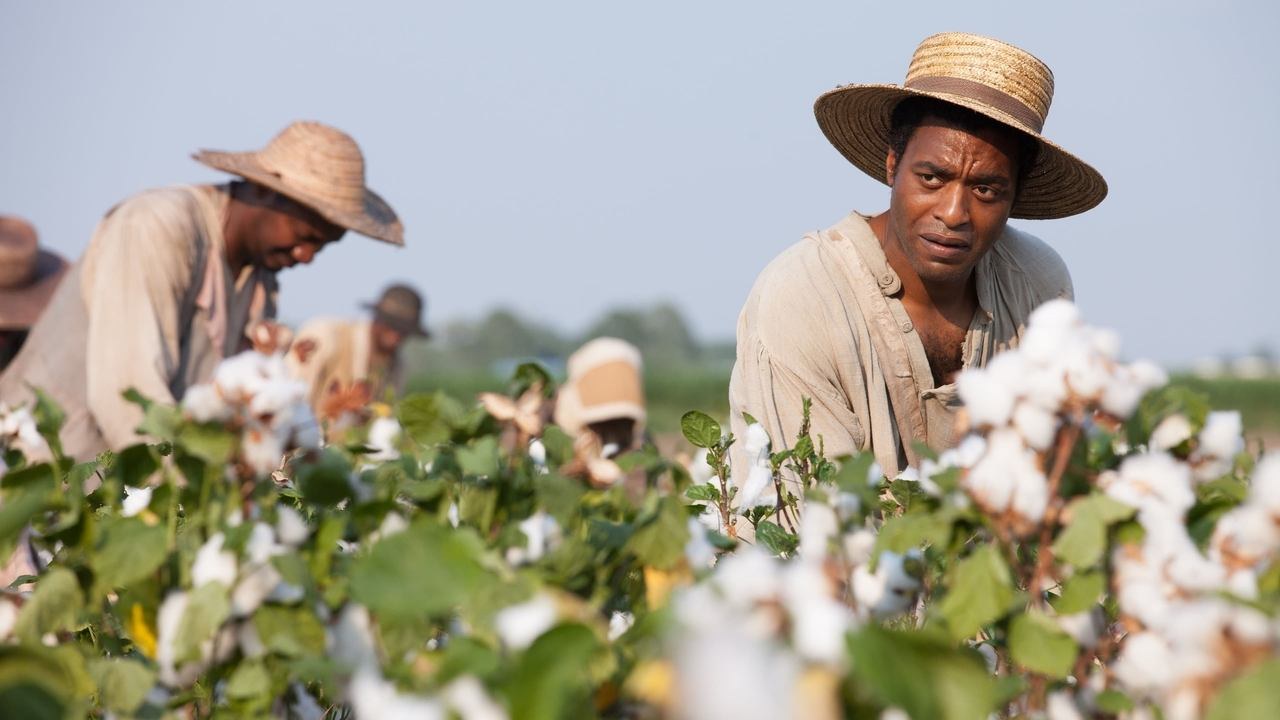
Solomon Northup is a free Black man living with his wife and children in Saratoga, New York, working as a skilled violinist, when he is deceived by two men offering him a lucrative traveling musical engagement, drugged, and sold into slavery in the Deep South, stripped of his papers, his name, and any legal recourse to prove his true status as a free man. Renamed “Platt” and sold to a series of increasingly brutal enslavers, Solomon spends the next twelve years enduring forced labor, degradation, and violence, all while carefully concealing his literacy and true identity, knowing that revealing either could cost him his life.
Under the plantation owner Edwin Epps, whose cruelty is compounded by his obsessive, predatory fixation on an enslaved woman named Patsey, Solomon witnesses and endures escalating brutality, including being forced to participate in Patsey’s savage whipping. Throughout his enslavement, Solomon maintains an inner conviction that he will not simply survive but hold onto his own humanity and identity, resisting the psychological erasure slavery is designed to inflict even while outwardly submitting to its physical demands in order to stay alive.
Solomon’s eventual rescue comes through a chance encounter with Samuel Bass, a Canadian laborer working temporarily on Epps’s plantation who is willing, at real risk to himself, to help Solomon send word north to those who can verify his free status. After twelve years of enslavement, Solomon is finally freed and reunited with his family, though the film’s closing acknowledgment that he never received legal justice for his kidnapping underscores that his individual restoration did nothing to address the systemic injustice that made his enslavement possible in the first place.
Analysis
Identity Preserved Under Systematic Erasure
Slavery, as the film depicts it, functions not merely as forced labor but as a systematic attempt to erase a person’s name, history, literacy, and legal existence entirely – Solomon is renamed, stripped of his papers, and warned that revealing his education or true identity could cost him his life. His quiet, sustained refusal to fully internalize this erasure, even while outwardly complying with it for survival, represents a form of resistance distinct from physical rebellion.
This distinction between outward submission necessary for survival and inward refusal to be erased offers an important, often overlooked dimension of resistance to systematic dehumanization: the preservation of one’s own sense of self and history even when every external structure is organized to deny it.
Complicity and Cruelty Along a Spectrum
The film refuses to present slaveholders as a uniform category of villainy; Solomon’s various enslavers range from the relatively more humane but still fundamentally complicit William Ford to the sadistic, obsessive cruelty of Edwin Epps, illustrating that the system of slavery corrupted and implicated even those who might otherwise have possessed some capacity for decency.
This spectrum matters because it resists a comforting narrative in which slavery’s evil is confined to uniquely monstrous individuals; the film insists instead that an entire social and economic system organized around the ownership of human beings inevitably corrupts even its more “benevolent” participants, who remain fully complicit regardless of their personal disposition.
Suffering Witnessed Without the Power to Prevent It
Solomon is repeatedly forced to witness, and at times even participate in, violence inflicted on fellow enslaved people, most devastatingly Patsey’s brutal whipping, without any power to prevent it without risking his own life and the lives of others. The film’s unflinching willingness to depict this violence, and Solomon’s anguished complicity forced upon him under threat, refuses to let the audience look away from what the system actually required of its victims.
This portrayal complicates any simple moral framework of resistance, showing that survival under total systemic violence sometimes requires enduring or even participating in acts one finds morally abhorrent, without this participation constituting genuine moral failure on the part of the person coerced into it.
Freedom That Arrives Without Full Justice
Solomon’s eventual rescue and reunion with his family, while genuinely joyful, is immediately followed by the film’s sober acknowledgment that he never received legal justice for his twelve years of kidnapping and enslavement – the men responsible faced no meaningful consequence. His personal restoration to freedom did nothing to address, let alone correct, the systemic injustice that made his suffering possible.
This refusal to let individual rescue substitute for systemic justice is one of the film’s most important closing statements, insisting that a single story’s resolution, however moving, cannot be mistaken for the resolution of the broader injustice it depicts.
Questions for Discussion
1. Solomon carefully conceals his literacy and true identity throughout his enslavement. What does this concealment, alongside his inward refusal to be erased, suggest about the difference between outward survival and inward resistance?
2. The film presents slaveholders along a spectrum, from the relatively humane Ford to the sadistic Epps. Why might the film resist presenting slavery’s evil as confined to uniquely monstrous individuals?
3. Solomon is forced to participate in Patsey’s whipping under threat to his own life. Does this coercion implicate him morally, or does the film present this as a case where genuine choice was not available to him? Explain your reasoning.
4. Solomon’s eventual rescue depends on the willingness of Samuel Bass to risk himself to help a stranger. What does this act of costly solidarity suggest about the kind of courage required to oppose an entrenched, dangerous system?
5. The film closes by noting that Solomon never received legal justice for his kidnapping. Why might the filmmakers choose to end on this sobering note rather than simply celebrating his reunion with his family?
6. What does the film suggest about the relationship between a person’s outward circumstances and their inner identity, given Solomon’s determination to preserve his sense of self despite total external erasure?
7. How does the film’s portrayal of Epps’s obsessive cruelty toward Patsey deepen your understanding of how systems of domination can compound different forms of abuse and violence?
8. What obligation, if any, does the story of Solomon’s individual rescue place on those who hear it, given that his personal freedom did not resolve the larger injustice of the system that enslaved him?


