Synopsis
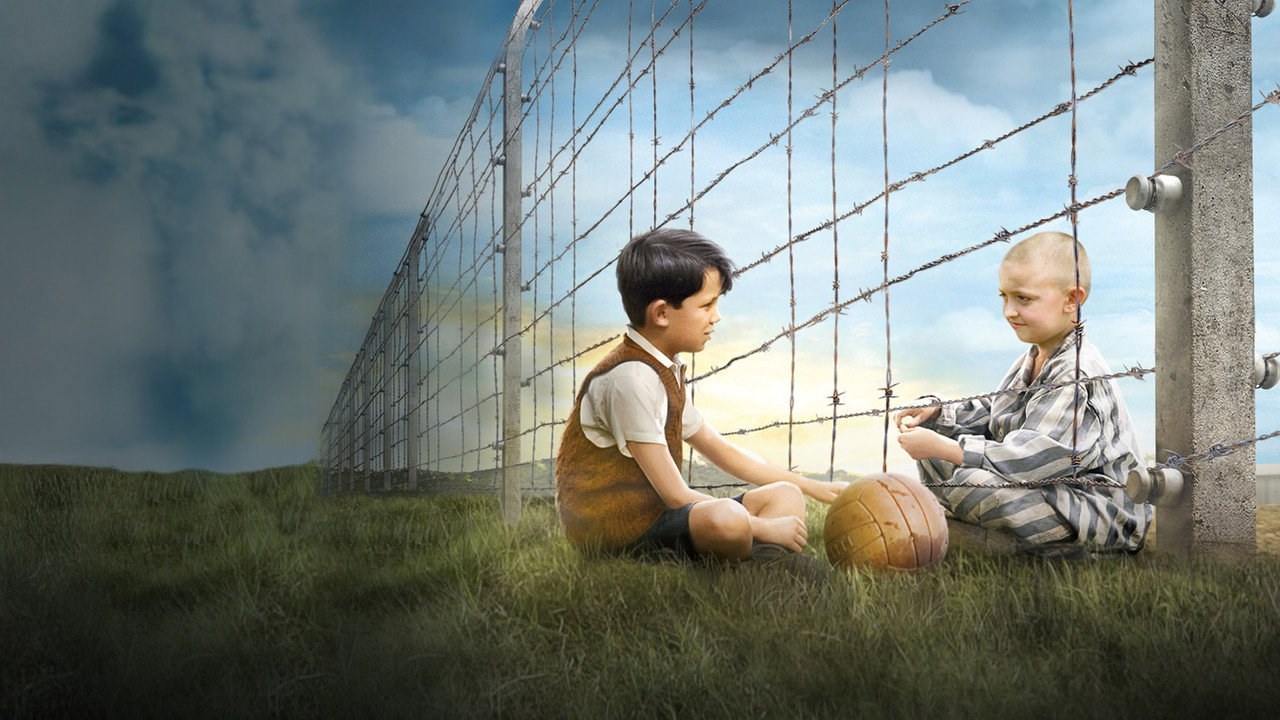
Bruno, an eight-year-old German boy, moves with his family to a remote house near a concentration camp after his father, an SS officer, is promoted to command it, though Bruno is told only that it is a farm and forbidden from exploring the fenced area visible from his new bedroom window. Bored and lonely in his isolated new home, Bruno defies his parents’ instructions and wanders to the camp’s perimeter fence, where he befriends Shmuel, a Jewish boy his own age imprisoned inside, unaware of the true nature or purpose of the camp separating them.
Over repeated secret visits, Bruno and Shmuel develop a genuine childhood friendship across the fence, playing games and sharing food, even as Bruno remains almost entirely innocent of what is actually happening to Shmuel and the other prisoners, interpreting the camp’s horrors through the limited, distorted understanding a sheltered, propagandized child might reasonably possess. Bruno’s growing unease about his family’s role in the camp gradually surfaces, but never develops into full understanding before tragedy strikes.
When Shmuel’s father goes missing within the camp, Bruno agrees to sneak inside, disguised in a spare set of the prisoners’ striped uniform, to help Shmuel search for him, only for the two boys to be swept up together in a mass movement of prisoners toward a gas chamber, dying together, hand in hand, in the same horror Bruno’s family had spent the entire film sheltering him from understanding, revealing with devastating finality the true cost of the willful blindness surrounding him.
Analysis
Innocence Preserved by Deliberate Concealment
Bruno’s parents, and his father in particular, actively shield him from any accurate understanding of what the camp actually is or what is happening to the people inside it, maintaining his innocence not through the natural limits of a child’s understanding alone but through active, deliberate deception about the true nature of their circumstances.
This deliberate concealment complicates any simple reading of Bruno’s innocence as purely admirable; the film suggests that innocence maintained through willful, systematic denial of an ongoing atrocity is itself a kind of moral hazard, one that ultimately fails catastrophically to protect the child it was meant to shelter.
Friendship That Does Not Require Full Understanding
Bruno and Shmuel’s friendship develops entirely outside of, and largely uninformed by, any accurate understanding of the vast difference in their actual circumstances – one a privileged son of a camp commandant, the other an imprisoned, starving victim of genocide – yet the connection between them remains, within the limits of what each boy can perceive, entirely genuine.
This portrayal suggests that authentic human connection can form even across circumstances of radical, tragic inequality, though the film’s devastating ending also insists that such connection, however genuine, cannot substitute for the clear-eyed moral understanding and action that Bruno’s ignorance ultimately prevented him from bringing to his friend’s actual, desperate situation.
The Catastrophic Cost of Willful Blindness
Bruno’s parents’ determination to keep him ignorant of the camp’s true purpose, motivated by a desire to protect both his innocence and their own family’s participation in atrocity from scrutiny, ultimately fails to protect him at all – his very innocence and lack of understanding is precisely what leads him, without any sense of the danger involved, into the fatal situation that claims his life alongside Shmuel’s.
This devastating irony – that the concealment meant to protect Bruno directly enables the circumstances of his death – offers the film’s starkest statement about the real, catastrophic costs of willful blindness, whether exercised to protect a child or to avoid confronting one’s own complicity in grave wrongdoing.
Complicity Assessed Across Different Levels of Awareness
The film distinguishes between different characters’ levels of awareness and complicity regarding the camp’s true purpose – Bruno’s father, who understands fully and administers the camp regardless; Bruno’s mother, who gradually learns the truth and is horrified but remains largely passive; and Bruno himself, who never fully understands at all – without offering any of them, including the fully complicit father, easy exoneration.
This layered portrayal of complicity, ranging from active administration to passive acquiescence to genuine childhood ignorance, resists reducing responsibility for atrocity to a single, simple category, insisting instead that moral responsibility must be assessed according to what each person actually knew, or willfully avoided knowing, and what they did or failed to do in response.
Questions for Discussion
1. Bruno’s parents actively conceal the true nature of the camp from him rather than simply relying on his natural childhood limitations. What does this deliberate concealment suggest about the moral risks of willful ignorance, even when intended to protect?
2. Bruno and Shmuel’s friendship forms genuinely despite Bruno’s near-total ignorance of their radically different circumstances. Can authentic connection exist meaningfully across such profound, tragic inequality? Explain your reasoning.
3. The concealment meant to protect Bruno directly leads to the circumstances of his death. What does this devastating irony suggest about the actual, practical costs of shielding someone from difficult truths?
4. The film portrays different characters with different levels of awareness and complicity regarding the camp – the father who administers it, the mother who is horrified but passive, and Bruno who never understands. How does the film ask us to judge each of these different positions?
5. Is Bruno’s mother’s passive horror, once she learns the truth, a form of moral failure, or does her limited power to act change how we should judge her inaction? Defend your answer.
6. What responsibility do adults bear for the information and understanding, or lack thereof, that they provide to the children in their care, especially regarding matters of serious moral consequence?
7. The film tells a story of the Holocaust primarily through the eyes of a German child rather than a Jewish victim. What are the risks and potential value of this narrative choice?
8. What do you think the film ultimately suggests about the relationship between innocence and moral responsibility – does not knowing about wrongdoing excuse a person from its consequences or its weight?


