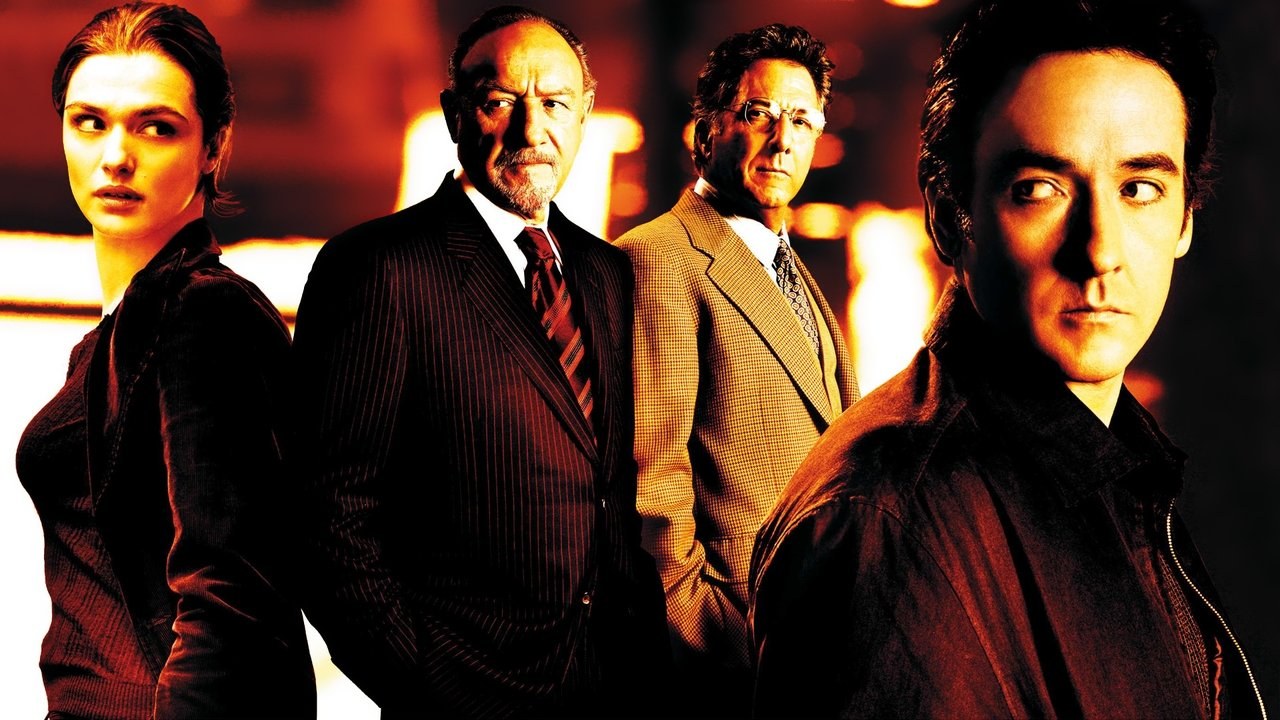
Synopsis
In a New Orleans courtroom, a widow sues a major gun manufacturer for damages after her husband is killed in a workplace mass shooting, a case with enormous financial stakes for the entire firearms industry, drawing the covert involvement of Rankin Fitch, a ruthless, highly skilled jury consultant hired by the gun industry to identify and manipulate the jury through extensive surveillance, intimidation, and dirty tricks in order to guarantee a verdict favorable to his clients regardless of the actual facts or merits of the case.
Unbeknownst to both sides, Nicholas Easter, a seemingly ordinary member of the jury pool who is actually secretly working alongside his partner Marlee outside the courtroom, orchestrates his own selection onto the jury and then begins covertly offering to sell the verdict to the highest bidder, approaching both Fitch’s team and the plaintiff’s idealistic lawyer, Wendell Rohr, with the same proposition, creating uncertainty for both sides about whether they are dealing with a genuine ally or simply a more sophisticated manipulator than even Fitch himself.
As the true motivation behind Nicholas and Marlee’s elaborate scheme is revealed – a deeply personal connection to gun violence that has driven them to specifically target Fitch’s operation for a reckoning years in the making – the film builds toward Nicholas successfully steering the jury toward a verdict against the gun manufacturer through legitimate persuasion of his fellow jurors, having used the appearance of corruption merely as a means to first neutralize Fitch’s own systematic manipulation of the process, ultimately restoring rather than further corrupting the jury’s genuine independent judgment.
Analysis
Justice Undermined by Sophisticated Manipulation
Fitch’s elaborate operation to manipulate the jury through surveillance, intimidation, and psychological profiling represents a systematic corruption of the jury system’s basic premise – that ordinary citizens can render impartial judgment based on evidence – revealing how vulnerable even well-established legal institutions can be to sufficiently resourced and sophisticated manipulation.
This portrayal offers a sobering account of how thoroughly the appearance of due process can mask an underlying reality of manipulation, particularly when one party possesses vastly greater resources and willingness to exploit legal and ethical gray areas than the system was designed to anticipate or prevent.
Fighting Manipulation Requires Understanding Its Methods
Nicholas and Marlee’s elaborate counter-scheme, requiring them to convincingly appear as sophisticated manipulators themselves in order to gain access to and ultimately neutralize Fitch’s operation, suggests that countering entrenched, sophisticated corruption sometimes requires a comparable level of strategic sophistication and willingness to operate within morally ambiguous territory, at least as a means toward an ultimately legitimate end.
This portrayal raises genuine questions about whether deceptive means can be justified by a sufficiently important legitimate end, given that Nicholas and Marlee’s own methods – deception, manipulation of both sides’ uncertainty – mirror, at least superficially, the very tactics they are ultimately working to defeat.
Personal Loss Transformed Into Systemic Reckoning
Nicholas and Marlee’s elaborate scheme is revealed to be motivated by deeply personal experience with gun violence, transforming what might have remained private grief into a sustained, strategic effort to address not merely their own individual loss but the broader systemic manipulation that allows powerful industries to escape accountability for the harm their products cause.
This transformation of personal grief into sustained, strategic action aimed at broader systemic accountability, rather than narrower personal vengeance alone, suggests a model of turning devastating loss toward constructive, if legally and ethically complicated, pursuit of justice extending beyond the original personal wound.
A Jury’s Genuine Judgment Ultimately Restored
Despite the elaborate deception and manipulation surrounding the trial from multiple directions, the film’s resolution depends ultimately on Nicholas persuading his fellow jurors through legitimate argument and evidence, restoring rather than further corrupting the jury’s capacity for genuine, independent judgment once Fitch’s manipulative influence has been neutralized.
This ultimate reliance on legitimate persuasion, rather than a final, decisive act of manipulation matching Fitch’s own, suggests that even after using ambiguous, deceptive methods to counter systemic corruption, the film’s underlying conviction remains that genuine justice ultimately depends on restoring, rather than replacing, a jury’s authentic, independent capacity for judgment.
Questions for Discussion
1. Fitch’s operation systematically manipulates the jury through surveillance and psychological profiling. What does this portrayal suggest about the vulnerability of legal institutions to sufficiently resourced and sophisticated corruption?
2. Nicholas and Marlee must appear as sophisticated manipulators themselves in order to neutralize Fitch’s operation. Does a legitimate end justify the deceptive means they employ? Explain your reasoning.
3. Nicholas and Marlee’s scheme is revealed to be motivated by personal experience with gun violence. What does this transformation of personal grief into systemic action suggest about constructive responses to devastating loss?
4. The film’s resolution depends on Nicholas persuading his fellow jurors through legitimate argument, once Fitch’s manipulation is neutralized. Why might the film insist on this legitimate final method rather than a final act of counter-manipulation?
5. Is there a meaningful moral distinction between Fitch’s manipulation of the jury and Nicholas and Marlee’s own deceptive counter-scheme, given that both involve significant deception? Defend your answer.
6. What responsibility do powerful industries bear for the harm caused by their products, and what recourse should exist when ordinary legal processes can be manipulated to shield them from accountability?
7. How does the film’s portrayal of jury manipulation reflect broader concerns about the influence of wealth and resources on legal outcomes, beyond the specific case depicted?
8. What do you think the film ultimately suggests about the relationship between using ethically ambiguous means to counter systemic corruption, and the risk that such means might themselves further undermine the integrity of the system being defended?


