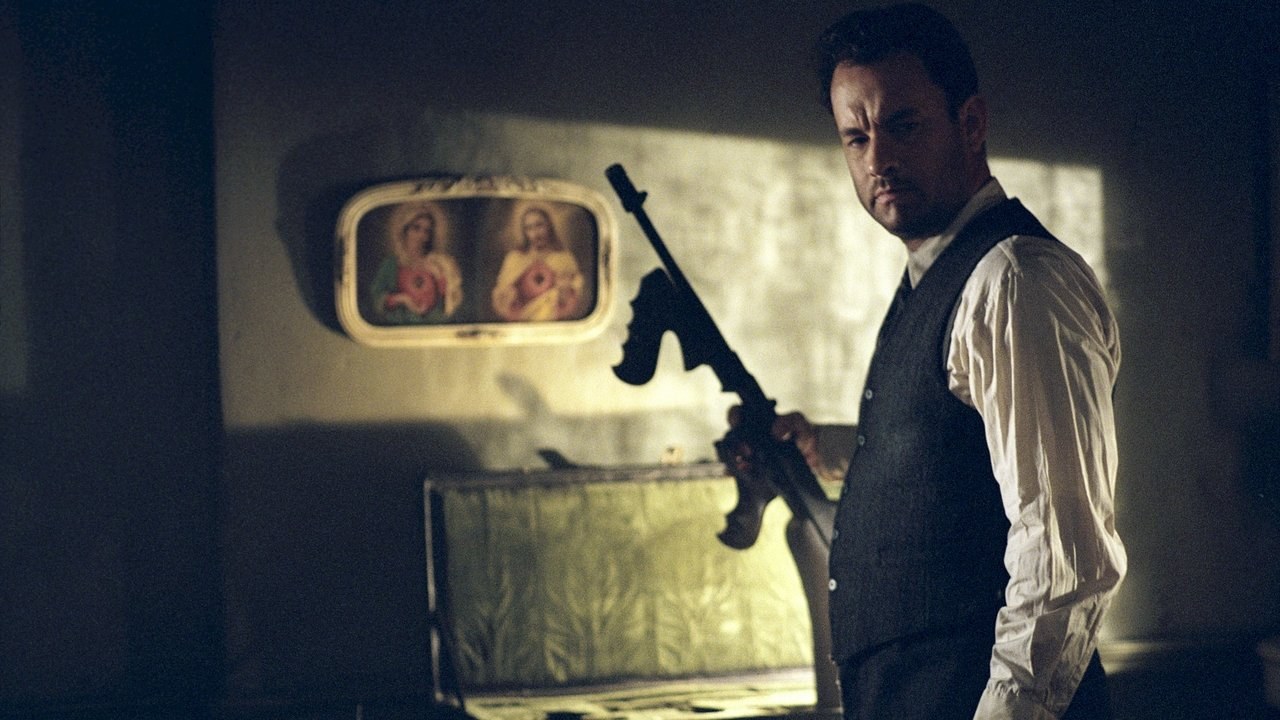
Synopsis
Michael Sullivan, a loyal enforcer for an Irish-American crime organization in 1930s Illinois, lives a carefully divided life, maintaining a warm, ordinary family existence with his wife and two sons while keeping the true nature of his violent profession hidden from his children, until his elder son Michael Jr. secretly witnesses him committing murder during a botched job, shattering the careful separation Sullivan had maintained between his family life and his criminal work.
When the crime family’s volatile heir, Connor Rooney, subsequently murders Sullivan’s wife and younger son in a jealous, panicked attempt to eliminate witnesses and consolidate his own position, Sullivan and his surviving son Michael Jr. are forced to flee, beginning a extended journey across the Midwest during which Sullivan, seeking both vengeance against Connor and protection for his surviving son, robs banks connected to the crime organization to draw out and punish those responsible.
As father and son travel together, Sullivan works deliberately and consciously to shield Michael Jr. from following in his own violent footsteps, teaching him to drive so the boy need never personally participate in the robberies, and ultimately sacrificing his own life in a final confrontation with Connor and the organization’s leadership, ensuring his son’s survival and, crucially, his son’s exit from the violent world that had consumed Sullivan’s own life, allowing Michael Jr. to grow up shaped by his father’s love and protection rather than his father’s violent profession.
Analysis
A Divided Life That Cannot Remain Permanently Separated
Sullivan’s careful maintenance of two entirely separate lives – devoted family man and ruthless criminal enforcer – reflects a common but ultimately unsustainable attempt to compartmentalize serious moral compromise from the relationships a person values most, a separation that collapses catastrophically once his son witnesses the violence Sullivan had worked so hard to keep hidden.
This collapse suggests that such careful compartmentalization, however sincerely maintained, tends eventually to fail, particularly once children reach an age of genuine perception and understanding, unable to remain permanently shielded from truths their parents may have hoped to keep separate from family life indefinitely.
Protecting a Child From Repeating a Parent’s Path
Sullivan’s deliberate effort to shield Michael Jr. from personally participating in violence – teaching him to drive getaway cars rather than allowing him any direct role in the robberies, working to ensure his son’s exit from organized crime entirely – reflects a father’s determined effort to prevent his own compromised path from becoming his son’s inherited fate as well.
This portrayal of active, deliberate effort to break an inherited cycle of violence, rather than simply hoping proximity to a criminal father would not affect a son’s own path, suggests that preventing such inheritance requires sustained, conscious parental effort rather than passive good intention alone.
Vengeance Pursued Alongside Genuine Protection
Sullivan’s campaign against Connor Rooney and the organization responsible for his wife and younger son’s murder combines genuine grief-driven vengeance with the more practical, urgent necessity of eliminating the ongoing threat to his surviving son’s life, complicating any simple reading of his violent campaign as either purely vengeful or purely protective.
This blending of vengeance and protection reflects an honest acknowledgment that grief and practical necessity often become genuinely entangled in a parent’s response to violence against their family, resisting a clean separation between righteous protective action and less justifiable personal retribution.
A Father’s Final Sacrifice Securing a Different Future
Sullivan’s death in the film’s climactic confrontation, arriving only once he has ensured Michael Jr.’s safety and exit from the criminal world that consumed his own life, represents the culmination of his sustained effort throughout the film to secure for his son a future entirely different from his own, even at the ultimate cost of his own life and continued presence in that future.
This final sacrifice, offered specifically to secure his son’s escape from the very world Sullivan himself could never fully leave, suggests that genuine paternal love sometimes finds its fullest expression not in a father’s continued presence, but in his willingness to give everything, including his own life, to ensure his child need not inherit his own compromised path.
Questions for Discussion
1. Sullivan maintains carefully separate lives as family man and criminal enforcer until his son witnesses his violence. What does this collapse suggest about the sustainability of such compartmentalization, especially as children grow older?
2. Sullivan actively works to prevent Michael Jr. from participating in violence or following his own criminal path. What does this deliberate effort suggest about what is required to break an inherited cycle, rather than simply hoping proximity will not affect a child?
3. Sullivan’s campaign against Connor Rooney combines genuine grief with practical necessity to protect his surviving son. Is it possible, or even necessary, to cleanly separate vengeance from legitimate protective action in his situation? Explain your reasoning.
4. Sullivan sacrifices his own life to secure his son’s safety and exit from organized crime. What does this final sacrifice suggest about how paternal love can be expressed even through a father’s absence rather than his continued presence?
5. What responsibility does Sullivan bear for the violence that eventually claims his wife and younger son, given his own long involvement in the criminal organization responsible?
6. Is Sullivan’s effort to shield Michael Jr. from the family’s crimes throughout his childhood ultimately protective, or does it leave the boy less prepared for the truth when it eventually surfaces? Explain your view.
7. How does the father-son road trip structure of the film’s second half shape your understanding of Sullivan’s effort to model a different, protective form of fatherhood despite his own violent profession?
8. What do you think the film ultimately suggests about whether a parent’s serious moral compromises can be prevented from being passed on to their children, given Sullivan’s determined effort to secure a different future for his son?


