Synopsis
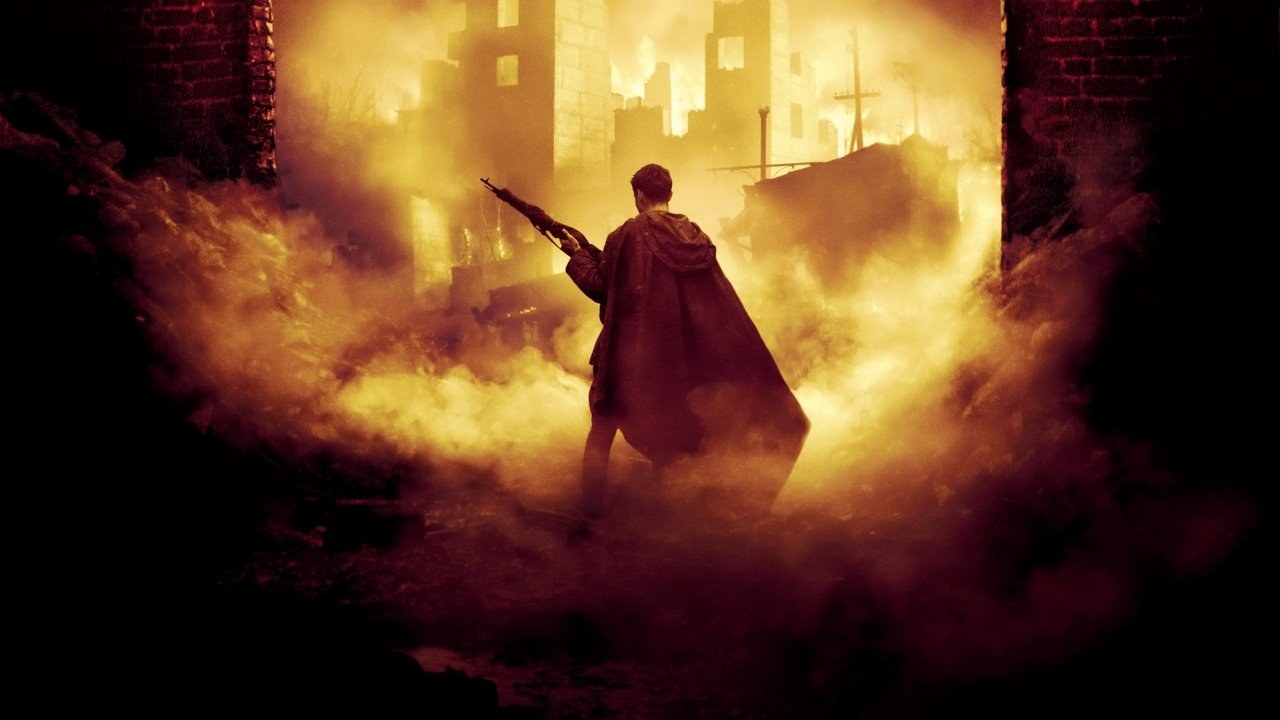
Vasily Zaitsev, a young shepherd from the Ural Mountains whose skill with a rifle was honed hunting wolves, survives the brutal, chaotic early defense of Stalingrad against advancing German forces, his extraordinary marksmanship catching the attention of Danilov, a Soviet political officer who recognizes an opportunity to boost desperately needed Soviet morale by transforming Vasily into a celebrated national hero and sniper, his exploits publicized through propaganda to inspire a demoralized, besieged population.
As Vasily’s reputation as a deadly, elusive sniper grows and his kills mount, the German command dispatches Major König, an aristocratic master marksman and the head of Germany’s sniper school, specifically to hunt down and kill Vasily, setting off an extended, deadly personal duel between the two expert snipers fought across the ruined city’s rubble, each attempting to outmaneuver and outwait the other in a contest that comes to symbolize, for both sides’ propaganda machines, the larger ideological struggle consuming the entire war.
As the personal rivalry between Vasily and König intensifies, complicated further by a romantic entanglement between Vasily and a fellow soldier, Tania, that also involves Danilov’s own feelings for her, the war’s brutal, indifferent reality repeatedly intrudes upon and complicates the propaganda narrative being constructed around Vasily’s heroism, culminating in a final, decisive confrontation between the two snipers that resolves the personal duel even as the larger war continues, largely unaffected by the individual contest that had been elevated to such symbolic significance by both sides’ need for a compelling story.
Analysis
A Man Transformed Into a Symbol
Vasily’s genuine skill and courage are real, yet his transformation into a celebrated national hero occurs largely through deliberate propaganda construction by Danilov, who recognizes Vasily’s usefulness as a morale-boosting symbol independent of, and sometimes in tension with, Vasily’s actual experience and desires as an individual soldier caught in a brutal, chaotic war.
This portrayal of an individual’s genuine achievement being appropriated and reshaped into a larger symbolic narrative for institutional purposes raises pointed questions about the gap between a person’s actual lived experience and the public story constructed around them, particularly when that construction serves purposes – morale, propaganda, ideology – that may not align with the individual’s own understanding of themselves.
Personal Rivalry as a Proxy for Larger Ideological Conflict
The duel between Vasily and König, elevated by both sides’ propaganda into a symbol of the broader ideological struggle between Soviet and German ideology, illustrates how larger institutional and ideological conflicts often seek out or manufacture individual, personalized narratives capable of making abstract, large-scale struggle more comprehensible and emotionally compelling to a broader public.
This reduction of a vast, impersonal war into a personal duel between two individuals, however dramatically compelling, risks obscuring the larger war’s actual scale, complexity, and indifference to any single confrontation’s outcome, a tension the film itself seems aware of even as it constructs its narrative around exactly this kind of personalized conflict.
Love Complicated by Competing Loyalties and Danger
The romantic entanglement between Vasily, Tania, and Danilov unfolds against the constant backdrop of mortal danger and competing loyalties – to the war effort, to friendship, to genuine romantic feeling – illustrating how even genuine human connection struggles to maintain its own integrity and priority amid circumstances of sustained crisis and institutional pressure.
This portrayal of love complicated by competing loyalties and constant danger offers an honest account of how difficult it can be to sustain straightforward, uncomplicated relationships within circumstances that constantly threaten to subordinate personal connection to larger, more urgent institutional and survival concerns.
Individual Courage Amid Institutional Indifference
Despite the propaganda narrative constructed around Vasily’s heroism, the film repeatedly shows the war’s brutal indifference to individual soldiers’ lives and struggles, with Soviet commanders willing to sacrifice significant numbers of ordinary soldiers for strategic or propaganda purposes that have little regard for the individual courage and suffering the war demands of them.
This tension between celebrated individual heroism and institutional indifference to the broader mass of ordinary soldiers’ lives offers a sobering counterpoint to the film’s more dramatic personal duel narrative, insisting that genuine courage and suffering extend far beyond the singular, celebrated figures propaganda chooses to elevate.
Questions for Discussion
1. Vasily’s genuine skill is transformed into a propaganda symbol largely through Danilov’s deliberate construction. What does the gap between Vasily’s actual experience and his public heroic image suggest about how individuals can be appropriated for institutional purposes?
2. The duel between Vasily and König is elevated by both sides into a symbol of the broader ideological conflict. What does this personalization of a vast, impersonal war suggest about how large-scale conflicts are made comprehensible to a broader public?
3. The romantic relationships in the film are constantly complicated by competing loyalties and mortal danger. What does this suggest about the difficulty of sustaining genuine personal connection amid sustained institutional crisis?
4. The film shows Soviet commanders willing to sacrifice significant numbers of ordinary soldiers for strategic or propaganda purposes. How does this institutional indifference complicate the film’s celebration of Vasily’s individual heroism?
5. Is Danilov’s use of Vasily as a propaganda symbol a betrayal of Vasily’s genuine humanity, a legitimate wartime necessity, or both simultaneously? Explain your reasoning.
6. What responsibility does Vasily bear for the public image constructed around him, given both his genuine participation in and his apparent discomfort with the propaganda narrative Danilov builds?
7. How does the personal duel between Vasily and König, however dramatically compelling, risk obscuring the larger war’s actual scale and complexity? Does the film seem aware of this tension?
8. What do you think the film ultimately suggests about the relationship between genuine individual courage and the larger, often indifferent institutional and ideological forces that seek to use or shape that courage for their own purposes?


