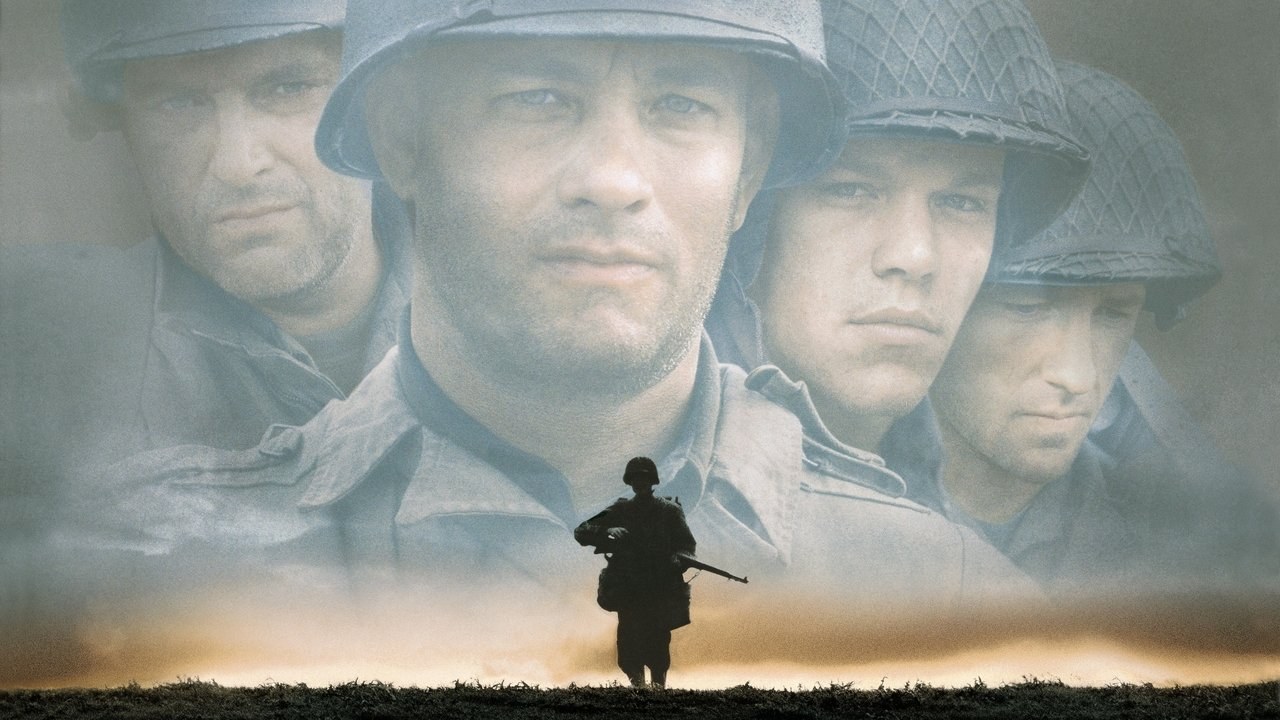
Synopsis
Captain John Miller leads a small squad of American soldiers through the harrowing D-Day invasion at Omaha Beach and its brutal aftermath, tasked shortly afterward with an unusual, morale-driven mission: locate Private James Ryan, whose three brothers have all recently been killed in combat, and bring him safely home, sparing his grieving mother from losing all four of her sons to the war.
As Miller’s squad journeys through dangerous, contested territory in search of Ryan, several of his men, having already survived the invasion’s horrors and lost comrades of their own, increasingly question the mission’s fairness and wisdom – risking multiple lives to save a single soldier who is, after all, no more inherently valuable than any of the men being asked to risk everything to save him – a tension the squad must repeatedly reckon with even as they press forward with their assigned duty.
Upon finally locating Ryan, defending a strategically vital bridge alongside a small group of fellow paratroopers, Ryan refuses to abandon his post and his remaining comrades simply to secure his own safety, prompting Miller’s squad to instead join Ryan’s unit in defending the bridge against an overwhelming German counterattack, a fierce battle that costs Miller and several of his men their lives, securing Ryan’s survival and the position’s defense at a devastating cost that Ryan carries with him, and is asked to justify through a life well-lived, for the remainder of his days.
Analysis
The Incalculable Arithmetic of a Single Life
Miller’s squad repeatedly grapples with the uncomfortable arithmetic underlying their mission – risking and eventually losing multiple soldiers’ lives to save a single man – a calculation that resists any clean moral resolution, since Ryan possesses no greater inherent claim to survival than any of the men risking their lives to save him, yet the mission proceeds regardless out of a conviction that a mother’s compounded grief and the symbolic value of at least attempting such rescue matter enough to justify the cost.
This unresolved tension between abstract calculation and concrete human compassion offers an honest account of how certain moral decisions resist tidy justification even when undertaken for genuinely compassionate reasons, requiring those who carry out such missions to act with conviction despite genuine, unresolved uncertainty about whether the cost is truly justified.
Duty Sustained Despite Reasonable Doubt
Miller’s men, despite their legitimate doubts and grievances about the mission’s fairness, ultimately continue to carry out their assigned duty with full commitment, illustrating a form of disciplined obedience that does not require full personal conviction of a mission’s wisdom, but rather a trust in the larger structure of command and purpose they have committed themselves to serve.
This portrayal of duty sustained despite reasonable doubt offers a nuanced account of military obedience distinct from either blind, uncritical compliance or individual soldiers simply following only those orders they personally find persuasive, suggesting a middle path in which genuine doubt and continued faithful service can coexist within a legitimate, trusted structure of command.
A Rescued Man’s Refusal to Abandon His Own Duty
Ryan’s refusal to leave his post and fellow soldiers simply to secure his own safety, despite having a legitimate, officially sanctioned reason to do so, reflects his own conviction that his duty to his immediate comrades outweighs his personal safety or his family’s need to preserve at least one surviving son, a conviction that directly complicates and ultimately reshapes the entire rescue mission’s purpose.
This refusal offers a striking parallel to Miller’s own men’s earlier questioning of the mission’s fairness – Ryan, too, refuses to accept that his own survival should be prioritized over his duty and loyalty to the men fighting alongside him, suggesting a shared conviction across the film that duty to comrades in arms carries a weight that individual safety alone cannot simply override.
A Life Measured Against Those Who Purchased It
Miller’s dying words to Ryan – to “earn this” – place upon Ryan’s subsequent life an explicit, permanent burden to justify, through how he lives, the cost several men paid with their lives to secure his survival, a burden Ryan carries visibly into old age, still uncertain, even decades later, whether his life has adequately answered for what was sacrificed to preserve it.
This final charge reframes survival itself as carrying genuine moral responsibility rather than simple good fortune, suggesting that those who survive at significant cost to others bear an ongoing obligation to live in a manner that honors and justifies, as fully as any life can, the sacrifice that made their continued existence possible.
Questions for Discussion
1. Miller’s squad questions whether saving one man is worth risking multiple lives. Does the film ultimately resolve this uncomfortable arithmetic, or does it leave the tension genuinely unresolved? Explain your reasoning.
2. Miller’s men continue the mission despite legitimate doubts about its fairness. What does this suggest about the relationship between duty, trust in a larger structure of command, and full personal conviction of a mission’s wisdom?
3. Ryan refuses to abandon his post and fellow soldiers to secure his own safety. How does this refusal complicate the entire premise and purpose of the rescue mission sent to save him?
4. Miller’s dying charge to Ryan – to “earn this” – places a lifelong burden on Ryan to justify his survival. What does this suggest about the moral weight carried by those who survive at significant cost to others?
5. Is the mission to save Private Ryan ultimately a wise and just use of military resources, or does the film suggest it reflects a flawed, if compassionate, calculation? Defend your answer.
6. What responsibility, if any, does Ryan bear for the deaths of Miller and his men, given that Ryan’s refusal to leave his post directly led to the battle that killed them?
7. How does the film’s unflinching opening depiction of the D-Day invasion shape your understanding of the stakes and context surrounding the more intimate story of Ryan’s rescue that follows?
8. What do you think it means, practically, for Ryan – or anyone in a similar position – to actually “earn” a sacrifice made on their behalf? Is such a debt ever fully payable?


