Synopsis
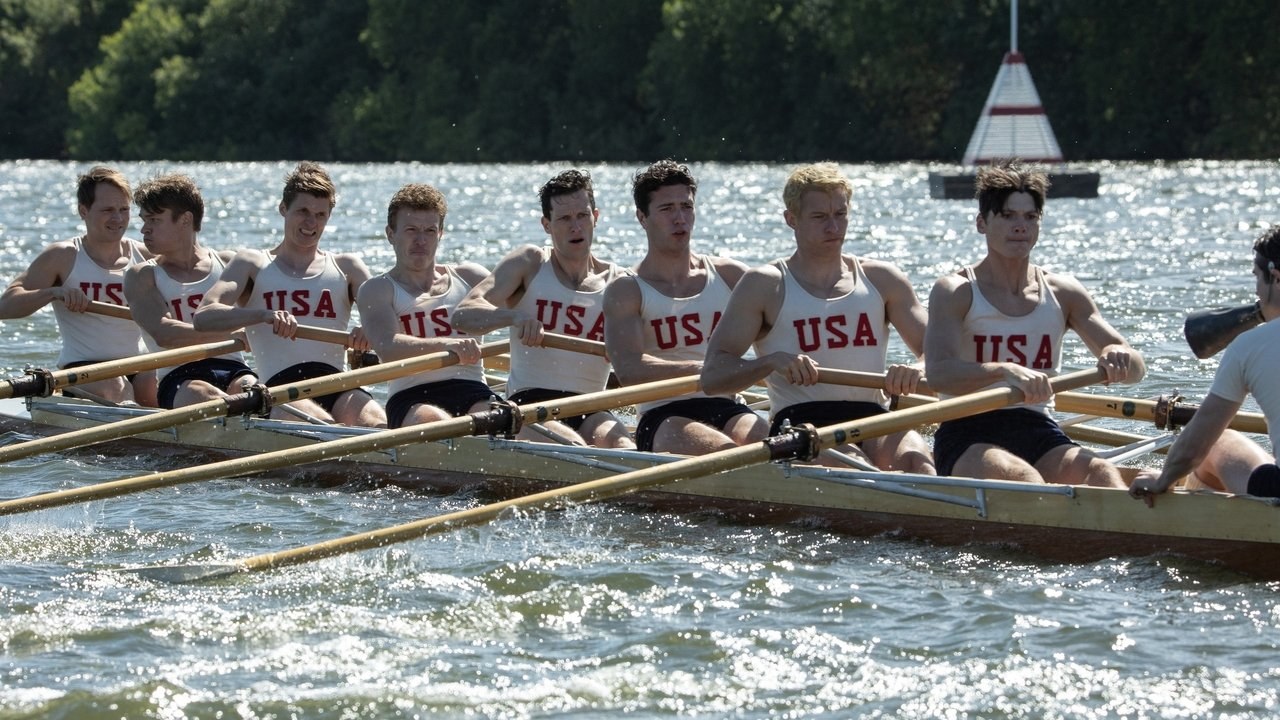
Joe Rantz, a determined but severely impoverished University of Washington student during the depths of the Great Depression, abandoned by his family as a teenager and living in genuine, precarious poverty, tries out for the university’s rowing team primarily out of desperate need for the modest income and room and board the position offers, rather than any prior passion for the sport, joining a diverse group of similarly working-class young men competing for a limited number of spots on the freshman crew.
Under the demanding, exacting coaching of Al Ulbrickson and boat-builder George Pocock, whose philosophy of rowing emphasizes not individual excellence but complete, selfless synchronization and trust among all eight rowers, Joe and his teammates gradually develop both the physical conditioning and, more importantly, the deep interpersonal trust required for a boat to move with the kind of unified, effortless power that individual talent alone cannot produce, with Joe’s own guarded, self-protective instincts, shaped by his difficult upbringing, presenting a particular obstacle to the vulnerability such trust requires.
As the team improbably advances from underdog status through increasingly high-stakes competition, ultimately earning the right to represent the United States at the 1936 Berlin Olympics amid Nazi Germany’s propaganda spectacle, Joe and his teammates’ hard-won unity and trust are tested by injury, exhaustion, and the enormous pressure of international competition, culminating in a dramatic gold medal victory that vindicates both their individual perseverance and, more centrally, the deeper communal trust and selflessness their coaches had insisted was the true foundation of genuine athletic excellence.
Analysis
Necessity Opening a Door to Unexpected Transformation
Joe’s initial motivation for joining the rowing team – desperate financial necessity rather than any prior passion for the sport – illustrates how circumstances of genuine hardship can sometimes open unexpected doors to significant, transformative opportunity, provided a person remains willing to fully commit once that door opens, regardless of the circumstances that initially prompted the choice.
This portrayal suggests that the purity or nobility of an initial motivation matters less than a person’s willingness to fully commit and grow once given an opportunity, regardless of whether that opportunity was initially pursued out of genuine passion or simple, pressing necessity.
Trust as the True Foundation of Collective Excellence
The coaches’ insistence that genuine rowing excellence depends not on individual talent or effort but on complete, vulnerable trust and synchronization among all eight rowers reframes athletic excellence as fundamentally relational rather than individual, requiring each rower to set aside self-protective instincts in favor of genuine, costly reliance on teammates.
This portrayal of trust as the true foundation of collective excellence offers a broader challenge to purely individualistic accounts of achievement, suggesting that certain forms of excellence – in athletics and beyond – simply cannot be achieved through individual talent or effort alone, requiring instead the harder, more vulnerable work of building genuine trust with others.
A Guarded Heart Learning to Risk Genuine Reliance
Joe’s difficult, abandonment-marked upbringing has taught him deep self-protective instincts and reluctance to rely on or trust others, presenting a particular obstacle to the kind of complete, vulnerable trust his coaches insist genuine rowing excellence requires, forcing Joe to confront and gradually overcome patterns of guardedness formed by genuine, painful past experience.
This portrayal of a guarded heart learning to risk genuine reliance on others, despite legitimate past reasons for self-protection, offers a hopeful account of how even deeply ingrained patterns of self-protective isolation, however understandably formed, can be gradually overcome through sustained, trustworthy relationship and shared purpose.
Ordinary Young Men Representing More Than Themselves
The team’s working-class origins and genuine economic hardship stand in stark, deliberate contrast to Nazi Germany’s propaganda spectacle at the 1936 Olympics, with their eventual victory representing not merely individual or even national athletic achievement but a broader vindication of collective, humble effort and genuine trust over the regime’s ideology of individual racial and national superiority.
This broader symbolic dimension, achieved through the genuine achievement of ordinary young men rather than any deliberate political statement on their part, suggests that authentic excellence achieved through humility, trust, and collective effort can itself constitute a meaningful, if unintentional, response to ideologies of domination and individual supremacy.
Questions for Discussion
1. Joe joins the rowing team primarily out of financial necessity rather than passion for the sport. What does his subsequent transformation suggest about the relationship between an initial motivation and the possibility of genuine growth once an opportunity is embraced?
2. The coaches insist that rowing excellence depends on complete trust and synchronization rather than individual talent alone. What does this framing suggest about forms of excellence that require collective rather than purely individual achievement?
3. Joe’s difficult upbringing has taught him self-protective instincts that initially hinder the vulnerability required for genuine team trust. What allows him to gradually overcome this guardedness, and what does this process suggest about healing from past hardship?
4. The team’s eventual Olympic victory occurs at the 1936 Berlin Games amid Nazi propaganda. What broader significance, if any, does their victory carry beyond their individual and national athletic achievement?
5. What responsibility do coaches and mentors bear for helping individuals overcome self-protective patterns formed by difficult past experience, in service of achieving genuine collective excellence?
6. Is Joe’s journey primarily about individual perseverance and growth, or does the film ultimately center the collective achievement of the entire team above any single member’s story? Defend your answer.
7. How does the film’s Depression-era setting shape your understanding of the stakes and significance of the opportunity the rowing team represents for these particular young men?
8. What do you think the film ultimately suggests about the relationship between individual talent, collective trust, and genuine excellence, based on the coaches’ philosophy and the team’s eventual success?


