There is a saying: “Dress for the job you want, not the job you have.” The idea behind it is that you want to show your willingness to take your professional life seriously. It shows that you are prepared to move up, to be promoted, to excel in your chosen field. It also means that you want to do better than you currently are doing – instead of simply accepting that where you are in your career is where you have to stay, you can help move yourself forward toward your goals by beginning to dress, act, and think for the job you actually want.
Although the saying is meant specifically for the work force, it can also be adapted for life: “Act like the person you want to be.” This is the central message of the movie Coach Carter – we don’t have to simply accept our own current status, but can strive to achieve higher goals, to become better people, to aspire to something greater. If we refuse to hold ourselves to a higher standard, then our life becomes a self-fulfilling prophecy – we think that we can’t become better than we are (whether personally, professionally, in school, in our friendships, in our relationship with God); thus we don’t try to become better; and surprise, surprise, we don’t become better. In fact, a refusal to hold ourselves to a higher standard will usually mean that we become more accepting of increasingly lower standards.
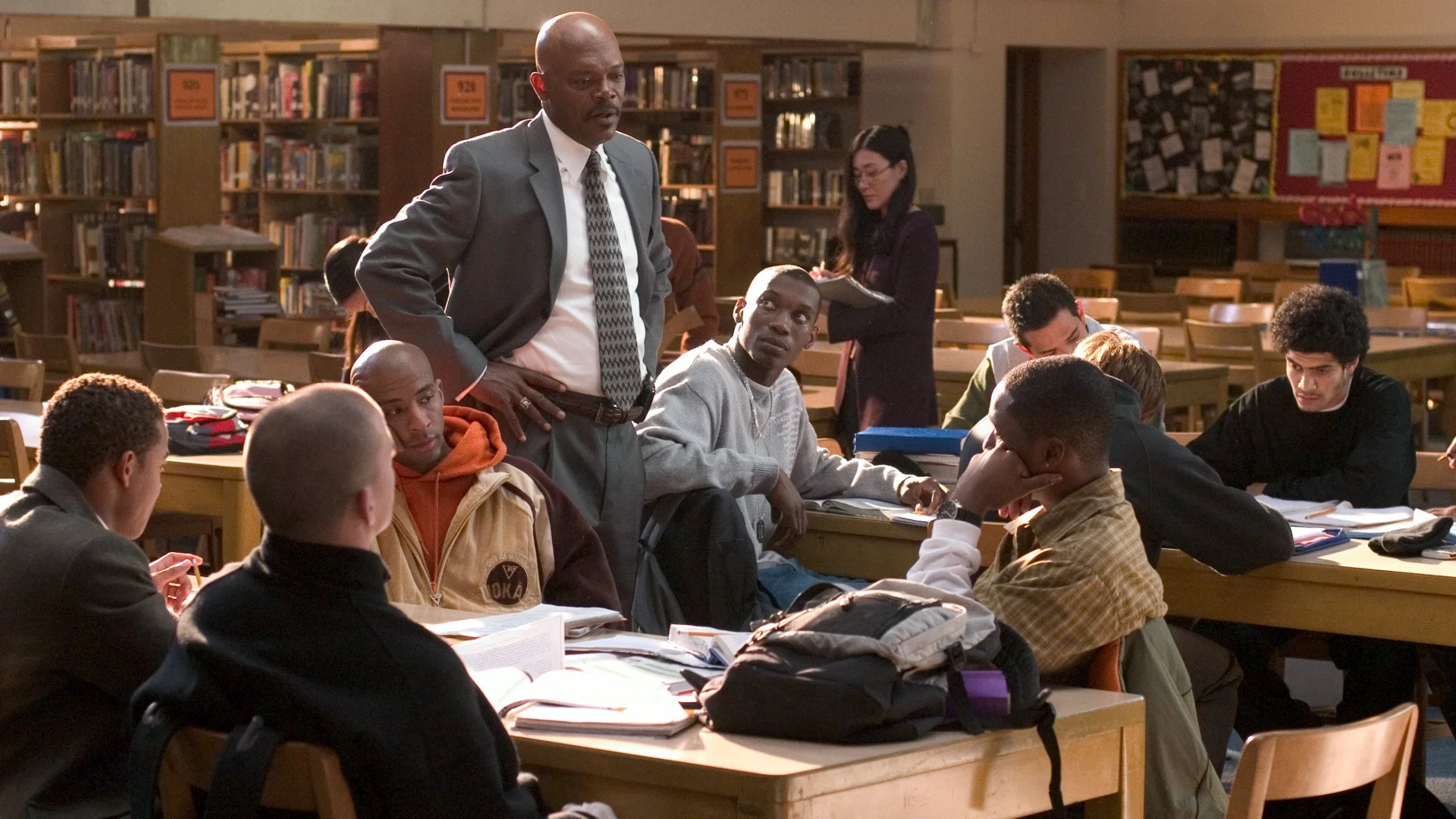
In the movie Coach Carter, coach Ken Carter insists on holding the members of the Richmond basketball team to a higher standard. The boys on the team live in the poorer areas of Richmond. Their prospects are not great – only 50% of students graduate from Richmond High School, and of these, only 6% go to college. As the principal tells Carter at one point, schools are funded based on academic performance – this means that every year in which Richmond High does poorly, it gets less funding. This is a perfect example of a self-fulfilling prophecy – standards are lowered for schools performing badly, which just reinforces the idea that Richmond students are likely to fail.
Carter is trying to fight against this idea, which he finds in the principal, in the students, and even in the parents. No one expects these boys to be anything better than failing students who can play basketball. The principal even tells Carter that this year of winning will be the highlight of many of these students’ lives. She has bought into the atmosphere of failure that surrounds Richmond students.
In the individual cases of some of these students, we can see similar difficulties arising. The students themselves don’t expect anything better out of themselves. They are initially offended that Carter would even expect anything out of them beyond playing basketball. We can also see the various difficulties that attend the lives of these students. For example, Kenyon’s girlfriend Kyra is pregnant. For Kenyon, this raises many fears – he sees it as a burden that will hold him back, as a complication in his life that he doesn’t want to face. Instead of supporting Kyra, he abandons her. Eventually he does the right thing and returns, but she has gone through with an abortion. Kenyon’s selfishness in not being willing to take responsibility for the consequences of his actions leads to the death of another human being.
Carter is determined to hold the students to a higher standard. He believes that they are capable of being better than they are, that it is not necessary that they simply accept failure at school or in life. He wants to teach them how to become men. At one point, he explains that he is trying to teach them the discipline that will help them achieve success.
The two key words, then, in Carter’s approach are ‘respect’ and ‘discipline.’ He insists that, if they are to be respectable, they must begin by respecting themselves. This is the “dress for the job you want” idea – begin by showing respect for yourself, and then others will respect you. He gives them an example from the very beginning by showing that he respects them. He respects them enough to hold them accountable through a contract. He insists that he refer to them as “sir”: “As of now” he says to one player, “you are a sir. So are the rest of you. ‘Sir’ is a term of respect. And you will have my respect until you abuse it.” Carter begins by offering to the boys the respect that no one else has shown them.
He then demands that they show this same respect to themselves. He forbids the use of the term “nigger” – “Nigger is a derogatory term used to insult our ancestors”; “We treat ourselves with respect. We don’t use the word nigger.” Using the term ‘nigger’ means accepting and internalizing others’ lack of respect. As Carter explains, “See, if a white man used it, you’d be ready to fight. Your using it teaches him to use it. You’re saying it’s cool. Well, it’s not cool.”
“Dress for the job you want.” If we want others to show us respect, we need to begin by showing respect for ourselves. This means holding ourselves to a higher standard, acting like a person we can respect. Carter tries to instill this in his players by insisting that they take their schooling seriously, that they dress professionally on game day (suit and tie). He also instills this by asking the students to evaluate their own lives. After telling them that students from Richmond have an 80% higher chance of going to prison than going to college, he tells them: “Now I want you to go home and look at your lives tonight and look at your parents’ lives and ask yourself, ‘Do I want better?’” He wants the students to take responsibility for the direction of their own lives – they don’t need to just mindlessly follow the paths of mediocrity and failure that the statistics say they will, or that even their own parents and teachers expect they will follow. Instead, they can be agents for change in their own lives and it begins by taking ownership and treating themselves with respect.
This respect needs to be extended to others as well. Carter is dismayed when he sees how the boys taunt their opponents. Winning has gone to their heads, and now they are willing to taunt others. Carter asks them, “Since when is winning not enough? Playing hard not enough? […] What gives you the right to wear Richmond on your chest and act like punks?” Kenyon tries to defend their actions with the classic excuse that “they were doing it too.” Carter’s response is blunt: “So? You can’t show some class? Act like a champion?”
Once again we see Carter telling the boys to “dress for the job you want” – or “act like the person you want to be.” In order to be a champion, you need to start by acting like one. Champions don’t use other people’s failures as an excuse for sinking to their level. Champions don’t belittle their opponents. Champions hold themselves to a higher standard. This is true both in sports and in life, and is an excellent example of the way that sports can, if properly engaged in, be a valuable training ground for life. As Carter says at one point, “Winning in here means winning out there.”
We mentioned above that ‘respect’ is one of the key terms in Carter’s approach. The other is ‘discipline.’ The two are linked – by practicing discipline, we can become the kind of person we can respect; further, we respect ourselves by holding ourselves to a higher standard, which is a kind of discipline. Carter expects discipline out of his students. He makes them sign a contract and expects them to honour it, even when this means locking the students out from playing basketball.
The key difference between Carter’s philosophy and that of many of the school’s educators and parents comes through most clearly in the scene where the school board and the parents have gathered to discuss the lockout. Most of the parents and teachers insist that Carter ignore the fact that the students’ grades have suffered and let the boys keep playing basketball. A parent says, “Then I move that we end this lockout and let the kids play.” This is the goal behind parents’ concern – letting the kids play. It doesn’t see the students as young men capable of making decisions, but sees them simply as ‘kids’ playing a game. It doesn’t see the connection between lessons learned through playing a game and living in the ‘real world.’
Carter, however, disagrees with this: “You really need to consider the message that you’re sending these boys. It’s the same message that we as a culture send to our pro athletes, which is that they are above the law. Now, I’m trying to teach these boys the discipline that will inform their lives and give them choices. If you endorse the fact that 15-, 16- and 17-year-olds don’t have to honor the simple rules of a basketball contract, how long do you think it’ll be before they’re out there breaking laws? Now, I played basketball at Richmond 30 years ago. It was the same thing then. Some of my teammates ended up in prison. Some of them ended up dead.”
Notice the difference then between the parents’ reaction and Carter’s. The parents see basketball as a way of keeping their kids out of other mischief, as a kind of substitute for parenting, in a way. This is similar to the view the principal presents at some points – that there is no real connection between basketball and academics, or basketball and the real world. Basketball is a sort of ‘safe-haven’ for the boys until they enter the inevitable downward spiral into crime, poverty, prison.
Carter’s view is different. These boys are no longer children, but are young men whose decisions and actions now will affect their lives. Notice the difference in language – the parent says “let the kids play”; Carter says that he wants to “effect change in a special group of young men.” Here he is showing the respect he expects his players to show themselves and each other – they are young men, not kids anymore. Further, Carter insists that there is a real connection between basketball and life, between academics and life. The lessons learned on the court and in the classroom are relevant to how these young men will then go out and think and act once they enter the so-called ‘real world.’ They need to start acting now like the men they will be expected to be once basketball is over and they have left school.
The movie, then, is about setting the bar higher for ourselves. If we want to be shown respect, then we need to begin by respecting ourselves enough to become the kind of person we can respect. The movie is about growing up, about beginning to think and act like young men rather than children. This means, as Carter explains, making decisions and learning to live with the consequences. Finally, the movie is about refusing to accept low standards – dream big! Finally, the way towards these goals is by “dressing for the job you want” – “act like the person you want to be.” This is called cultivating the virtues. A virtue is a good habit; like any habit, you only get better at it by practicing it. Carter tells his players to act like champions in order to be champions. The same is true in all areas of life – if we want to be champions, we need to start acting like champions.
All of this is in the movie, but as Catholics we also know that there is more to the story than this. Self-respect, discipline, setting the bar high – we know that all of these things are possible for us because of Jesus Christ. He is the one who calls us to a higher standard. He tells us that we were so precious to Him that He was willing to die for us – what greater basis for self-respect is there than that? Should we not want to respond to this great evidence of His respect for us by acting as He would have us act? He tells us not to return “an eye for an eye” but to love our enemies – this is a very lofty goal, which we wouldn’t even dare attempt if He didn’t promise us His grace!
Questions
1. “Dream and your dreams will fall short.” – St. Josemaria
- How does this quote connect with Coach Carter? How does it go beyond Coach Carter and introduce a specifically Catholic understanding of the messages of the movie?
2. What are some of the key virtues which Carter tries to get his students to develop?
3. At one point, Carter explains that “winning in here means winning out there.” What does this mean? What is the connection which Carter sees between basketball and life after school?


