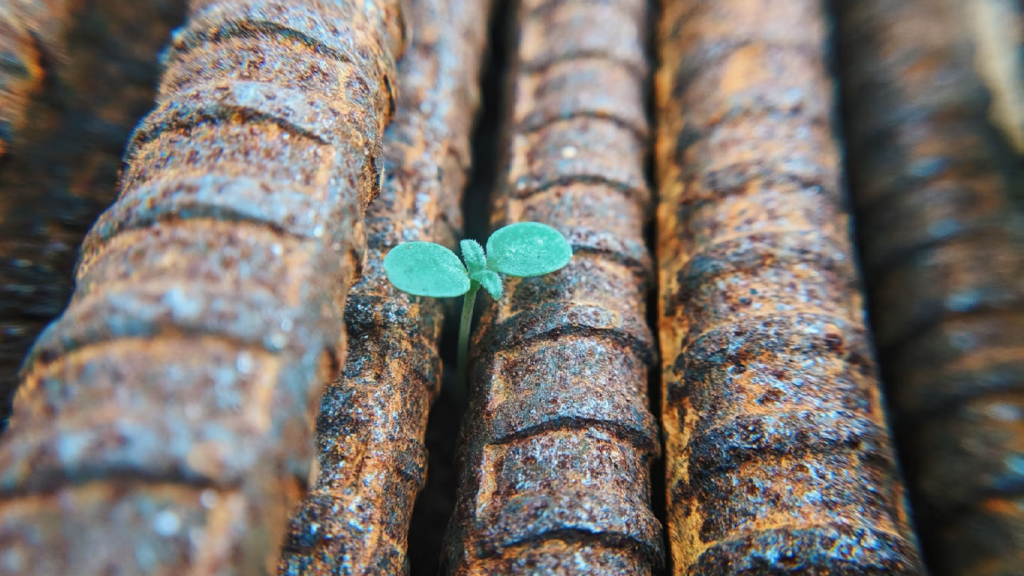
The only adequate response to the ongoing gift of life is gratitude. We did not bring ourselves into existence, nor did we earn the fundamental goods that make our lives possible. Our health, abilities, relationships, faith and opportunities all rest upon gifts that came before our own efforts. St. Paul asks, “What do you have that you did not receive?” That question places our whole life in its proper perspective. We are not self-created or self-sufficient. Everything good in us has first been received, even when our own effort has been necessary to develop it.
St. Anthony of Padua expressed this truth forcefully when he taught that we should attribute to God every good we have received rather than claiming as our own what ultimately comes from him. This does not deny human merit or the importance of hard work. We really do make choices, develop talents and accomplish things through perseverance. Yet the very capacity to work, think, choose and persevere is itself a gift. Gratitude allows us to take legitimate satisfaction in what we accomplish without falling into the illusion that we are the ultimate source of our own good.
Giving thanks reminds us that life itself is an extraordinary privilege. We can become so accustomed to being alive that we cease to experience existence as gift. G. K. Chesterton captured this sense of wonder when he observed that we readily thank people for ordinary presents, yet often fail to ask whom we should thank for the far greater “birthday present of birth.” We have eyes that see, ears that hear, minds that think, people who love us and a world filled with things we did not create. Much of our unhappiness comes not from possessing too little but from failing to appreciate what we already possess.
Gratitude therefore has a close relationship with joy. Joy does not depend simply on accumulating more. A person can possess a great deal and remain dissatisfied because attention is fixed on what is missing, while another person with far less can experience life as abundant. Gratitude changes our way of seeing. Once we begin deliberately thanking God, we discover that his gifts surround us far more completely than we had noticed.
This discovery also makes us humble. Gratitude reminds us how much we depend upon God and upon other people. None of us has educated, healed, fed, protected or formed himself entirely alone. Parents, teachers, friends, priests, doctors, colleagues and countless people we may never meet have contributed to the life we now live. Even the most ordinary things we use each day are the fruit of someone else’s labour. To recognize this dependence does not diminish us. It places us within the communion for which we were created.
Gratitude is therefore the opposite of entitlement. A sense of entitlement tells us that good things are simply what we deserve, while every difficulty is an intrusion that should not have occurred. If we live this way, blessings quickly become invisible. We accept them as normal and reserve our attention for whatever is inconvenient, disappointing or painful. The grateful person sees the same reality differently. He recognizes that much of what he receives is gift and learns not to become accustomed to God’s generosity.
There are also gifts we never see. We can thank God for dangers from which he has protected us, temptations that never reached us, trials he did not permit and burdens that might have been beyond our strength. We do not know how often providence has redirected events without our awareness. We can also thank him for the good he accomplishes through us without our knowing it. A word, an example or a small act of service may have helped another person in ways we will never discover in this life.
For this reason, gratitude is more than making a list of blessings. Counting our blessings is useful, especially when discouragement narrows our attention, but gratitude can become a settled disposition of mind and heart. We begin to receive reality with a sense of wonder. Ordinary things regain their value because we no longer assume that they simply had to be there. Life itself becomes something received rather than possessed as an unquestioned right.
The liturgy teaches us this disposition with particular clarity. At Mass the priest says on behalf of the whole Church that it is “truly right and just, our duty and our salvation, always and everywhere” to give thanks to God. The words are striking: always and everywhere. Thanksgiving is not reserved for days when everything has gone according to our plans. It belongs to Christian life in every circumstance because God never ceases to be our Father and never ceases to work for our good.
St. Paul likewise tells us to “give thanks in all circumstances.” The Catechism explains that every joy and suffering, every event and need, can become matter for thanksgiving when united with Christ. This does not mean that suffering is good in itself or that we should pretend to enjoy what is painful. Christianity never asks us to call evil good. It teaches instead that no circumstance lies outside the reach of God’s providence and grace.
The Cross makes this possible. God sometimes blesses us through things we would never have chosen. A cross can purify us, detach us from illusions, strengthen us and draw us into deeper union with Christ. It can also make us more capable of understanding and serving others. We may not see any of this while we are suffering, and we should be cautious about offering easy explanations for another person’s pain. Yet faith allows us to trust that God can bring a greater good even from circumstances that remain difficult and mysterious.
This is why Christian gratitude can coexist with tears. We can grieve a loss, ask God to remove a burden and still remain grateful. Thanksgiving is not an emotional denial of pain. It is an act of faith that recognizes that God’s goodness is larger than the present difficulty. We may not yet understand what he is doing, but we know whom we have trusted.
St. Bernadette of Lourdes gives us a remarkable example of this spirit. Looking back over her life, she thanked God not only for consolations but also for poverty, misunderstanding, humiliation, illness and spiritual dryness. Such thanksgiving should not be interpreted as a love of suffering for its own sake. Bernadette had learned to see her whole life, including what had wounded and purified her, within the providence of God. She could thank him because she trusted that nothing surrendered to him was wasted.
This kind of gratitude is very different from a superficial optimism that insists everything is fine. It is rooted in the Paschal mystery. The worst apparent defeat in human history, the crucifixion of Christ, became the means of redemption. God did not make the injustice, cruelty and sin involved in the Passion good; he brought from them a good infinitely greater than the evil. The Cross therefore gives Christians a reason for hope even when we cannot yet see how a particular suffering will be redeemed.
Gratitude also opens us more fully to grace. St. Thérèse of Lisieux spoke with characteristic simplicity about the way thanksgiving seemed to draw an overflow of divine gifts into her life. Her point was not that gratitude makes a reluctant God more generous. God is already infinitely generous. Rather, thanksgiving makes us more receptive. It turns our attention away from ourselves and toward the love that is continually being offered to us.
Jacques Philippe makes the same point when he explains that gratitude is a sign that we have truly recognized and welcomed God’s love. Complaint, jealousy and defensiveness can close the heart because they keep us focused on what we believe we have been denied. Gratitude opens the heart by helping us recognize what has already been given. The more clearly we perceive God’s generosity, the more confidently we can receive what he wishes to give next.
The Gospel account of the ten lepers illustrates this difference. All ten were healed, but only one returned to Jesus. The Samaritan’s gratitude led him back to the source of the gift, and there he received something more. Christ said to him, “Rise and go your way; your faith has made you well.” The other nine received physical healing, but the grateful man entered into a deeper encounter with Christ.
Ingratitude, by contrast, can leave us spiritually impoverished even while we possess many gifts. We may receive blessings without allowing them to lead us toward the Giver. We enjoy the benefit and continue on our way. Gratitude turns us around. Like the Samaritan, we return to Christ and recognize that the gift is an invitation to communion.
Even thanksgiving itself can become distorted if pride remains at its centre. The Pharisee in the Gospel thanked God that he was not like other people, but his words were not true gratitude. He was really congratulating himself. Genuine thanksgiving recognizes our dependence upon God and makes us more compassionate toward others, not more convinced of our superiority.
A grateful person therefore tends to become more outward-looking. When we know ourselves to be recipients of generosity, we become more willing to be generous. We are less inclined to hoard our time, attention or possessions because we no longer experience life as something we must secure entirely for ourselves. Gratitude makes it easier to give because we know that we have first received.
This is why grateful people often bring a certain lightness to those around them. They are not blind to suffering or injustice, but they do not allow hardship to become the whole meaning of reality. Chesterton wrote that the world is “more full of glory” than we understand. Gratitude helps us perceive that glory without denying the world’s wounds.
A grateful person also becomes more merciful. If we recognize how patiently God has dealt with our weakness, we become less harsh toward the weakness of others. If we know how often we have been forgiven, helped and carried, we are more ready to forgive and help in turn. Gratitude received becomes grace given.
For this reason, gratitude should not remain merely an interior feeling. The grateful Samaritan acted. He turned around, returned to Jesus, praised God and fell at Christ’s feet. His gratitude took visible form. Our thanksgiving likewise becomes more complete when it moves us to make some return.
We can never repay God in the strict sense. Everything we might offer him is already his gift. A simple childhood story captures this beautifully. A father cuts a flower from his garden, gives it to his son and asks the boy to take it to his mother. The child proudly presents the flower as though it were his own gift. Yet even his ability to give has first been given to him. God treats us in a similar way. He gives us life, talents, time and grace, and then allows us the dignity of offering these gifts back to him through love and service.
Gratitude therefore finds a natural expression in self-giving. Instead of merely saying “thank you,” we ask how the gifts we have received can become gifts for others. If we are grateful for our education, we can use what we know in service. If we are grateful for friendship, we can become more faithful friends. If we are grateful for forgiveness, we can forgive. If we are grateful for our faith, we can help others encounter Christ.
This gives gratitude a practical role in the struggle for holiness. Grand resolutions often fade because they depend too much on enthusiasm. Gratitude provides a more stable motive. We can ask ourselves in a difficult moment: How can I show God here and now that I am grateful? The answer may be very simple. We can complete a duty well, be patient with someone, resist a temptation, make an act of service or accept an inconvenience without complaint.
The important thing is to act while the grace is present. We do not need dramatic gestures or promises about what we will do years from now. A small act performed promptly can be a more authentic expression of gratitude than an ambitious resolution that never becomes concrete. Thanksgiving then enters ordinary life and begins to shape our choices.
A habit of gratitude can also protect us against discouragement and self-pity. When we are discouraged, our attention often contracts around what is wrong. We begin to interpret our whole life through a single failure, disappointment or difficulty. Gratitude widens the field of vision. The problem remains real, but it is no longer the only reality.
This does not mean using gratitude to avoid necessary action. If something is wrong, we may need to correct it. If we have sinned, we need repentance. If another person is suffering injustice, charity may require intervention. Gratitude is not passivity. It gives us a more truthful foundation from which to act because we are not driven solely by resentment or fear.
It can also deepen sorrow for sin. When we become more aware of how much God has given us, sin appears not only as the breaking of a rule but as a failure to respond to love. We see more clearly the generosity against which we have turned. Repentance then becomes less centred on ourselves and more rooted in the desire to return love for love.
The story of the Fall can be understood in part as a failure of gratitude. Adam and Eve were surrounded by gifts, yet the serpent drew their attention to the one thing they were told not to take. Instead of living from abundance, they began to experience themselves as deprived. Once they distrusted God’s generosity, disobedience became easier.
The same dynamic appears in our own temptations. We can forget everything God has given and focus intensely on what we believe we are missing. We tell ourselves that happiness depends on possessing this one thing, receiving this recognition or escaping this particular limitation. Gratitude breaks the spell by reminding us that God has already shown himself trustworthy.
This is especially important when we compare ourselves with others. Comparison makes us conscious of gifts we do not possess and can blind us to those we do. Someone else has greater ability, better health, more recognition or circumstances we would prefer. If we remain fixed on the comparison, resentment grows.
Gratitude helps us receive our own life. God has not given everyone the same gifts or the same path. We can work to improve what should be improved and pursue legitimate goals without treating another person’s blessings as evidence that we have been neglected. We can rejoice in what God has given others while learning to recognize what he has entrusted to us.
A vivid reflection on true wealth makes this point well. A man reads a list of the world’s richest people and realizes that his name is absent, yet on reflection he sees himself as immensely rich. He has life, health, family, friends, a home, books, eyes that see, ears that hear, feet that walk and hands that can show affection. His wealth lies in realities so familiar that financial rankings cannot measure them.
We often need this kind of reorientation. The most valuable things in our lives may be the very things we notice least because they are always present. We become conscious of our eyesight when it begins to fail, of mobility when walking becomes difficult, of friendship when someone moves away, and of health when illness arrives. Gratitude teaches us to appreciate gifts before loss teaches us their value.
This is one reason a daily practice of thanksgiving can be so fruitful. We can spend a few minutes in prayer recalling the blessings and mercies of the previous day. The point is not to force a particular emotion but to train our attention. We ask ourselves where we encountered goodness, help, beauty, grace or an opportunity to love.
At first the exercise may seem repetitive. We may thank God for the same people and ordinary circumstances each day. Yet repetition does not make the gifts less real. In fact, the things for which we repeatedly give thanks are often the foundations of our life.
After recalling what we have received, we can ask how our gratitude should take concrete form. Is there someone we should thank, encourage or help? Is there a duty we should perform more generously? Is there a person whose goodness we have been taking for granted? Gratitude becomes especially fruitful when memory leads to action.
We should express our thanks to people as well as to God. Much of God’s goodness reaches us through human hands. We may feel grateful toward parents, teachers, friends, colleagues or those who have helped us spiritually, but gratitude that is never expressed remains incomplete. A simple word of thanks can reveal to someone that his effort has been seen and valued.
We should be particularly attentive to those closest to us. Familiarity easily makes daily acts of service invisible. We may thank a stranger for a small courtesy while failing to thank the people who care for us every day. Gratitude in family and community life creates an atmosphere in which people know that their sacrifices are recognized.
Prayer is also a powerful way to thank our benefactors. Some gifts can never be adequately repaid. We may owe much of our faith, education or personal growth to people who have given us something beyond calculation. We can ask God to reward them and give them the graces they need.
The Eucharist brings all these dimensions of gratitude together. The very word *Eucharist* means thanksgiving. In the Mass, Christ’s perfect thanksgiving and self-offering to the Father become the centre of the Church’s worship. We bring our lives, work, joys, sufferings and needs and unite them with his sacrifice.
This teaches us that the deepest form of gratitude is not simply to say thanks but to offer ourselves. Christ gives himself completely to the Father and to us. Our response is to place our own life at his disposal. Thanksgiving becomes a way of living when we receive everything from God and return everything to him through love.
After Holy Communion, this response becomes intensely personal. Christ has given us not merely a blessing but himself. We can remain with him in thanksgiving without searching for elaborate words. Sometimes gratitude is almost wordless. We simply recognize the gift and allow ourselves to be present before the Giver.
This deeper gratitude can gradually become an attitude that accompanies the whole day. We notice a beautiful morning, a helpful conversation, work completed, an unexpected kindness or strength given in a difficult moment. We do not need to interrupt everything with formal prayers. The heart can simply turn toward God in recognition.
We can also thank him for what we do not see. We will never know in this life all the ways he protected, guided and sustained us. We do not know how much good he has done through our actions without our awareness. Gratitude therefore includes an element of trust. We thank God for blessings known and unknown.
At the end of the day, a simple prayer can gather everything together: Thank you, Lord, for everything. We thank him for what was joyful and for the grace that sustained us in what was difficult. We thank him for the people who helped us, for the good we were able to do and even for opportunities we failed to use well, because his mercy allows us to begin again.
To say “for everything” does not mean that we approve of every evil or understand every suffering. It means that we place the whole day within God’s providence. Nothing needs to be excluded from prayer. What was good can become praise, what was painful can become trust, and what was sinful can become repentance and a new beginning.
As this habit grows, gratitude becomes less dependent on mood. We do not have to wait until we feel grateful. We can choose to recognize reality truthfully. Feelings may follow, but the act of thanksgiving is already valuable because it directs us toward God.
Over time, gratitude changes the texture of Christian life. We complain less because we notice more. We become less resentful because we remember what we have received. We become less self-centred because thanksgiving turns our attention outward toward the Giver and toward the people through whom his goodness reaches us.
We also become freer. A person consumed by what he lacks is easily controlled by desire, comparison and disappointment. Gratitude loosens this grip. It helps us enjoy what we have without clinging to it and pursue what is good without believing that our happiness depends entirely on obtaining it.
The saints understood this freedom. Their gratitude was not based on easy lives. Many endured poverty, illness, misunderstanding and severe trials. They learned to recognize God’s love beneath circumstances that did not always feel like blessings. Their thanksgiving was therefore an expression of faith.
We may not yet be able to thank God with the radical simplicity of St. Bernadette for every humiliation or suffering. Christian growth is gradual, and we should not force words that are not yet sincere. We can begin more simply by asking for the grace to trust God within what we do not understand.
Perhaps we can say, “Lord, I do not see the good in this, but I know that you are with me. Help me to receive whatever grace you want to give through it.” Such a prayer is already the beginning of thanksgiving because it refuses to separate suffering from God’s loving providence.
Gratitude ultimately rests on the conviction that we are loved. If we believe that God is indifferent or hostile, thanksgiving will always feel artificial. But if we know that he has created us, redeemed us and given himself for us, then gratitude becomes the natural response to a love that precedes everything we do.
The Cross is the definitive proof of that love. Whatever remains unexplained in our lives, we can look at Christ crucified and know that God has not remained distant from human suffering. He entered it and transformed it from within. The Resurrection assures us that suffering and death do not have the final word.
For this reason, Christian gratitude is inseparable from hope. We give thanks not only for what we can already understand but because we trust the final meaning God is giving our life. Some gifts will become clear only in eternity. Some prayers may be answered in ways we recognize only much later.
Until then, we can cultivate the habit of receiving each day as gift. We can thank God for the obvious blessings, for the hidden ones, for the people through whom he helps us and for the grace that accompanies our crosses. We can make our gratitude concrete through service and generosity.
The more we do this, the more we discover that gratitude does not impoverish our desire for greater things. It purifies desire. We can still hope, strive and ask for what we need, but we do so from a foundation of abundance rather than resentment. We know that we have already received far more than we could ever claim as our due.
The only intelligent response to the ongoing gift of life is therefore gratitude. We have received existence, redemption, grace and a thousand daily gifts that pass almost unnoticed. We have also received the extraordinary dignity of being able to return those gifts to God through our own freedom.
Like the child who proudly gives his mother the flower his father first placed in his hands, we offer God what he has already given us. Our prayer, work, service, sacrifice and love are all made possible by grace, yet God accepts them as our genuine gift. Even the ability to thank him is itself something for which we can be grateful.
A grateful life becomes a continual movement of receiving and giving. We receive from God, recognize his goodness, and respond by giving ourselves to him and to others. Then thanksgiving ceases to be an occasional prayer after something pleasant happens. It becomes the underlying attitude of our Christian life.
We can ask God for this grace each day: to notice more, complain less, remember his gifts and respond generously. We can ask him never to let familiarity make us indifferent to the extraordinary gifts of faith, the sacraments, our vocation and the people he has placed beside us.
If we learn to live this way, even ordinary days acquire a new depth. Nothing needs to be spectacular. The gift is already present in being alive, being loved, having another opportunity to serve and knowing that God is near. Gratitude allows us to recognize this and to answer, with our words and with our life: Thank you, Lord, for everything.
By the Via Virtutis team
Photo by Megan Watson on Unsplash