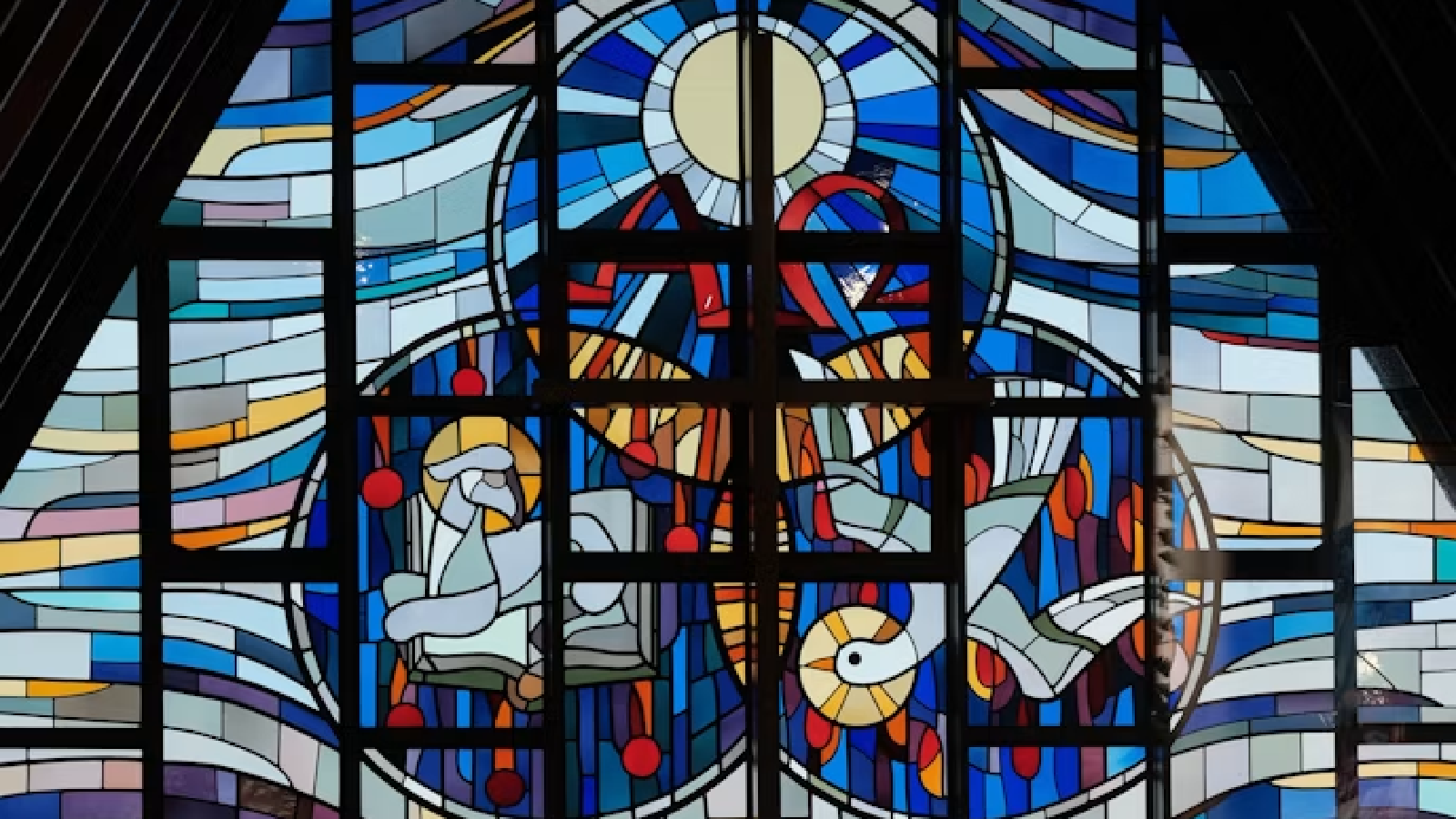
One of the greatest truths of the Christian faith is also one of the easiest to take for granted: through grace, we have become children of God. St. John expresses it with wonder: “See what love the Father has given us, that we should be called children of God; and so we are.” These words do not describe a beautiful metaphor or simply a way of speaking about God’s affection for us. They reveal a supernatural reality that changes our relationship with God and should gradually transform the way we understand our whole life.
Jesus Christ is the Son of God by nature, the only-begotten Son, eternally begotten of the Father and consubstantial with him. Our sonship is different. We are creatures, yet God has freely chosen to make us his adopted children through grace. St. Peter says that we become “partakers of the divine nature.” God does not destroy or replace our human nature but elevates it, drawing us into the life of the Blessed Trinity. Through Christ and in the Holy Spirit, we are admitted into an intimacy with God that we could never have attained by our own powers.
This divine filiation is given to us in Baptism and rests upon sanctifying grace. It is therefore far more than the natural relationship every creature has with the Creator. God loves everything he has made, and every human being is created in his image and called to communion with him. But through grace we receive a new supernatural life. We become members of God’s household and can address him, in a profound and real sense, as Father.
St. Paul understood the immensity of this gift from his own experience. He never forgot that he had once persecuted Christians, yet Christ called him, forgave him and entrusted him with the mission of an Apostle. Rather than remaining imprisoned by his past, Paul marvelled at the abundance of grace he had received. Something similar should happen in us. Awareness of our sins and limitations should lead us to humility, but it should never obscure the greater truth of what God has done. We have been created, redeemed and called into his family.
Our divine filiation should therefore become one of the foundations of our interior life. Prayer changes when we know that the God to whom we speak is our Father. We certainly continue to adore him as Creator and Lord, but reverence is joined to filial confidence. We do not approach an impersonal force or a distant sovereign. We come before Someone who knows us completely, loves us personally and desires our good more deeply than we ourselves do.
This changes the way we understand the struggle for holiness. The Christian life can sometimes be reduced in our minds to a programme of self-improvement. We identify defects, make resolutions and measure our progress, gradually becoming discouraged when we discover that the same weaknesses continue to appear. But holiness is not primarily a solitary effort to perfect ourselves. It is the life of a child who allows the Father to transform him through grace.
We still have to struggle. Divine filiation does not remove the need for effort, self-denial or conversion. A child of God can sin and must continually return to the Father. Yet the struggle takes place within a relationship of love. We try to overcome our defects not because we need to prove our worth but because we want to please the Father who already loves us. This gives Christian asceticism a very different spirit. We can be demanding with ourselves without becoming anxious or harsh because our hope rests more in God’s grace than in our own performance.
The Holy Spirit enables us to live this reality. St. Paul teaches that we have received the Spirit of adoption by whom we cry, “Abba! Father!” The Spirit bears witness that we are children of God and gradually forms in us the likeness of Christ, the Son. St. Thomas Aquinas explained that our adoption is the work of the whole Trinity: the Father is its source, the Son is the model according to whom we are made children, and the Holy Spirit impresses that likeness within us.
To live as a child of God therefore means becoming more like Christ. Jesus shows us what perfect sonship looks like. His whole life is directed toward the Father. He seeks the Father’s glory, trusts his will and remains obedient even when obedience leads through suffering and death. If we are children in the Son, our own life must gradually acquire the same orientation.
This does not mean that we will always understand God’s will. There are moments when events seem incomprehensible and we cannot see how they fit within his providence. Illness, disappointment, injustice, failure and the suffering of people we love can shake us deeply. We may know intellectually that God is our Father while emotionally feeling abandoned or confused.
Divine filiation becomes especially important at such moments. Trust in God does not mean pretending that suffering is not painful or calling evil good. Christ himself experienced anguish in Gethsemane and prayed that the chalice might pass from him. Yet he added, “Not my will, but yours, be done.” His abandonment to the Father did not eliminate suffering; it gave him the strength to pass through it in love.
We can learn to respond in the same way. When we cannot understand what God permits, we can still remain in his hands. We may tell him frankly that we are afraid, hurt or confused. Filial prayer allows this sincerity because a child does not need to hide his distress from a loving father. We then try to add, even if it costs us: “Father, I do not understand, but I trust you.”
An old story gives a simple image of this confidence. During a violent storm at sea, the passengers and sailors were terrified, but a child continued playing without apparent concern. When someone later asked how he had remained so calm, he replied that his father had been the captain. The storm was real, and the danger was not imaginary, but the child’s knowledge of who was at the helm changed the way he experienced it.
Our confidence in God is deeper still. We do not believe that being his children means nothing painful will happen to us. The lives of Christ, Our Lady and the saints make that impossible to maintain. We believe instead that no circumstance escapes the Father’s providence and that he can bring a greater good even from what is painful or evil. Our life remains in his hands whether the sea is calm or the storm is raging.
This conviction gives us a profound basis for peace. Much of our anxiety comes from the desire to control what cannot be controlled. We want to know how everything will turn out and to protect ourselves from every possible loss. Prudence requires us to plan and act responsibly, but eventually we reach the limits of our foresight and power. Divine filiation allows us to entrust what lies beyond those limits to our Father.
This abandonment is not passivity. A child of God works, struggles, makes decisions and uses all legitimate human means. But after doing what can reasonably be done, we do not need to carry the whole weight of the future on our shoulders. God remains God, and we remain his children.
The awareness of divine filiation can also transform the way we respond to our own failures. When we sin or fall through weakness, our instinct may be to withdraw from God because we feel ashamed or unworthy. Yet a child who falls does not cease to be a child. If we have sinned seriously, we need repentance and the sacrament of Reconciliation, but the right response is to return to the Father rather than hide from him.
The parable of the prodigal son reveals this beautifully. The younger son leaves home, wastes his inheritance and eventually recognizes the misery into which he has fallen. He prepares a speech in which he intends to say that he is no longer worthy to be called a son. But the father sees him from a distance, runs to meet him and restores him to the household. The son’s sin was real, and repentance was necessary, but the father’s love was greater than the son’s failure.
Remembering that we are children of God therefore protects us from discouragement. We may have to begin again many times. We may discover weaknesses that embarrass us or realize that our progress is slower than we hoped. None of this should surprise God’s children. Our Father knows what we are made of. He asks for sincerity, humility and perseverance, not the illusion that we can make ourselves perfect without his grace.
Divine filiation also teaches us how to receive correction. If our identity rests mainly on our accomplishments or on the image others have of us, criticism can feel like a threat to our worth. But our deepest dignity does not depend on always being right or appearing successful. We are children of God before we achieve anything. This security makes it easier to admit mistakes, learn from others and accept the humiliation that sometimes accompanies growth.
The same truth gives meaning to our ordinary work. A child naturally wants to please a loving father. When we know ourselves to be God’s children, our daily duties can become offerings of love. Work is no longer merely a way of earning money or achieving recognition. Study, professional responsibilities, family tasks and apparently insignificant duties can all be done in the presence of the Father and offered to him.
This gives unity to Christian life. We do not live one part of the day for God and another part for ourselves. A child does not cease to belong to his family when he leaves the house. In the same way, we remain children of God at work, at home, in recreation and in our relationships with others. Every circumstance can become a place of encounter with the Father.
Knowing that God is our Father also changes the way we look at other people. Divine filiation is inseparable from fraternity. If God is our Father, those who share his supernatural life are truly our brothers and sisters in Christ, and every human being we meet is created and loved by God and called to enter his family.
This should affect our judgments. We easily notice the faults of others while overlooking our own. Our Lord warns us about seeing the speck in our brother’s eye while ignoring the beam in our own. The problem is not that we should become incapable of recognizing faults or exercising prudent judgment. We need instead to learn to look at people with the eyes of Christ.
A person’s weakness is never the whole truth about him. Someone may be difficult, inconsiderate or deeply flawed, but he remains a person loved by God. If he is a Christian living in grace, he is also a child of the same Father. Remembering this can soften our judgments and make us more patient without requiring us to deny reality.
Christian fraternity is lived through ordinary details. It appears in the way we speak about others, the patience with which we listen and the readiness to help when someone needs us. It may require us to overlook an irritating habit, forgive an offence or make a sacrifice that no one else notices. The first Christians became known for the love they had for one another because their faith in Christ created a new family that crossed ordinary social divisions.
Our sense of fraternity cannot stop with those we naturally like or those who share our background. God’s love is wider than our preferences. Every person is created in his image and called to the intimacy of his household. A genuine awareness of divine filiation therefore expands our heart and gives an apostolic dimension to our life. We want others to discover the Father we have discovered.
Apostolate then becomes something more than persuading people to accept religious ideas. We are helping them encounter the God who loves them as a Father and calls them into communion with him. We want them to know Christ because through Christ the deepest identity of the human person is revealed and elevated. We have received a gift that naturally seeks to be shared.
Divine filiation also gives us a healthy sense of our own dignity. Christian humility does not require us to think badly of ourselves. We know that everything good in us is received, but what we have received is astonishing. God has created us in his image, redeemed us through Christ and made us his children by grace. We can therefore be humble without becoming timid or insecure.
St. Josemaría often encouraged Christians to draw strength from this truth and to call God “Father” frequently throughout the day. This simple practice can change our perspective. When we are worried, we can say, “Father, I trust you.” When we receive something good, “Thank you, Father.” When we fail, “Father, forgive me and help me begin again.” When we face a difficult task, “Father, I cannot do this well without you.”
These brief acts remind us that we are never spiritually alone. God is not merely present at certain explicitly religious moments. We live continually under his loving gaze. His presence is not the surveillance of a suspicious judge but the attentive care of a Father who wants us to grow into the fullness of life he has prepared for us.
This filial spirit also gives us freedom. If our Father is God, we do not need to seek our ultimate security in wealth, status, popularity or human approval. These things may have legitimate value, but they cannot give us our deepest identity. We already possess a dignity that the world did not give and cannot take away.
The saints often possessed this remarkable freedom. They could endure misunderstanding, failure and even persecution without losing their fundamental peace because their life was anchored elsewhere. Their confidence did not come from believing themselves invulnerable. It came from knowing to whom they belonged.
Our Lady is the perfect human model of this abandonment. Her entire life is a response to God’s initiative. At the Annunciation she does not know everything that her yes will involve, but she entrusts herself to God: “Let it be done to me according to your word.” She continues in that trust through Bethlehem, the flight into Egypt, the hidden years of Nazareth and finally Calvary.
Mary’s faith was not protected from darkness. She stood beneath the Cross when everything seemed to contradict the promises she had received. Yet she remained faithful. As our Mother, she teaches us that filial abandonment does not require understanding everything. It requires knowing the One in whom we have placed our trust.
We can ask her to help us live more consciously as children of God. This awareness should not remain an abstract doctrine remembered only when we study theology. It should enter our prayer, our work, our struggles and the way we treat others. It should shape how we face uncertainty and how we recover after failure.
The more deeply divine filiation takes root in us, the more naturally we will live with serenity and hope. We will still experience suffering, temptation and confusion, but they will no longer have the final word. Beneath everything remains the certainty that we belong to God.
We are not strangers trying to earn admission into his household. In Christ, by grace, we have been welcomed into the family. God is our Father. Christ is our Brother and the perfect model of our sonship. The Holy Spirit dwells within us and forms us increasingly in the likeness of the Son.
From this truth flows a whole way of living. We pray with confidence, struggle without discouragement, work in the Father’s presence and return quickly when we fall. We look upon others with greater charity because we recognize their dignity before God. We face the future without needing to control everything because we know whose hands hold our life.
To live by divine filiation is ultimately to learn to see everything from within the relationship Christ has opened for us with the Father. It is to pass through life with the confidence of children who know they are loved. Whatever happens, whether the sea is calm or the storm is raging, our Father remains at the helm.
By the Via Virtutis team
Photo by Dominic Kurniawan Suryaputra on Unsplash


