The Church repeatedly invites us to become like children before God. St. Peter urges us to long for pure spiritual milk like newborn infants, while Our Lord tells Nicodemus that no one can see the Kingdom of God unless he is born anew. Nicodemus is puzzled because he understands Christ’s words in a merely physical sense. Jesus is speaking, however, of a new life brought about by grace, in which we recover the simplicity, trust and dependence of a child while retaining the judgment and responsibility of an adult. Spiritual childhood does not ask us to return to immaturity. It calls us to recognise the truth of our relationship with God: He is our Father, and we are His children.
Our Lord states this teaching with great force: “Unless you turn and become like children, you will never enter the kingdom of heaven.” St. John Chrysostom points to simplicity, sincerity and humility as qualities that children possess naturally and that prepare us for a filial relationship with God. A small child does not pretend to be self-sufficient. He knows that he depends upon his parents and instinctively turns to them for help, protection and guidance. We must learn to approach God in the same way. The more clearly we recognise our need for Him, the more freely His grace can work in us. St. Paul expresses this paradox when he says, “When I am weak, then I am strong.” Our weakness becomes a source of strength when it leads us to rely upon God rather than upon ourselves.
The world generally associates maturity with independence. A mature person is expected to be capable, self-reliant and able to manage life without needing assistance. There is truth in this at the human level, since we must learn to assume responsibility and use our abilities well. Yet before God we never cease to be dependent creatures. Every moment of our existence is sustained by Him, and every good thing we possess has first been received from His hands. Christian maturity therefore does not consist in becoming independent of God but in becoming increasingly conscious of our dependence upon Him. We grow spiritually when we stop behaving as though everything rested upon our intelligence, determination or strength and begin to live as sons and daughters who trust their Father.
This awareness of our littleness does not lead to discouragement. On the contrary, it fills us with confidence. If we relied only upon ourselves, our weakness would give us every reason to be afraid. Once we understand that God is our Father, however, we no longer measure what is possible solely by our own resources. Our wisdom and strength lie in knowing that we are small and that He is infinitely great. He asks us to work, to struggle against our defects, to learn how to do good and to help others do the same, but He does not ask us to accomplish these things alone. His grace goes before us, accompanies us and brings our efforts to fulfilment.
Spiritual childhood must never be confused with passivity or a refusal to accept responsibility. To abandon ourselves to God does not mean waiting lazily for Him to do everything while we make no effort. A child who trusts his father is not necessarily inactive. He may be energetic, adventurous and eager to help, precisely because he feels secure in his father’s presence. In the same way, those who truly know themselves to be children of God should be ready to undertake demanding work and to face difficulties courageously. They do not depend upon their own strength, but neither do they use their weakness as an excuse for inaction.
St. Josemaría illustrated this truth with an incident he witnessed on a beach near Valencia. As evening approached, a group of fishermen came ashore and began hauling in a heavy net. Their bodies were hardened by years of labour at sea, and they strained with all their strength as their feet sank into the sand. A very small boy suddenly appeared, took hold of the rope with his little hands and began pulling beside them. His effort contributed almost nothing to the work and may even have been a slight hindrance, yet the fishermen allowed him to remain. They were moved by his eagerness to share in their labour.
That child gives us a vivid picture of our own efforts in God’s service. We too spend our days pulling on the rope through our work, prayer, apostolate and struggle for holiness. When we look only at our limitations, we may feel that our contribution is insignificant. Yet God does not despise our small efforts. He asks us to take hold of the rope and give what we can, while He supplies the strength that we lack. The child on the beach could not haul the net ashore by himself, but he could genuinely participate in the work of the fishermen. In the same way, God allows us to participate in His work even though He remains the source of every lasting fruit.
A child is the clearest image of dependence. He cannot provide for himself or find his way through the world without help. Our situation before God is no different. Christ tells us plainly, “Apart from me you can do nothing.” These words are not meant to humiliate us but to free us from an impossible burden. We were never created to live apart from God or to achieve holiness through our own powers. At the same time, because we are His children, we can also repeat with St. Paul, “I can do all things through him who strengthens me.” Both statements are true. Without Christ we can do nothing, but with Him our weakness no longer sets the limits of what His grace can accomplish.
Our divine filiation gives us a basis for hope that does not depend upon changing circumstances. We can face difficulties with greater serenity because the outcome of our lives is not governed by blind chance. God remains our Father when events go according to our wishes and when they do not. He is present in our successes and in our failures, and His providence can bring good even from circumstances that we do not understand. This confidence does not remove suffering or eliminate the need for effort, but it prevents fear from having the final word.
The child of God can therefore be daring. Children often ask for things that adults would consider impossible, and they readily begin tasks without calculating every obstacle in advance. Their boldness can be imprudent when it is guided only by natural impulse, but when childlike daring is united to good judgment, formation and grace, it becomes a powerful force in the Christian life. St. Josemaría described the apostle as a person who combines the audacity of a child with love for Christ, a desire to do God’s will and all the human preparation he is capable of acquiring. We should not allow an exaggerated awareness of our defects to make us timid in God’s service. If He asks something of us, He will also provide the grace we need to carry it out.
This childlike spirit is fully compatible with mature thought and responsible conduct. St. Paul tells us to be children in evil but mature in our thinking. We should be innocent of malice without being naïve, trusting without being careless and simple without being foolish. Spiritual childhood does not excuse poor judgment, emotional instability or a failure to meet our obligations. It shapes the deepest part of our relationship with God. In the ordinary affairs of life we must use our intelligence, acquire experience and make prudent decisions, while in our prayer we stand before the Father with the openness and confidence of a child.
One of the most beautiful features of childhood is the way children recover from their falls. A small child is continually losing his balance, yet most of his falls are soon forgotten. He cries for a moment, receives reassurance from his parents and begins running again. An adult who falls may be injured seriously and can become embarrassed by the incident. Something similar can happen in the spiritual life when we become too conscious of our own dignity or too convinced of our strength. We are shocked by our failures because we imagined that we had already outgrown such weaknesses. Instead of turning immediately to God, we may brood over the fall, become ashamed of ourselves or sink into discouragement.
A childlike soul reacts differently. We should feel genuine sorrow for our sins, since love cannot remain indifferent when God has been offended. Yet sorrow is not the same as bitterness. After a fall, we return to our Father, ask forgiveness and begin again. We do not deny the seriousness of sin, but neither do we act as though our weakness were greater than God’s mercy. The child knows that his parents are nearby to console and lift him. In the same way, we should live with a constant awareness that God is ready to forgive us whenever we approach Him sincerely.
Our repeated failures can even help us grow in holiness when they deepen our humility and trust. We may wish that our defects would disappear more quickly, and we should struggle perseveringly against them. Yet God sometimes allows us to experience our weakness so that we do not build our spiritual life upon pride. A person who has never become conscious of his own frailty can easily judge others harshly or attribute his progress entirely to personal effort. The experience of falling and being forgiven can make us more compassionate, more patient and more convinced of our need for grace.
Serious falls often begin when we think of ourselves as spiritually grown-up and self-sufficient. Pride convinces us that we no longer need advice, correction or support. We may become reluctant to ask for help from God, from a priest or from a trusted friend because admitting our difficulty seems humiliating. Left alone, we can easily become confused and lose our sense of direction. Spiritual childhood protects us from this isolation by teaching us to seek help naturally. A child does not regard dependence as shameful. He asks because he knows that he is in need.
We should therefore cultivate a real hunger for God’s assistance, His word, the Eucharist, His consolation and His strength. This desire is one of the best remedies for pride. As long as we imagine ourselves self-sufficient, our spiritual life remains closed in upon itself. Once we acknowledge our need, we become receptive to grace. We begin to pray more sincerely, to listen more carefully and to accept formation with greater docility. Our conduct then becomes not smaller or more timid, but more generous and more deeply Christian.
Devotion to Our Lady has an essential place in this path. Mary is the Mother of Jesus and our Mother, and she teaches us how to live as children in God’s presence. Her own greatness was inseparable from her humility. She knew that God had done great things for her, yet she never treated His gifts as personal possessions or reasons for self-exaltation. Her confidence was rooted entirely in Him. When we draw close to Mary, we learn to approach God with the same filial trust and to place our lives in His hands.
The Gospel scene in which mothers bring their children to Jesus reveals how warmly Our Lord welcomes those who come to Him with a childlike heart. St. Mark tells us that the disciples tried to prevent the children from approaching, perhaps because they wished to protect the Lord from the disorder of the crowd. Jesus was displeased and said, “Let the children come to me; do not hinder them, for to such belongs the kingdom of God.” He then took them in His arms, laid His hands upon them and blessed them. We can imagine the mothers returning home with great joy after seeing the tenderness with which Christ received their children.
Jesus uses the incident to teach His disciples something essential: “Whoever does not receive the kingdom of God like a child shall not enter it.” The Kingdom is a gift before it is an achievement. We cannot earn it through self-confidence or claim it as the reward of our natural abilities. We receive it with open hands, as a child receives what his father gives. Faith itself requires this openness. God reveals truths that surpass our understanding, and we accept them not irrationally but because we trust the One who speaks.
Our Lord does not praise childishness. He sees in children an absence of pretence, a willingness to trust and an awareness of need. A child does not normally construct an elaborate image of himself for others to admire. He lives more directly in the present and readily expresses his dependence. Adults often burden themselves with anxieties about the future, replay the past and lose the grace of the present moment. Spiritual childhood helps us recover the ability to live today as the day God has given us, without being paralysed by what may happen tomorrow.
This does not mean that we should neglect planning or fail to anticipate our responsibilities. Prudence often requires us to prepare carefully for the future. The difficulty begins when concern becomes restless anxiety and we behave as though everything depended upon our ability to control what lies ahead. A child is secure because he trusts the wisdom and protection of his father. We too can make plans while remaining detached, knowing that God may lead us in ways we did not foresee.
The children who approached Jesus also teach us simplicity in prayer. They did not analyse whether they were important enough to deserve His attention. They came because they were drawn to Him, and their mothers trusted His goodness. We sometimes complicate our relationship with God by excessive self-analysis. We may think that we must first become worthy before approaching Him or that our prayer has little value because we are distracted and weak. A child does not wait until he is perfect before calling for his father. He turns to him precisely because he needs help.
A few days before the Passion, children acclaimed Jesus in the Temple while the chief priests and scribes looked on with indignation. They cried out in praise of the Son of David, recognising what the learned refused to see. Christ accepted their confession and recalled the words of Scripture: “Out of the mouth of babes and sucklings you have brought perfect praise.” Throughout salvation history, God repeatedly chooses what appears small to confound what considers itself great. The proud may possess extensive knowledge and yet fail to recognise Him, while the simple see clearly because their hearts remain open.
We too need the simplicity and courage of those children. Our society often encourages us to hide our faith or to soften it until it no longer challenges anyone. Human respect makes us worry excessively about how others will judge us. Children are generally less paralysed by the fear of ridicule. When they love someone, they express it directly. Spiritual childhood gives us the freedom to acknowledge Christ openly, without becoming aggressive or insensitive. We do not seek confrontation, but neither do we withhold our praise when fidelity requires us to speak.
To recover a childlike heart as adults demands real effort. Pride and self-sufficiency become deeply rooted over time. We learn to protect ourselves, control our image and conceal our need for others. The way of childhood asks us to abandon these defences before God. We must admit that we cannot find the path or remain on it without grace. We learn to believe as children believe and to ask as children ask, not because faith is irrational or prayer is a substitute for effort, but because God is truly our Father.
This life becomes possible when the truth of divine filiation takes deep root in us. Through the Redemption, we have not merely received a new title or legal status. St. John tells us, “We are God’s children now.” By grace we are given a genuine participation in the divine life and are made heirs of heaven. Human adoption changes a person’s family and legal circumstances, but divine adoption reaches much deeper. As St. Thomas Aquinas explains, God does not simply declare us worthy of an inheritance; through grace He transforms us and makes us capable of receiving it.
We should pause frequently to consider the greatness of this gift. The Creator of the universe invites us to call Him Father. We are not servants who obey only out of fear or strangers seeking an audience with a distant ruler. In Christ we have been brought into the household of God. This truth should shape our prayer, our struggle and our entire view of life. We can approach Him with reverence and at the same time with complete filial confidence.
A good father explains the world to his child and protects him from dangers he cannot yet understand. The child feels small, but he is not overwhelmed by his weakness because he knows who is holding his hand. He listens to his father’s voice without suspicion and trusts that he will be welcomed at home even when others have disappointed him. Our trust in God should have this same character. We may not understand what He permits, but we know that His love does not change. He is never hostile or indifferent toward His children.
This confidence frees us from the fear of what others may think. Excessive concern for public opinion often comes from pride. We want to appear competent, admirable and in control, and we hesitate to act when there is a risk of looking foolish. A child is less encumbered by this false human respect. He may begin again after a failure because he has not made his reputation the centre of his life. When we know that our deepest worth comes from being children of God, the judgment of others loses some of its power over us.
The falls and weaknesses that occur along the way can then become occasions of sanctification. We do not seek them or treat them lightly, but neither do we allow them to define us. Love remains young when it knows how to begin again. The childlike soul does not brood endlessly over unpleasant experiences or preserve every injury as evidence against another person. It forgives more readily because it is less absorbed in itself. St. John Chrysostom explains that those whom the Gospel calls children are distinguished not by age but by simplicity of heart.
Simplicity gathers together many of the qualities of spiritual childhood. A simple person does not think one thing and say another. He does not manipulate others through hidden motives or construct an elaborate false image of himself. St. Jerome teaches that the child proposed by Christ as our model has an innocence and purity of intention without which we cannot enter the Kingdom of Heaven. This simplicity does not mean that we must reveal everything to everyone or lack prudence in our dealings. It means that our words and actions should flow from an upright heart.
Such people are a blessing in human relationships. We feel at ease with them because they are sincere, friendly and unaffected. They do not force us to guess what lies behind every statement or wonder whether kindness conceals calculation. This simplicity is increasingly rare because self-protection and self-promotion encourage us to manage every impression. Spiritual childhood restores interior unity. We learn to be the same person before God, before others and when we are alone.
Docility also belongs to the childlike spirit. The word refers to a willingness to be taught. A child naturally looks to those who know more than he does, while the proud adult often assumes that he already understands. In the spiritual life, docility means keeping our minds open to truth and allowing what we learn to influence our conduct. It is possible to accumulate religious information while remaining resistant to conversion. We may know many teachings in theory yet fail to penetrate their meaning because we approach them with a closed heart.
The person who considers himself spiritually mature may stop listening. He believes that familiar truths have nothing more to teach him and that he has already understood prayer, the Mass, work, charity and apostolate. In reality, the deepest Christian mysteries can never be exhausted. A childlike soul remains capable of wonder. It can discover new meaning in the words of the Our Father, participate more consciously in the Eucharistic sacrifice and recognise fresh opportunities to sanctify ordinary work. It begins to look at those nearby not merely as colleagues, relatives or acquaintances, but as souls loved by Christ and called to eternal life.
We often take the most important truths for granted precisely because they are familiar. We recite the Our Father without considering what it means to address God as Father. We attend Mass without fully entering into Christ’s offering. We perform our work without seeing it as a place of encounter with God, and we pass people each day without remembering the eternal destiny hidden within their ordinary lives. Spiritual childhood renews our sight. The familiar becomes new because we receive it again with openness and gratitude.
Mary is our sure guide along this way. Through closeness to her, we learn what it means to be authentic sons and daughters. She teaches us to love without calculating the return, to be simple without becoming naïve and to remain hopeful because nothing can separate us from God’s love. Devotion to Mary does not distract us from Christ. It leads us to Him with the confidence of children who know that their Mother understands their weakness and will help them rise after every fall.
The path of spiritual childhood is therefore not a minor devotion suited only to certain temperaments. It expresses the truth of every Christian life. We are creatures who depend entirely upon God, sinners who live by mercy and adopted children who have received an inheritance beyond anything we could deserve. Our littleness and our dignity are not opposed. We are small, but we belong to the Father. We are weak, but His strength is at work in us. We fall, but His mercy raises us up.
As we grow older, our human responsibilities increase and our judgment should become more mature. Yet our souls should become younger before God. We should pray with greater confidence, ask for help more readily and begin again more quickly. Instead of becoming hardened by disappointment or self-satisfied through success, we can learn to live with the openness of children who know that they are loved. This filial spirit allows us to work seriously without anxiety, to acknowledge our faults without despair and to face the future without fear.
Let us ask Our Lady to help us become little in the best and deepest sense. Under her guidance, we will learn to abandon pride, to trust the Father and to accept our dependence upon grace. We will discover that spiritual childhood is not an escape from adult life but a way of living it more fully. The responsibilities remain, the struggle continues and suffering does not disappear, but everything is transformed by the certainty that we are children of God. With Mary beside us, we can place our hands in the Father’s and allow Him to lead us towards the Kingdom that belongs to those who receive it like a child.
*By the Via Virtutis team
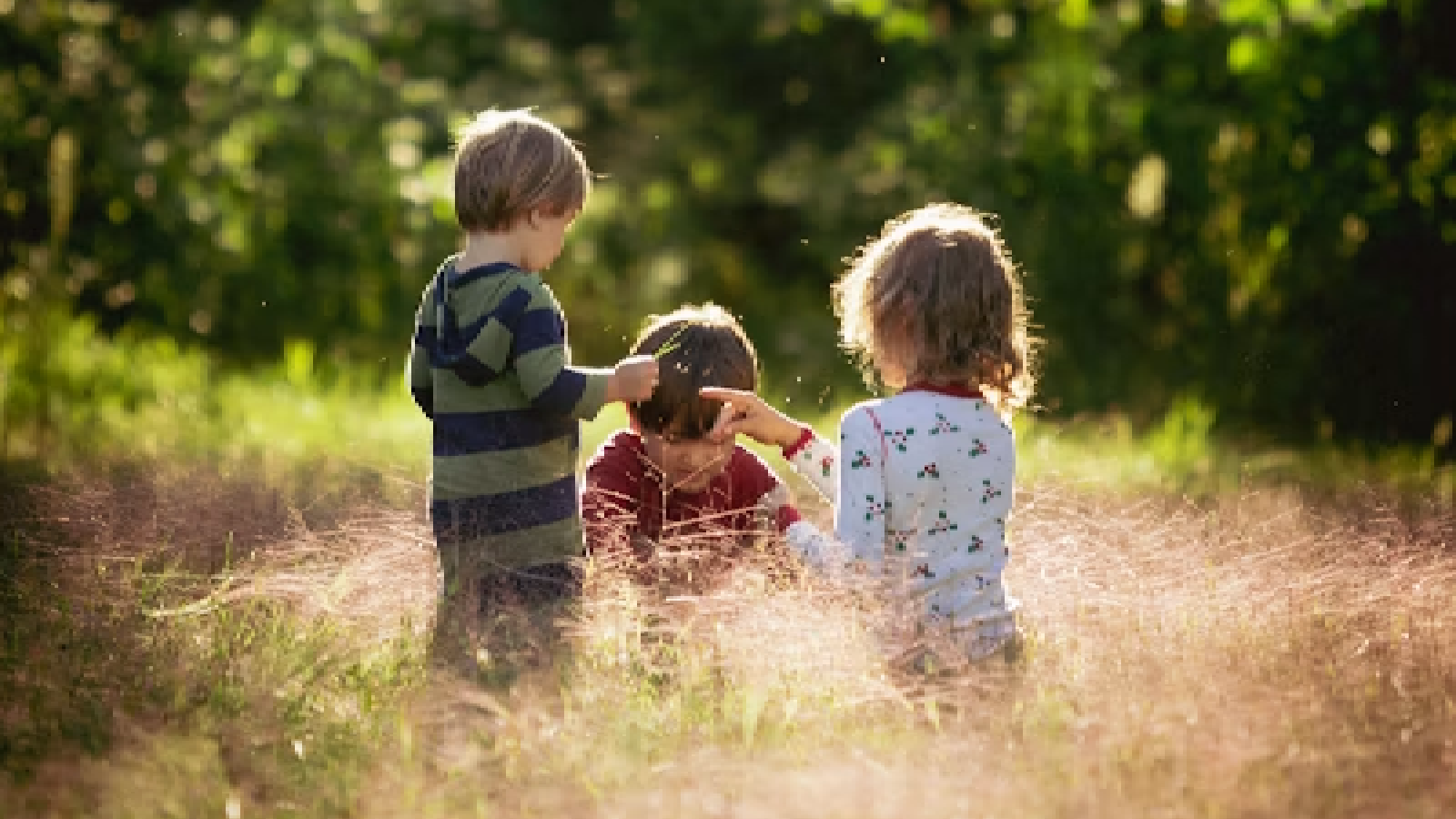
Photo by Laura Ohlman on Unsplash