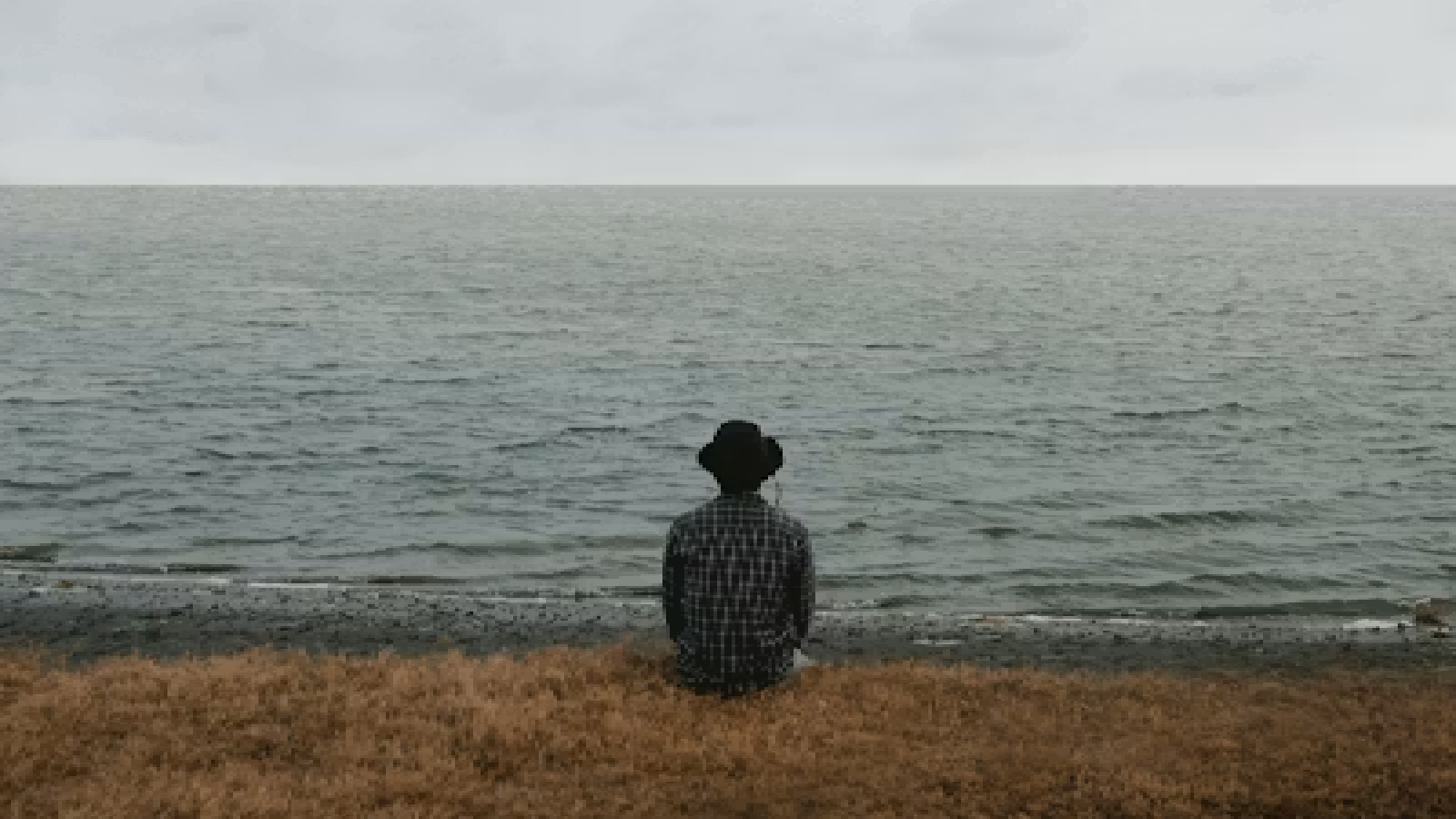
St. Paul tells us that Abraham believed God’s promises and continued to hope when there seemed to be no human reason for hope. His example is especially valuable when we become painfully aware of our weakness or feel that our efforts in the spiritual life are producing little. St. Josemaría taught that, if we want God to act in us and through us, we must be ready to struggle each day while acknowledging that we are frail and burdened by many shortcomings. Our confidence does not rest upon the belief that we are strong enough to overcome every difficulty. We place it in God, who remains faithful and continues to help us even when we have little confidence in ourselves.
There are times when the road ahead seems to disappear. We may lose our sense of direction, doubt decisions that once seemed clear or become discouraged because the results of our effort do not correspond to what we expected. We can also pass through periods when prayer feels empty and our former enthusiasm has faded. At such moments we need to rely more firmly upon faith and hope, remembering that God’s presence does not depend upon our ability to perceive it.
St. Josemaría once used an experience from an early pilgrimage to a Marian shrine to illustrate this truth. As the pilgrims approached from a distance, they could see the shrine clearly upon the hill. When they descended into the valley, however, it disappeared from sight. The goal had not changed and the road still led towards it, but the landscape temporarily hid it from view. After they continued climbing, the shrine appeared again.
Something similar often happens in our life with God. He may allow us to glimpse the beauty of a vocation, a resolution or a particular path and give us sufficient light to begin. Later, when we are already committed to the journey, the goal may seem hidden. Doubts arise, weariness increases and we feel tempted to stop. We may even wonder whether the light we once received was real. Yet the fact that we cannot see the destination at a particular moment does not mean that it has ceased to exist or that we have taken the wrong road.
These periods call for fidelity rather than constant reconsideration. We have seen the path, prayed about it and perhaps received sound guidance. When passing feelings begin to obscure what was previously recognised with reasonable clarity, we should continue without surrendering to indecision. This does not mean that we must never review a decision or seek further advice. It means that we should not allow every fluctuation of mood to overturn commitments made sincerely before God.
The temptation to abandon the road can appear in attractive forms. The flowers growing beside the path seem to offer relief, pleasure or the possibility of another life requiring less sacrifice. Yet many of these apparent alternatives lose their charm once we try to possess them. They do not give the peace we expected because they draw us away from the good God has entrusted to us. Perseverance sometimes means continuing to climb without the consolation of seeing the summit, guided by faith, the commitments we have made and the counsel of those who know us well.
Opening our heart sincerely is particularly important when discouragement clouds our judgment. We should not remain alone with fears that grow larger through secrecy and imagination. A conversation with a spiritual director or another prudent person can help us distinguish a genuine problem from the distorted impressions produced by fatigue or temptation. Obedience and trust do not eliminate personal responsibility, but they provide support when our own vision has become uncertain.
If we persevere, the darkness eventually passes, although not always in the way or at the time we expect. We may see the goal again with a clearer and more mature faith. The trial will often have purified our motives, showing us whether we were following Christ because of consolation or because we truly desired Him. We emerge more aware of our dependence upon grace and more capable of facing future difficulties without panic.
St. Augustine observed that faith would have little merit if the risen Christ remained continually visible to our bodily eyes. The Holy Spirit enables us to desire and love the One whom we do not yet see. Christ is no less present because He has withdrawn from our physical sight, and the periods in which His action seems hidden can deepen the spiritual faith by which we cling to Him. One day, after our hearts have been purified, faith will give way to vision and we will contemplate God face to face.
God may sometimes remove human consolation so that we learn to place our support more completely in Him. When events turn out very differently from our plans, we may feel that everything is going wrong. At such moments we can correct our perspective and say instead: “With you, Lord, I will continue, because you are my strength.” This act of faith does not deny the setback or pretend that the situation is easy. It places the difficulty within the larger certainty that God has not abandoned us.
Hope helps us keep a supernatural outlook during our ordinary work and interior struggle. It lifts our eyes beyond the immediate failure and helps us grasp the hand God continually extends towards us. Our passions may rebel, selfishness may narrow our vision and vanity may tempt us to behave as though everything depended upon our success. When we look only at ourselves, discouragement is almost inevitable. When we turn again towards Christ, we remember with St. Paul that we can do all things in the One who strengthens us.
This confidence should not become presumption. God trusts us and desires to make us useful instruments precisely where He has placed us, but we should not underestimate the difficulties of Christian life. Grace does not remove the effects of original sin or prevent us from experiencing resistance within ourselves. Our nature has been wounded, and our personal sins have often strengthened habits that oppose the action of God. We should therefore expect struggle and prepare for it without becoming surprised by our weakness.
The Christian life requires humility, contrition and sustained effort. We trust God as though everything depended upon Him, because in the deepest sense it does, while working seriously as though much depended upon our response. Grace does not replace our effort but enables it to become fruitful. We pray, receive the sacraments, examine our conscience, seek advice and fulfil our duties carefully. Through these ordinary means, God gradually heals the resistance within us and draws us towards greater freedom.
This struggle lasts throughout life, and there may be periods when difficulties within and around us become particularly intense. Temptations can return with unexpected force. Opposition from others may be added to interior weariness, and memories of past sins can suddenly disturb our peace. What has been forgiven may appear again in the imagination and accuse us as though God’s mercy had been insufficient.
We should never allow the memory of our past to lead us to despair. If a sin has been confessed sincerely, God has forgiven it. We may still need to repair its consequences, and the memory can keep us humble, but it should not be used to deny the effectiveness of grace. Even painful recollections can become occasions for drawing closer to Christ, thanking Him for His mercy and recognising more clearly how faithfully He has protected us.
God has made us His children and does not abandon us when we feel weakest. A trial may reveal our need for Him and free us from the illusion that we can sustain the spiritual life by natural strength alone. It can deepen our love because we discover that He remains present when we have little to offer except trust. Our misery, when acknowledged without discouragement, becomes a place where divine mercy can act.
Some people experience periods when their prayer and spiritual practices feel artificial. They fulfil their commitments but feel cold and uninspired, as though they were merely performing a role. St. Josemaría responded to this concern with characteristic optimism. If we continue doing what love requires when emotion offers no support, our apparent “play-acting” can become a sincere expression of fidelity.
We are small children before the infinite goodness, wisdom and beauty of God. Scripture speaks of divine Wisdom rejoicing over the earth and delighting to be with the children of men. God is not a severe spectator waiting for us to perform perfectly. He looks upon our clumsy efforts with the affection of a Father who knows our limitations and takes pleasure in every sincere attempt to please Him.
When prayer feels dry or our duties become burdensome, we can carry them out with as much grace and generosity as we are able. The absence of feeling does not make the act false. A mother who rises during the night to care for a child may feel only exhaustion, yet her action remains an expression of love. In the same way, fidelity to prayer, work or service can be deeply genuine even when the heart seems unresponsive.
St. Josemaría illustrated this with a medieval legend about a monastery of learned contemplative monks. Among them was an uneducated lay brother who had once been an acrobat. The other monks served Our Lady through study, prayer and the careful performance of their responsibilities, while he felt that he had little to offer. He could barely read and did not possess the abilities he admired in the others.
One night, while the community slept, he went into the church and stood before the image of Our Lady. He thought of the abbot’s learning, the prior’s virtues and the service rendered by the other monks, and he wondered how someone as simple as himself could please her. Then he remembered the one thing he knew how to do. He returned to his cell, put on his old performer’s clothing and began to juggle and turn somersaults before the statue.
The prior discovered him but did not rebuke him. According to the legend, he saw a motherly smile upon the face of the image. The story does not suggest that skill or study are unimportant. It teaches that God receives with affection the sincere offering of what we are able to give. The lay brother’s performance was simple and perhaps clumsy, but it came from a heart that wanted to love.
We may sometimes feel like that brother. Other people seem more capable, prayerful or effective, while our own contribution appears poor. Comparison then increases discouragement and prevents us from recognising the gift God actually asks from us. He does not expect us to reproduce another person’s talents or vocation. He asks us to offer our own work, struggle and limitations with love.
Living in the presence of God helps us recover joy. We remember that Christ and His Mother look upon us with affection and remain close even when our feelings suggest otherwise. This awareness does not make every difficulty disappear, but it prevents suffering from becoming isolation. We are accompanied and supported in each effort.
We should also learn to speak openly when something is going wrong. Problems become heavier when we conceal them out of shame, pride or fear of disappointing others. Confession allows us to place sin before the mercy of Christ, while spiritual direction or another confidential conversation helps us express whatever is burdening the heart. We can speak about temptations, doubts, sadness, resentment or weariness without pretending to have resolved everything beforehand.
Such sincerity often brings immediate relief because it replaces secrecy with truth. The problem may remain, but we no longer carry it alone. Another person can help us see the situation more clearly, suggest practical steps and remind us of what discouragement caused us to forget. Openness also protects us from the distortions of imagination, which tend to grow when they are never exposed to prudent judgment.
After we have opened our heart, peace often returns and dedication becomes stronger. We recognise again that the work of sanctification and apostolate does not depend solely upon our natural qualities. God acts through us, and without His help we cannot please Him or produce lasting supernatural fruit. This dependence is not humiliating in a destructive sense. It is the condition of the child who receives everything from a loving Father.
We should therefore face discouragement with both realism and hope. We do not deny our weakness, the persistence of temptation or the possibility of failure. We also refuse to treat these things as stronger than grace. Abraham hoped against hope because he trusted the One who had made the promise. Our confidence rests upon the same fidelity.
There may be stretches of the road when we cannot see the shrine, understand what God is doing or feel any enthusiasm for continuing. We keep walking because the goal has not disappeared. We use the means God has provided, remain faithful to prayer and duty, and seek guidance when our vision is obscured. In time, the path becomes clear again, and we discover that the period of darkness was not empty.
God can use these trials to purify our faith, strengthen our hope and make our love less dependent upon consolation. He teaches us to rely upon Him rather than upon our own sense of progress. The struggle may leave us more humble, but it also leaves us more secure, because we have experienced that His grace remains present even when everything else seems uncertain.
We can therefore continue without fear. When we fall, we return. When we feel cold, we fulfil our commitments with love. When the past accuses us, we place it again within God’s mercy. When we cannot see the goal, we remember the light already received and continue along the road. Christ asks us only to trust Him and to take the next faithful step.
Our efforts may sometimes seem as awkward as the acrobat’s somersaults before the image of Our Lady. Yet God sees the intention and receives the offering. He does not despise our poverty but transforms it through grace. If we remain close to Him, open our hearts sincerely and continue hoping against hope, He will bring His work in us to completion.
*By the Via Virtutis team
Photo by daniar ainun on Unsplash


