Understanding Suffering
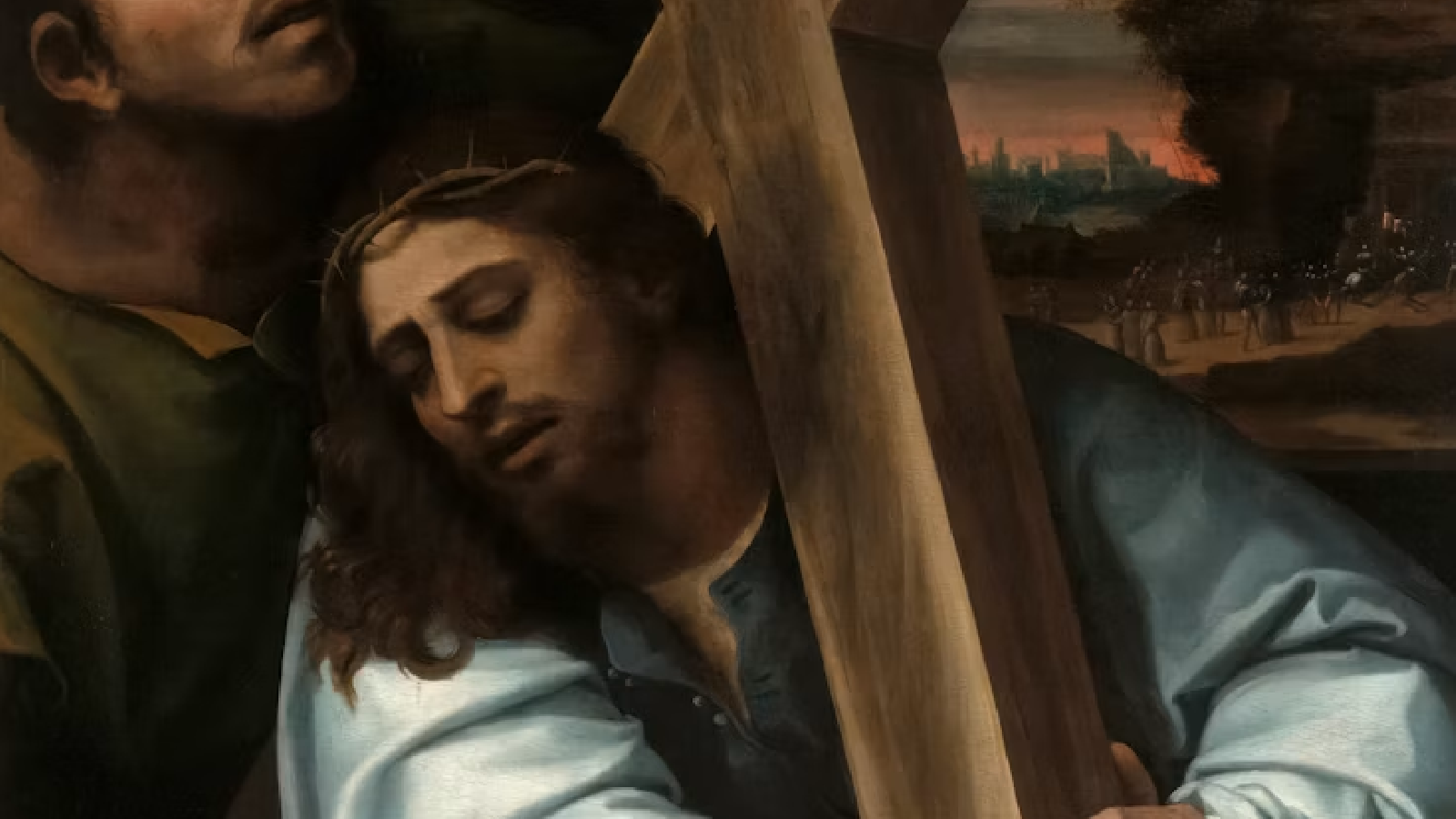
The Cross is the unmistakable sign of the Christian because it was through the Cross that Christ accomplished the Redemption of the world. Our Lord frequently spoke of bearing the cross as a way of summarizing the Christian meaning of suffering and contradiction. He tells us plainly: “Whoever does not bear his own cross and come after me cannot be my disciple.” On another occasion, he says to the crowd: “If any man would come after me, let him deny himself and take up his cross daily and follow me.” His listeners understood the force of these words. Under Roman occupation, crucifixion and the terrible preparations that preceded it were familiar realities. To take up one’s cross meant accepting something painful and demanding, not merely enduring a passing inconvenience.
Suffering is part of every human life. It assumes many forms and touches everyone, regardless of age, wealth, health, or social position. St Paul compares the suffering of creation to the pains of a woman in childbirth: “We know that the whole creation has been groaning in travail together until now.” St Peter likewise warns the first Christians not to be surprised when trials come upon them, as though something strange were happening. We may be tempted to imagine that a life without suffering would be normal and that pain is an unfortunate interruption. Experience teaches otherwise. Even when life is generally happy and secure, we encounter illness, disappointment, misunderstanding, fatigue, loss, temptation, and the limitations that belong to our human condition.
The Christian faith does not teach that suffering formed part of God’s original plan for humanity. God created our first parents to live in friendship with him, free from sin and destined to pass from earthly happiness to the joy of eternal life. Sin disrupted that harmony and brought suffering and death into the world. Yet God did not abandon humanity to the consequences of the Fall. The Son of God became man and entered fully into our condition. He knew hunger, thirst, exhaustion, rejection, loneliness, and grief. In his Passion and Death, he accepted suffering to a degree that we can scarcely comprehend. By uniting it to his obedient love for the Father, he transformed what had entered the world through sin into an instrument of redemption.
The Cross therefore changes the meaning of our own suffering. Pain is never good in itself, and Christianity does not ask us to seek suffering for its own sake or to become indifferent to the sufferings of others. We should relieve pain when we reasonably can, care for the sick, console those who grieve, and work to correct injustice. Nevertheless, when suffering cannot be avoided, it need not be useless or meaningless. United to Christ, it can become an expression of love, an offering for others, and a participation in his saving work. St Paul speaks of completing in his flesh “what is lacking in Christ’s afflictions for the sake of his body, that is, the Church.” Nothing is lacking in the sacrifice of Christ itself; his Redemption is perfect and complete. What remains is for its fruits to be applied throughout history, and Christ allows us to cooperate mysteriously in that work.
This gives suffering a dignity that it could never possess apart from the Cross. A person who bears illness, contradiction, or sorrow in union with Christ is not spiritually inactive. He may appear to the world to be accomplishing very little, yet he can be serving the Church and souls in a profound way. Suffering accepted with faith makes the power of the Redemption present in human history. It opens us more deeply to grace and can obtain grace for others. We may not see the results of our offering, but faith assures us that nothing given to God out of love is ever wasted.
Most of our crosses will not be dramatic. They will be found in the difficulties of ordinary life: physical weakness, disappointments at work, family tensions, financial worries, misunderstanding, loneliness, plans that do not unfold as we hoped, or the daily struggle against our own defects. The Lord permits these things for our sanctification and for the good of the whole Church. By accepting them with him, we become active participants in his work of salvation. The road to Heaven does not require us to escape the limitations of our present life. It requires us to meet them with faith and to allow Christ to transform them.
The Fruits of the Cross in Christian Life
The Cross, which appears at first to be only an instrument of suffering, bears abundant fruit in the life of a Christian. One of its first effects is detachment. When we enjoy good health, material security, affection, success, and the esteem of others, we can easily begin to rely on these things as though they were permanent. Suffering reminds us that every earthly good is fragile. This realization need not make us gloomy or suspicious of happiness. Rather, it helps us enjoy God’s gifts without treating them as our ultimate good. St Francis of Assisi expressed this freedom in the words, “My God and my all.” When the Lord truly becomes the centre of our life, we discover that even when something important is taken from us, not everything has been lost.
Trials can also purify us from the effects of our past sins. St Augustine compares God to a physician who uses suffering as a remedy for the wounds sin has left in us. This does not mean that every sickness or misfortune should be interpreted as a direct punishment for some particular fault. Our Lord explicitly rejected such simplistic judgments. Yet suffering can awaken repentance, loosen our attachment to sin, and lead us back to divine mercy. The prophet Hosea expresses this movement of return: “Come, let us return to the Lord; for he has torn, that he may heal us.” When pain reveals our weakness, we become more ready to seek the One who alone can heal us completely.
Our Lord himself invites us to turn to him in times of weariness and trial: “Come to me, all who labour and are heavy laden, and I will give you rest.” Many of us can recall moments when suffering led us to pray with a sincerity and dependence that had been absent in easier times. When our usual supports fail, Christ becomes more real to us. We discover that he is not merely a figure from the past or an ideal whom we admire, but a living refuge who knows our condition from within. He does not always remove the burden immediately, but he strengthens us to carry it and gives us a peace that circumstances alone cannot explain.
Contradictions also give us occasions to grow. Faith deepens when we continue to trust God without seeing clearly what he is doing. Fortitude develops when we persevere despite fatigue or discouragement. Humility increases when we accept that we cannot control everything and must sometimes receive help from others. We become more understanding when our own suffering makes us sensitive to burdens that other people may be carrying. Even cheerfulness acquires greater depth when it is no longer dependent entirely on favourable circumstances. These fruits do not appear automatically. Suffering can make us bitter or self-absorbed if we turn in upon ourselves. It bears fruit when we bring it to Christ and ask him to teach us how to live it.
We should therefore learn to offer our difficulties to God. Many things that appear useless can acquire eternal value when they are accepted out of love. A headache, a sleepless night, an unexpected delay, a humiliating mistake, or a disappointment can become a prayer when we unite it to the sacrifice of Christ. We need not exaggerate the difficulty or pretend that it does not hurt. We simply place it in God’s hands and ask him to use it for some good purpose. There are periods of life when such opportunities seem to arrive in abundance. We may then be tempted to complain that one problem follows another. Faith teaches us instead to gather these occasions and convert them into spiritual treasure.
The interior life rarely matures without some measure of difficulty. St Alphonsus Liguori observed that, just as a fire needs air in order to burn, the soul often needs tribulation in order to grow. When everything proceeds according to our wishes, we may not discover the depth of our self-love, impatience, or dependence on human approval. Contradictions reveal what is within us and show us where we need conversion. This can be discouraging at first, but it is a grace to see ourselves truthfully. The Lord does not reveal our weakness in order to humiliate us but so that we may rely more fully on him.
Even temptation can serve our growth when we resist it with God’s help. St Paul assures us that no temptation has overtaken us that is not common to humanity. God is faithful and will not allow us to be tempted beyond our strength; with the temptation, he will also provide the means to endure it. Temptation reminds us that we are engaged in a real spiritual struggle and that we cannot remain faithful by our own strength alone. Each time we turn to the Lord, reject an evil suggestion, and renew our desire to love him, our freedom is strengthened. A trial borne with Christ can therefore leave us spiritually richer than we were before it began.
Going to Jesus and Mary in Times of Trial
When difficulties arise, our first response should be to go to Jesus with confidence. The psalms give us words for this prayer: “In my distress I cry to the Lord, that he may answer me.” At times we may feel as helpless as the people of Israel when they prayed: “We are powerless against this great multitude that is coming against us. We do not know what to do, but our eyes are upon thee.” Such a prayer is not an admission of defeat. It is an act of faith. We acknowledge our limitations and place our hope in the One whose power is not limited.
The merciful Heart of Jesus is always open to us. He knows the precise weight of what we are carrying, including those aspects of it that no one else fully understands. We should speak to him simply, without trying to manufacture elevated sentiments. We can tell him that we are tired, afraid, disappointed, or confused. We can ask him to remove the difficulty if that is his will, while also asking for the grace to bear it well if it remains. When our faith weakens, we may hear his gentle reproach to the disciples: “O man of little faith, why did you doubt?” He does not say this to drive us away, but to draw us back into trust.
St Teresa of Avila marvelled at how little power even the strongest opposition possesses when God is pleased to give courage. We should ask for that courage, especially when a trial seems likely to continue. God ordinarily gives strength for the present moment rather than for every imagined suffering of the future. We make our burden heavier when we mentally live through tomorrow’s problems before they have arrived. Grace is given day by day. Our task is to remain close to Christ and do faithfully what the present moment requires.
With the Lord beside us, we can bear what would otherwise overwhelm us. Separated from him, even small difficulties can become unbearable because we rely only on our own resources. St Teresa spoke of Christ as the true friend and captain who goes before us because he was the first to suffer. He does not direct us from a distance. He has known betrayal, injustice, physical agony, abandonment, and death. When we suffer, we follow a path that he has already walked, and he accompanies us upon it.
Life with Christ also helps us retain joy and good humour in the midst of difficulty. The saints were not people who denied suffering or pretended that everything was pleasant. They had learned, however, not to allow every setback to dominate their imagination. We too should try to see our problems in proportion. Some crosses are genuinely heavy and call for patience, prayer, and the support of others. Many ordinary contradictions, however, can be accepted without turning them into tragedies. A bruised ego, an inconvenient change of plans, or a thoughtless remark should not be allowed to disturb our peace for hours. Humility enables us to laugh at ourselves, let go of minor grievances, and continue serving those around us.
We should also turn to the Blessed Virgin, who remained close to her Son throughout his Passion. No one understood the Cross more deeply than Mary. She did not rebel against God, nor did she become hardened by sorrow. She stood beneath the Cross with faith, sharing in the suffering of Christ and consenting again to the Father’s will. She can teach us to unite our own sorrows to his sacrifice and to bring spiritual fruit from them.
We may invoke her Sorrowful Heart and ask her to increase in us a sincere aversion to sin, which is the deepest cause of human suffering. We can also ask her to help us accept the physical and moral contradictions of each day in a spirit of reparation. Under her motherly care, suffering does not cease to be painful, but it can become fruitful. Mary leads us to Jesus, and with Jesus the Cross is never the final word. It leads through love, sacrifice, and apparent defeat to the joy of the Resurrection.
By the Via Virtutis team
Photo by Art Institute of Chicago on Unsplash


