The First Book of Maccabees recounts how Judas and his brothers, after many years of conflict, went up to Mount Zion to cleanse and rededicate the sanctuary. Their enemies had been defeated, but the victory had come only after prolonged hardship, repeated battles and steadfast fidelity to the commandments of God. Their struggle offers an image of the Christian’s interior life. We too are called to restore God’s rightful place within us, and this requires a struggle that lasts throughout our earthly life. We will face temptations, defects and discouragement many times, but we should meet them with perseverance and with the cheerful sporting spirit that St. Josemaría so often recommended.
A good athlete does not expect victory without effort. He knows that progress comes through training, that setbacks are inevitable and that a poor performance on one day does not determine the final result. We need the same attitude in our ascetical struggle. We try to be faithful, and when we become aware of our failures, we ask God for help and begin again. We place our weakness and every obstacle at the feet of Christ, trusting that He can raise us above what we cannot overcome by our own strength. What matters is that we do not abandon the struggle. We rectify our intention, renew our resolutions and continue, even when we seem to be making little progress.
The Christian life is therefore a continual beginning again. St. John Chrysostom observed that it is not fatal for a soldier to fall in battle; the real disaster is to remain on the ground. A wound is not the end of the struggle unless we refuse to treat it and lose hope. The dedicated athlete understands this instinctively. He may fail repeatedly before he masters a particular movement or reaches the level for which he has been training. Defeat becomes certain only when he gives up. In the spiritual life, perseverance often matters more than any single success or failure. God does not ask us never to fall, but He does ask us never to stop returning to Him.
The comparison with sport has its limits, because an athlete ultimately depends upon his own natural powers, the guidance of a trainer and the encouragement of others. In our struggle, God Himself assists us. Isaiah reminds us that the Lord does not grow faint or weary. He gives strength to those who have none and renews those who place their hope in Him. Even the young become tired and stumble, but those who wait upon the Lord “shall mount up with wings like eagles; they shall run and not be weary; they shall walk and not faint.” Our confidence does not rest upon an exaggerated opinion of our own abilities. It rests upon the grace of God, which is never denied to those who seek it sincerely.
St. Josemaría once remarked that an athlete’s eyes often light up when he sees the obstacle he must overcome. The difficulty awakens his desire to test himself and to achieve a victory that would have been impossible without the challenge. God looks with love upon our own struggle. He knows that the obstacles we face can become occasions for growth, provided that we meet them with faith and perseverance. We may have to fight the same battle many times, but He does not abandon us. His grace remains more powerful than our weakness, and the final victory belongs to Christ.
Training strengthens an athlete by requiring him to exert himself against resistance. Muscles that are never used gradually weaken, while disciplined exercise increases endurance and power. Something similar happens in the ascetical life. Our daily struggle against selfishness, laziness, impatience or sensuality strengthens our freedom and deepens our love for God. St. Cyprian contrasted Christians with those who do not know God by observing that adversity leads some people only to complaint, while for those who live by faith it can strengthen virtue. Difficulties do not sanctify us automatically, but when we accept them with love and struggle faithfully within them, they can make us more steadfast and more dependent upon grace.
No serious athlete believes that occasional effort is sufficient. Training must be regular. He pays attention to physical conditioning, diet, technique and rest, and he accepts sacrifices that would seem excessive to someone who does not share his goal. Tiredness does not lead him to abandon his programme whenever he does not feel like continuing. We must show the same constancy in the spiritual life. We remain in shape by struggling in the small duties and opportunities of each day. If we neglect these ordinary efforts, we should not be surprised when we find ourselves unprepared for a greater temptation or sacrifice.
The strongest spiritual life is usually built through fidelity in little things. The skilled athlete pays close attention to details that may escape the casual observer. A gymnast refines the exact position of the body, while a runner learns to regulate his pace and movement with precision. Victory is often decided by habits formed during long hours of preparation rather than by a sudden burst of effort at the decisive moment. Our holiness also depends largely upon details: beginning prayer at the appointed time, offering our work to God, controlling a sharp reply, finishing a task carefully or performing an unnoticed service. None of these actions seems remarkable in isolation, but together they shape the soul.
This attention to small things is not pettiness. It is a practical way of expressing love. When we care deeply about another person, we do not limit our affection to rare and dramatic gestures. We show it in daily attentiveness. Our relationship with God develops in the same way. Great acts of generosity may occasionally be required, but they are usually prepared by the smaller acts of fidelity that have taught us to put Him before ourselves. The athlete who ignores the ordinary discipline of training cannot suddenly produce excellence in a competition. Nor can we expect to respond heroically in a great trial if we habitually refuse God in the small demands of each day.
The prize for which we struggle is incomparably greater than any athletic victory. St. Paul reminds us that competitors train for a crown that will perish, while we seek an imperishable one. Our goal is not merely self-mastery or the satisfaction of becoming better people. We struggle so that Christ may be formed within us and so that our thoughts, desires and actions may increasingly resemble His. Every sacrifice has meaning because it belongs to this work of transformation. We are not engaged in a private contest of willpower; we are cooperating with grace so that the life of Christ may take deeper root in us.
For this reason, we should not be surprised by trials. St. Peter tells Christians not to regard the fiery ordeal as though something strange were happening to them. Hardship has always formed part of the path of discipleship. St. John Chrysostom compared souls to trees. Those that grow sheltered from wind may appear healthy, but their roots remain shallow and their wood soft. Trees growing on exposed mountainsides endure storms, snow and severe winds, yet these conditions make them strong. We should not seek difficulties for their own sake, but when God permits them we can receive them as opportunities to strengthen our dedication.
The sporting spirit helps us suffer without becoming gloomy or self-absorbed. It does not mean pretending that pain is pleasant or denying the real difficulty of sacrifice. It means accepting that effort is part of the contest and refusing to allow hardship to destroy our joy. An athlete may be exhausted, bruised or disappointed and still remain committed to his goal. In the same way, we can experience suffering while preserving peace because we know why we are struggling and whom we are trying to love. Our difficulties become part of our response to Christ.
We must also learn how to lose. No athlete wins every game, and no Christian succeeds in every interior battle. We will sometimes give in to impatience, fail to keep a resolution or neglect an opportunity for charity. A person who abandons the entire struggle because of one defeat has misunderstood its nature. We know in advance that human weakness will lead to failures. God alone never loses a battle. Our task is to return to Him, learn from what happened and continue with greater humility.
A good sportsman studies his losses. He does not merely lament the result; he asks what went wrong and how he can prepare better for the next contest. Our examination of conscience should have the same practical character. We acknowledge our sins and omissions honestly, but we do so in God’s presence and with confidence in His mercy. We try to identify the occasions that led us to fall, the false reasoning we accepted or the means we neglected. Contrition then produces a new resolution rather than sterile self-reproach.
St. Josemaría urged us to draw from our falls a new impulse, allowing God to bring life even from what seemed to be a defeat. Our daily mistakes, failures in love and unfulfilled resolutions can become occasions for humility and renewed dependence upon grace. St. Paul could even rejoice in his weakness because it made room for the power of Christ. He did not approve of his defects or cease struggling against them. He understood, however, that the discovery of his own poverty could draw him more deeply into reliance upon God.
God knows our defects and takes them into account in the work of our sanctification. He gives us grace to overcome them, but He may not remove every weakness at once. The humble and persevering struggle against a persistent fault can itself become an important means of holiness. We naturally wish to be rid of our shortcomings, and we should use every appropriate means to correct them. Yet our sanctity does not depend upon achieving the flawless image we have formed of ourselves. It depends upon loving God, responding to grace and beginning again whenever we fail.
St. Paul teaches that all things work together for the good of those who love God. St. Augustine emphasised the breadth of this promise: God is able to direct everything to our benefit. Even our deviations from the right path can contribute to our growth when repentance brings us back humbler and more experienced. A fall may teach us to distrust our presumption, to understand another person’s weakness or to become more faithful to the means that protect us from temptation. God does not cause our sins, but His mercy is so great that He can draw good even from them.
This truth should never become an excuse for carelessness. We cannot say that sin does not matter because God can bring good from it. The good comes from His mercy and from our repentance, not from the sin itself. The Passion of Christ offers the supreme example of God’s power to bring a greater good from evil. The crucifixion of the Son of God was the greatest injustice in human history, yet through it God accomplished the Redemption of the world. His providence does not make evil good, but it prevents evil from having the final word.
Our falls should therefore produce humility. When things are going well, we can easily attribute our progress to ourselves and imagine that we have become secure against future failure. Experience teaches us otherwise. We may be following the right path, but we should continue with gratitude and vigilance, knowing that every victory depends upon grace. The moment we begin to think that we can no longer fall, we have already placed ourselves in danger.
Along with humility, our failures should awaken sorrow born of love. This sorrow is different from irritation with ourselves. We may be upset because a fall damages the image we hold of ourselves, but that reaction can remain centred upon pride. True contrition arises because we recognise that we have failed to love God and others as we should. It moves us to seek forgiveness, make amends where possible and renew our struggle. Far from leading to discouragement, sorrow of this kind burns away complacency and restores fervour.
We should not dismiss small and frequent faults as unimportant. St. Augustine compared them to water entering a ship through tiny cracks in the hull. A small amount of water may not seem dangerous, but if it is allowed to accumulate, the ship will eventually sink. Sailors therefore continue bailing while the water continues seeping in. Human weakness remains with us, and we will need to keep struggling throughout our lives. The persistence of our defects does not make the effort pointless. It makes perseverance necessary.
This image helps us avoid two opposite errors. The first is scrupulosity, which treats every minor imperfection as a catastrophe and can leave us paralysed by self-analysis. The second is carelessness, which ignores small faults until they have gradually weakened the soul. A sporting spirit avoids both extremes. We take our struggle seriously, but we do not become morbid. When we notice that water has entered the boat, we begin bailing instead of sitting down to lament the condition of the hull.
God’s grace is abundant throughout this struggle. Even when we have not been faithful, He continues to watch over us with love. St. Josemaría compared this mercy to that of a mother who readily forgets a child’s unkindness when he returns to her affectionately. Jesus does not keep a resentful account of everything we have done badly. When we approach Him with sincere contrition, He forgives us and restores us to friendship. The sacrament of Confession is a privileged encounter with this mercy, where our defeats are placed in the hands of the One who can give us a new beginning.
Our small daily failures should help us trust God more and ourselves less. They reveal that we are fragile, but they also reveal the patience of the Father who never tires of receiving us. We need not be surprised by our weakness as though it were a new discovery. We should learn to accept ourselves truthfully, laugh at our pretensions when appropriate and continue striving without dramatizing every setback. Our optimism is not based upon confidence that we will never fail again. It rests upon the certainty that God remains faithful and that His strength is greater than our weakness.
The sporting spirit of the Christian is therefore deeply supernatural. It combines seriousness of purpose with joy, a clear awareness of our weakness with confidence in grace, and sorrow for failure with readiness to begin again. It does not minimise sin or treat holiness as a game. Rather, it enables us to struggle without anxiety because we know that Christ is beside us. He is not a distant spectator waiting to judge our performance. He strengthens us, raises us after every fall and leads us towards the victory He has already won.
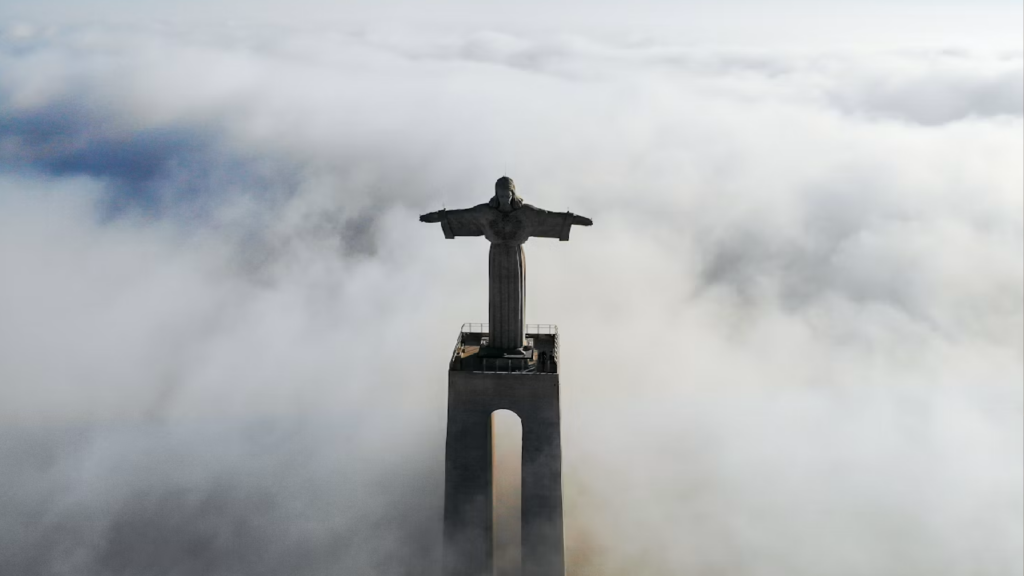
Our Lady also accompanies us. Above the clouds of our changing moods and daily struggles, the light of divine grace continues to shine, and Mary remains the Morning Star who guides us towards Christ. A good athlete draws courage from the presence of those who believe in him. We have far more than human encouragement. We have a Mother who knows our weakness, intercedes for us and helps us recover when we are tired or discouraged.
We will continue to lose some skirmishes, but we should never mistake a skirmish for the whole battle. Each day gives us another opportunity to train, to correct what went wrong and to renew our love. We can approach the ascetical struggle with the determination of an athlete who keeps his eyes upon the goal and does not allow fatigue or disappointment to erase the joy of competing. We are striving not for a temporary triumph but for union with Christ and the eternal life He has promised.
When we live in this way, even our weaknesses become occasions for grace. We remain vigilant in little things, draw lessons from our defeats and place every effort in God’s hands. We struggle with tenacity but without harshness, because we know that holiness is His work within us. There will be difficult stretches and moments when the rampart appears too high, but we need not be afraid. If we remain faithful and continue beginning again, Christ will help us cross what we cannot overcome alone. With His grace and the help of Our Lady, we can continue the contest peacefully and joyfully until the final victory.
*By the Via Virtutis team
Photo by Sven Kucinic on Unsplash