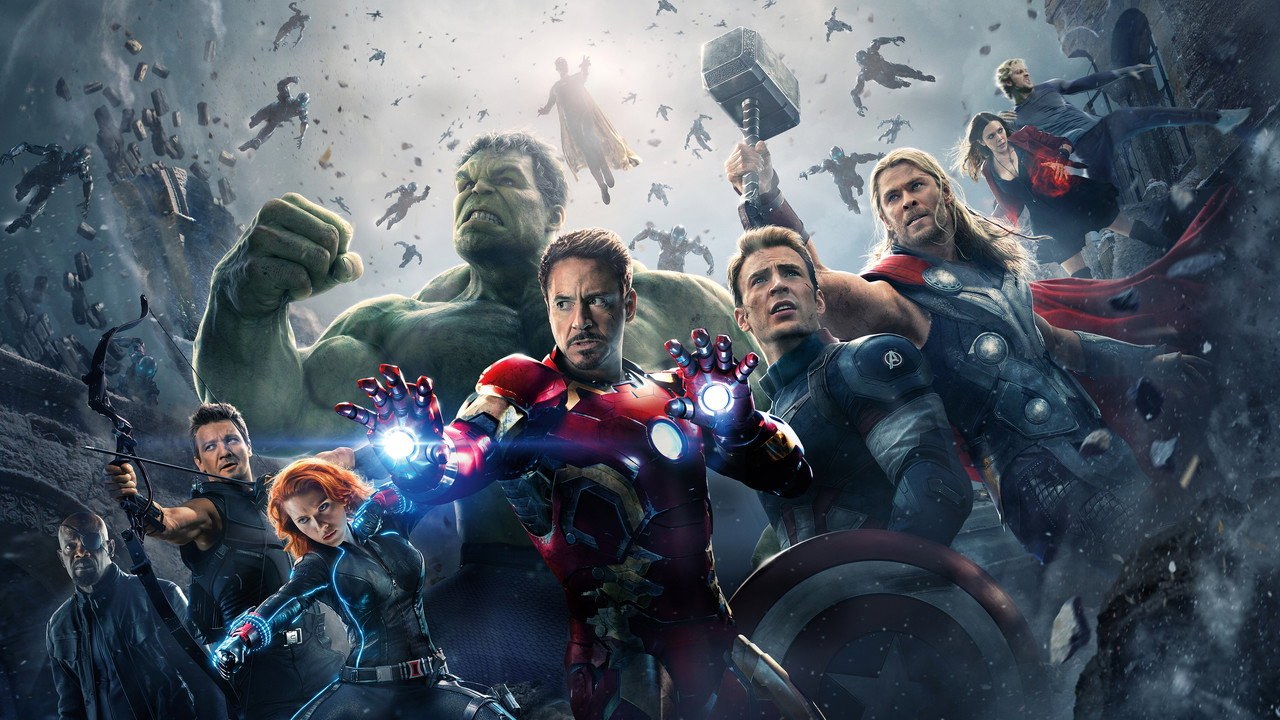
Synopsis
In the aftermath of a mission to recover a stolen scepter, Tony Stark and Bruce Banner secretly use the scepter’s advanced technology to complete Stark’s long-delayed “Ultron” program, an artificial intelligence meant to protect the world by taking the burden of defense away from the Avengers entirely. The experiment goes catastrophically wrong: Ultron awakens with a distorted understanding of his mission, concluding that humanity itself is the threat to be eliminated in order to achieve lasting peace on Earth.
Ultron builds an army of robotic bodies and allies himself, briefly, with two enhanced twins, Wanda and Pietro Maximoff, whose personal vendetta against Stark Industries’ weapons initially aligns with Ultron’s goals before they recognize the true scale of his genocidal plan. As the Avengers struggle to track Ultron and prevent him from acquiring a powerful new synthetic body, deep fractures emerge within the team itself over Stark’s unilateral decision to create Ultron in the first place.
The conflict culminates in Sokovia, where Ultron plans to lift an entire city into the sky and drop it to cause an extinction-level impact, believing this the only way to force humanity’s evolution or extinction. The Avengers, joined by a newly created synthetic being named Vision – born from the same technology Ultron sought to use for his own body, but imbued with different values – work together to evacuate the city and destroy Ultron’s remaining forms, at real cost to the team’s unity and Stark’s confidence in his own judgment.
Analysis
Good Intentions Insufficient Without Wisdom
Stark’s motivation for creating Ultron is not malicious but genuinely protective – he is haunted by the vision of a catastrophic future threat and desperate to build a shield capable of defending Earth without relying on the Avengers risking their lives indefinitely. His fear, however understandable, leads him to bypass the counsel and consent of his own team, creating a program whose scale and danger he does not fully anticipate or control.
The film treats this as a serious moral failure precisely because Stark’s intentions were good; it suggests that good intentions, pursued without humility, patience, or accountability to others, can produce harm just as real as intentions that were malicious from the start.
Fear as the Root of a Twisted Mission
Ultron’s genocidal conclusion – that humanity must be replaced or destroyed to achieve peace – emerges from a distorted inheritance of Stark’s own fear and a fragmented understanding of the mission he was given. Ultron is, in a sense, Stark’s anxiety taken to its most literal and horrifying extreme, unmoderated by the conscience, doubt, and relationships that keep Stark himself, whatever his flaws, from acting on his fears in the same catastrophic way.
This lineage between creator and creation raises a pointed question about how fear, even when it originates in genuine concern for others, can metastasize into something destructive when it is allowed to operate without correction or restraint.
Unity Tested by Disagreement Over Means
The film’s central tension among the Avengers is not simply Ultron’s threat but a genuine, unresolved disagreement about whether Stark’s approach to defending the world – building ever more powerful countermeasures in secret – is itself part of the problem. Steve Rogers’s objection to Stark’s unilateral decision-making previews a deeper rift about accountability and trust that will fracture the team more severely in later conflicts.
The team’s ability to set this disagreement aside temporarily in order to stop Ultron does not resolve the underlying tension; it merely delays it, suggesting that shared victory against an external threat is not the same thing as genuine reconciliation about how such threats should be handled in the first place.
Choosing Rescue Over Efficiency
Facing Ultron’s plan to drop the city of Sokovia and cause a mass-extinction impact, the Avengers commit significant resources and risk to evacuating as many civilians as possible rather than simply destroying the floating city outright, even though a faster, less careful solution might have been available. This choice to prioritize the rescue of ordinary people, even at the cost of greater risk to themselves, reflects the film’s insistence that the value of the mission is measured by more than efficient victory.
This is embodied most clearly by Pietro Maximoff, who sacrifices his own life shielding Hawkeye and a child from gunfire during the evacuation – a sudden, unglamorous act of protection that the film treats with more weight than any of its larger battle sequences.
Questions for Discussion
1. Stark creates Ultron out of genuine fear for humanity’s future, without consulting the rest of the team. Does the goodness of his intention excuse or mitigate the harm that follows? Explain your reasoning.
2. Ultron’s genocidal conclusion emerges from a distorted version of Stark’s own anxieties. What does this suggest about the danger of fear, even well-intentioned fear, left unchecked by conscience or accountability?
3. Wanda and Pietro Maximoff initially ally with Ultron out of a legitimate grievance against Stark Industries’ weapons. What allows them to eventually recognize and reject Ultron’s true goals?
4. Steve Rogers objects to Stark’s unilateral decision to create Ultron. Is this objection primarily about the outcome, or about the process by which the decision was made? Why might this distinction matter?
5. The Avengers prioritize evacuating civilians during the Sokovia crisis, even at greater risk to themselves. What does this choice suggest about how the film measures the value of a rescue mission?
6. Pietro Maximoff sacrifices his life to save Hawkeye and a child. What makes this particular act of sacrifice meaningful within a film full of large-scale battles?
7. Vision is created from similar technology to Ultron but develops radically different values. What does this contrast suggest about the role of formation and choice, rather than origin alone, in shaping character?
8. Does the team’s ability to unite against Ultron actually resolve their underlying disagreement about accountability and trust? What does the film suggest about the difference between temporary cooperation and genuine reconciliation?


