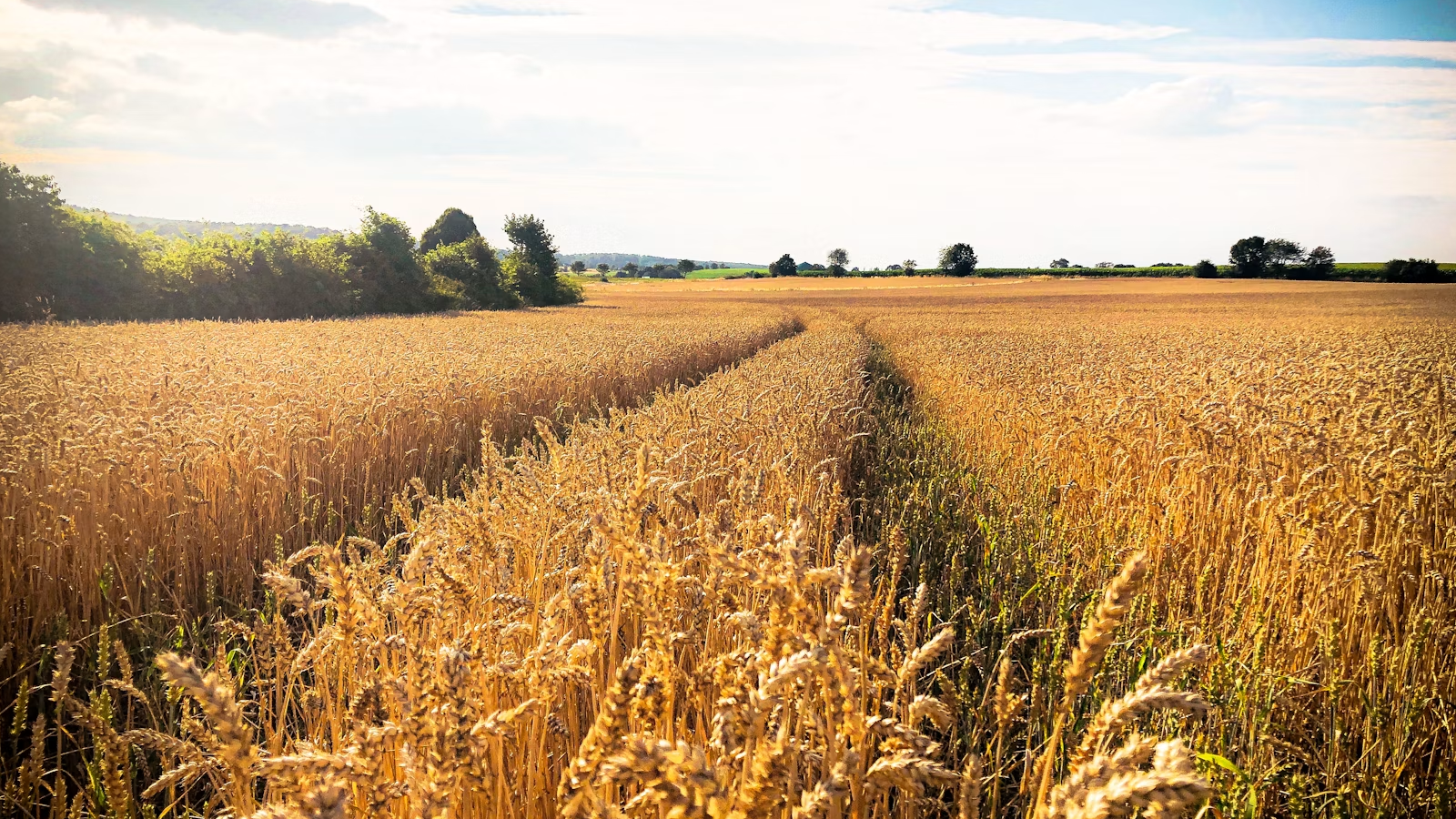
When a great crowd gathered around Jesus and people came to Him from town after town, He used an image familiar to His listeners to explain the mysterious action of grace in the human heart. Most of those before Him knew the work of sowing and understood how much the harvest depended upon the condition of the soil. “A sower went out to sow his seed,” Jesus began. The sower is Christ Himself, who never ceases to scatter the seed of His word and extend His kingdom of peace and love within souls. Yet the fruitfulness of that seed depends upon our freedom and upon the response we make to grace.
God approaches people in the most varied circumstances. He speaks through Scripture, prayer, the sacraments, the teaching of the Church, the example of others and the ordinary events of each day. The seed is always good, but the ground upon which it falls differs greatly. Christ describes a path hardened by continual traffic, shallow soil covering rock, ground overgrown with thorns and, finally, good earth that receives the seed and produces an abundant harvest. These are not fixed categories into which people are permanently divided. They reveal conditions that can exist within our own hearts at different moments and invite us to ask what kind of soil we are becoming.
Some of the seed falls upon the path, where it is trampled underfoot and carried away by birds. Jesus explains that the devil comes and removes the word from the hearts of those who do not truly receive it. A path becomes hard because many feet have passed over it. In the same way, the heart can gradually become resistant through repeated sin, neglected contrition and familiarity with what separates us from God. The word is heard, but it does not enter deeply enough to take root.
This hardening rarely occurs all at once. We may begin by making small concessions and treating them as unimportant. A selfish habit is excused, a resentment is preserved or an impure thought is welcomed instead of rejected. As the same choices are repeated, the conscience becomes less sensitive. What once disturbed us no longer seems serious, and the heart becomes like soil so compacted that the seed remains exposed on the surface.
St. Gregory the Great saw in this hardened ground the heart that has grown accustomed to unclean or sinful thoughts and has become too parched to sustain the divine word. The devil finds resistance to grace already prepared within such a soul. He does not always need to persuade us openly to reject God. It is enough if he keeps us distracted, careless and unwilling to repent, so that the seed never penetrates beyond a passing impression.
The opposite response is sincere contrition. When we recognise our faults and turn back to God, we do not drive Him away by showing Him our weakness. We attract His mercy. Humility softens the soil and allows grace to enter. The person who acknowledges his sins truthfully is far better disposed to receive God than one who appears outwardly respectable but has ceased to examine himself honestly.
The parable therefore invites us to consider the spirit of reparation with which we respond to our daily failures. We should not become scrupulous or magnify every imperfection into a disaster, but neither should we grow indifferent to the small things that wound our friendship with Christ. Love notices details. When we have acted selfishly, spoken uncharitably or neglected a known duty, we should turn to God without delay, ask forgiveness and make a sincere effort to repair the harm.
Frequent Confession has an important place in keeping the heart receptive. We do not approach the sacrament merely to remove the burden of grave sin. We go because we need Christ’s healing and want our friendship with Him to grow. Honest confession exposes what pride would prefer to hide and prevents faults from becoming settled habits. Through absolution, God restores grace and makes the soil of the soul ready to receive His word again.
As intimacy with Christ deepens, we should become more attentive to anything that weakens it. St. Josemaría urged us not to tolerate small obstacles that cause suffering to the One who loves us. This does not mean living in constant anxiety about offending God inadvertently. It means having the courage to break with whatever we know is incompatible with love, even when it appears minor and the sacrifice costs us.
Other seed falls upon rocky ground. It begins to grow quickly but soon withers because it has no moisture and cannot put down roots. Jesus says that this represents those who receive the word with joy and believe for a time, but fall away when temptation arrives. Their first response is sincere, and their enthusiasm may be considerable, but the spiritual life remains too dependent upon feeling. When prayer becomes difficult or following Christ requires sacrifice, the initial resolution proves unable to endure.
This condition is especially common at the beginning of a conversion or vocation. We are moved by a retreat, a conversation, a book or a powerful experience of prayer. We see the beauty of the Christian life and resolve to change. Such moments are gifts from God, and we should receive them gratefully. Yet enthusiasm alone cannot sustain fidelity. Feelings naturally rise and fall, while the demands of discipleship remain.
The moment of truth often comes through adversity, temptation or spiritual dryness. Prayer no longer produces the same consolation. A resolution that seemed easy now requires perseverance. Difficulties arise in our family, work or apostolate, and we begin to wonder whether the path is worth the effort. If our commitment was rooted mainly in the satisfaction we received, we may gradually abandon it when that satisfaction disappears.
Many good intentions have been lost in this way. People genuinely desire holiness so long as the desire itself feels uplifting. When the interior life becomes a struggle, they discover that they were seeking themselves within the things of God. St. Augustine observed that people approach Christ for many reasons, but few seek Jesus simply for the sake of Jesus. We may seek peace, encouragement, belonging or relief from difficulties, all of which God can legitimately give. Yet faith must eventually mature into love for Him, whether or not His service brings immediate consolation.
To seek Jesus for His own sake means following Him wherever He leads. At times the path will be smooth and the landscape attractive; at other times it will be steep and difficult. The essential thing is not the condition of the road but the certainty that it leads to Christ. We remain faithful because we want Him, not merely the experiences we associate with Him.
Daily prayer gives roots to this desire. We pray when it comes easily and when it costs us effort. A prayer that appears dry or distracted may be more deeply rooted in love than one accompanied by strong feeling, because we remain before God without receiving an obvious reward. The regularity of prayer teaches the heart that Christ is worthy of our time and attention under every condition.
The roots of faith also grow through doctrine, the sacraments and spiritual formation. A merely emotional Christianity remains vulnerable because it lacks sufficient understanding. We need to know whom we believe, what the Church teaches and why the Christian vision of life is true. Knowledge alone does not produce holiness, but it strengthens conviction and helps us endure moments when emotion offers little support.
Another portion of the seed falls among thorns. It takes root and begins to grow, but the thorns grow beside it and eventually choke it. Jesus identifies these thorns as the cares, riches and pleasures of life. Unlike the hardened path, this soil receives the word, and unlike the rocky ground, the plant develops for a time. The problem is that other attachments are allowed to grow unchecked until they consume the space, light and nourishment needed by the divine seed.
The cares of life are often legitimate. We need to work, provide for material needs and attend to family responsibilities. The danger lies in allowing these concerns to dominate the heart. Work may become an obsession, financial prudence may turn into anxiety, and reasonable planning may become an attempt to control every future possibility. God is not formally rejected, but He is continually displaced by whatever seems more urgent.
Riches can choke the word even when we do not possess great wealth. The attachment matters more than the amount. A person of modest means may be consumed by the desire for possessions, while someone with considerable resources may use them generously and remain detached. The heart becomes entangled when material security, social status or comfort begins to determine our happiness and decisions.
Pleasure is also a good created by God, but it becomes a thorn when sought without measure. Food, drink, entertainment, sexuality and recreation all have a proper place within human life. When appetite is never denied, however, it gradually weakens our ability to choose the good when the good requires sacrifice. We may retain our faith in theory while becoming less willing to live according to it whenever it conflicts with preference.
St. Basil explains why Christ compares worldly pleasures to thorns. Thorns injure whatever part of the body they catch. In a similar way, disordered attachments affect our thoughts, actions and judgment. When the heart is fixed upon temporal things, sensitivity to the things of God becomes dull and reason itself is weakened. We begin to justify what we desire rather than allowing truth to guide desire.
Mortification protects the seed from these thorns. It gives us freedom in relation to created goods and keeps them within their proper order. Mortification does not mean despising the world or rejecting legitimate enjoyment. It means accepting small sacrifices so that comfort and appetite do not become masters. We refuse ourselves something lawful at times in order to remain capable of refusing what is sinful and of giving ourselves when love asks more.
Prayer and mortification belong together. Prayer directs us towards God, while mortification removes what prevents us from following that direction. Without prayer, self-denial can become grim willpower or a source of pride. Without mortification, prayer may remain ineffective because our daily choices continually contradict what we tell God we desire. Every road to holiness passes through communion with God and the sacrifice required to make that communion practical.
The Acts of the Apostles describes the first Christians as persevering together in prayer. Their apostolic fruitfulness flowed from this union with God. We cannot produce supernatural life by plans, techniques or human energy alone. We need intelligence, organisation and effort, but these remain sterile unless grace gives them life. “Nothing can be done without prayer,” St. Josemaría insisted, because the work belongs ultimately to God.
After describing the conditions in which the seed fails, Jesus speaks of the good soil. Some seed falls upon fertile ground, grows and yields a hundredfold. These are those who hear the word, hold it fast in an honest and good heart and bear fruit through perseverance. The result is abundant, but it does not appear immediately. The harvest requires time, patience and fidelity through changing seasons.
The hope contained in this final image is essential. Christ does not describe the poor soil in order to condemn us or leave us discouraged. He wants every heart to become good ground. Whatever our past history, grace can transform us. A hardened path can be broken open, stones can be removed and thorns can be uprooted. God continues sowing because He never ceases to hope for a harvest in us.
No one should conclude that he is incapable of bearing fruit because of past sins or repeated failures. Some people carry serious wounds and habits formed over many years. Change may be slow and require patient assistance, but the power of grace is greater than every obstacle. The decisive thing is that we remain willing to receive the seed and cooperate with the work God wishes to accomplish.
Good soil listens with an honest heart. This honesty excludes both hypocrisy and discouragement. We do not pretend to possess virtues we lack, but neither do we define ourselves entirely by our defects. We stand before God as we truly are, acknowledging the good He has already done and the areas that still require conversion. Such truthfulness allows Him to work in the deepest part of the soul.
Contrition is therefore one of the first conditions of fruitfulness. A humble heart remains sensitive to sin and ready to return. It does not become paralysed by guilt or rely upon its own goodness. The humble person knows that every fruit comes from grace and that without God the soil of the soul soon becomes barren.
Prayer is the second indispensable condition. The seed needs moisture, and the soul needs continual contact with God. Prayer keeps faith from remaining an idea and transforms it into a living relationship. It allows the word to descend from the mind into the heart, where it can shape our motives, choices and affections.
We should not measure prayer only by what we feel or remember afterwards. Some periods of prayer will seem rich, while others may appear unproductive. The root grows beneath the surface before any visible fruit appears. Fidelity itself is already part of the work God is doing, and we should not abandon prayer merely because we cannot see immediate results.
Mortification also helps make the ground fruitful by clearing away what competes with grace. This may involve moderation in food, entertainment or comfort, but some of the most valuable mortifications arise in our relationships. We listen when we would rather speak, accept an interruption, control an impatient reply or perform a service without being noticed. These acts remove the thorns of selfishness and make room for charity.
The third condition is perseverance in the interior struggle. The good soil bears fruit “with patience.” We must be ready to begin and begin again, especially when our efforts appear to produce little. Growth in virtue is often gradual and hidden. A defect may remain after years of struggle, yet our way of responding to it may have changed considerably. We fall less frequently, rise more quickly and depend more deeply upon God.
Discouragement can become another form of pride. We expected to transform ourselves rapidly and are disappointed to discover our weakness. Humility accepts that sanctification is God’s work and that He determines its pace. We continue using the means within our reach and trust Him with the harvest.
Patience does not mean passivity. A farmer cannot force the crop to grow, but he must prepare the soil, remove weeds, provide water and protect the young plants. In the same way, we cooperate actively through prayer, the sacraments, examination of conscience, spiritual direction and concrete resolutions. We do what depends upon us while recognising that life and growth come from God.
The prophet Ezekiel records God’s promise: “A new heart I will give you, and a new spirit I will put within you; and I will take out of your flesh the heart of stone and give you a heart of flesh.” This is more than moral improvement. God desires to renew us from within, replacing resistance with docility and self-centredness with the capacity to love. He can reach depths that our own efforts cannot touch.
We should therefore approach the interior struggle with confidence. The grace of God is all-powerful, and His desire to transform us is greater than our desire to change. He respects our freedom and asks for our cooperation, but He does not leave us alone with the task. Each time we return to Him, He continues the work.
St. Augustine compares God to a farmer. If God were to abandon us, our souls would become a desert. Yet we too have responsibility for the soil entrusted to us. When we separate ourselves from Him, we turn our own hearts into barren ground. Fruitfulness depends upon remaining close to the One who gives life.
This closeness is renewed many times during the day. A brief aspiration, a glance towards a crucifix or a simple offering of our work can return the heart to God. When we notice that anxiety, irritation or distraction has drawn us away, we need not wait for the next formal period of prayer. We can enter again into His merciful Heart and ask Him to restore our interior unity.
The parable also teaches us to be patient with others. We do not always know the condition of the soil into which a word has fallen or the hidden work grace may be carrying out. Someone who appears indifferent may be wrestling inwardly with the truth. Another may respond enthusiastically and later struggle. Our task is to sow with charity, pray and trust the action of God.
We should not become discouraged when apostolic efforts appear fruitless. Christ Himself encountered hardened hearts, shallow enthusiasm and worldly attachment. Yet He continued preaching and sowing. Some seed seemed lost, but other seed produced a hundredfold. Fidelity in apostolate does not depend upon seeing immediate results.
The same hope applies to our families, friendships and communities. A word spoken with love may bear fruit years later. The example of patient fidelity can remain in another person’s memory long after we have forgotten it. God alone sees the whole field and knows how each seed will develop.
Becoming good ground is therefore the work of a lifetime. The soil needs continual cultivation because hardness, stones and thorns can return. A person who has grown greatly in holiness remains capable of negligence. We never outgrow the need for contrition, prayer and mortification. These are not merely remedies for beginners but ordinary means by which the heart remains open to grace.
At the same time, we should recognise and thank God for the fruit already present. Gratitude protects us from the belief that the interior struggle consists only in detecting faults. Grace has already produced faith, hope, love and countless acts of service within us. To acknowledge this is not pride, provided that we give the glory to God. It strengthens confidence that He will continue what He has begun.
The harvest Christ desires is not only personal perfection. Good ground produces seed that can nourish others and extend the Kingdom. As grace transforms us, we become more patient, generous and available. Our work, relationships and ordinary duties begin to communicate something of Christ. Fruitfulness is measured ultimately by love.
We will often see very little of this fruit ourselves. Some acts of prayer and sacrifice may appear to disappear into the earth. Yet nothing offered to God is lost. The hidden roots support a life that may become visible only much later, perhaps even beyond this world.
We can ask Our Lady to help us receive the word as she did. Mary listened with humility, held the mysteries of God in her heart and allowed His word to shape her whole life. No thorns of self-interest choked the seed, and no trial separated her from the will of God. Her life produced the greatest fruit because she gave herself without reserve to grace.
With her help, we can return each day to Christ the Sower. We can ask Him to break up what has become hardened, remove the stones that prevent deep roots and clear away the attachments that suffocate His word. We should not be afraid of the work this may require. The One who cultivates the field is also the One who provides the seed, the rain and the growth.
Our part is to remain near Him, listen with an honest heart and begin again whenever we fail. Even after years of struggle, we should not judge the harvest prematurely. God is still sowing and still transforming the soil. If we remain humble, faithful in prayer and willing to accept the sacrifices that love requires, He will make our lives fruitful in ways that surpass our expectations.
The final word of the parable is therefore one of hope. No past failure need determine the future of the soul. A heart of stone can become a heart of flesh, and barren earth can yield a hundredfold. Christ continues to sow because He believes in the harvest His grace can produce. We need only return to His side, receive His word and allow Him to make us good ground.
*By the Via Virtutis team
Photo by rajeev ramdas on Unsplash


