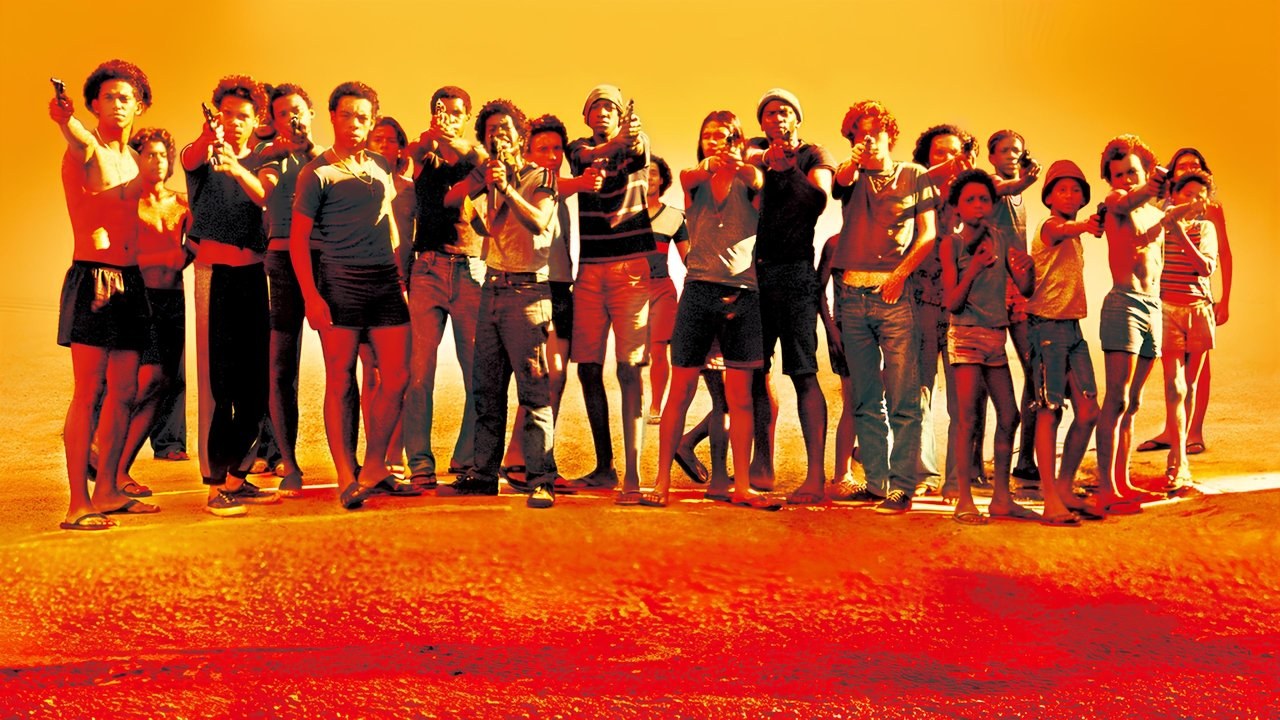
Synopsis
Rocket, a thoughtful, artistically-minded boy growing up in the impoverished, crime-ridden favela of Cidade de Deus on the outskirts of Rio de Janeiro, narrates the story of his neighborhood’s descent into escalating gang violence across the 1960s and 1970s, tracing how successive generations of young men, offered virtually no legitimate economic opportunity, are drawn into drug trafficking and violence from ever-younger ages, each generation more casually brutal than the last.
The film centers particularly on Li’l Zé, a childhood acquaintance of Rocket’s who rises from petty childhood crime to become the favela’s most powerful and ruthlessly violent drug lord, employing even younger children as killers and enforcers, his reign of terror eventually provoking a devastating gang war with a rival trafficker that engulfs the entire community in escalating violence neither the police nor any other authority seems willing or able to meaningfully address.
Rocket, determined throughout the film to escape the cycle of violence surrounding him through his genuine passion for photography, eventually achieves this escape not through any dramatic act of heroism but through the almost accidental circumstance of photographing the gang war’s violence for a newspaper, securing a legitimate career and a way out of the favela precisely by documenting rather than participating in the very cycle of violence that continues, devastatingly, to consume the childhood friends and acquaintances he leaves behind.
Analysis
Violence as an Inherited, Escalating Condition
Each successive generation of young men in Cidade de Deus is drawn into crime and violence at an increasingly young age, with children who grow up witnessing violence as an unremarkable feature of daily life becoming, in turn, even more casually brutal perpetrators of that same violence as they reach adolescence and young adulthood.
This portrayal of violence as an inherited, escalating condition rather than a series of isolated individual choices offers a sobering account of how thoroughly sustained exposure to violence and the absence of legitimate opportunity can shape successive generations’ baseline expectations of what constitutes a normal, viable path through life.
Legitimate Opportunity as the Genuine Alternative to Violence
Rocket’s eventual escape from the favela’s cycle of violence comes not through moral superiority or particular heroism but through his access to a legitimate opportunity – a career in photography – that the vast majority of his peers, equally capable and equally deserving, never receive, highlighting how much individual outcomes in such environments depend on access to genuine alternatives rather than personal virtue alone.
This portrayal resists any simple narrative in which Rocket’s escape reflects his superior character compared to his peers who remain trapped in violence, insisting instead that the presence or absence of legitimate opportunity plays a determinative role that individual moral effort alone cannot fully overcome.
Power Pursued Through Escalating, Self-Consuming Brutality
Li’l Zé’s rise to power through increasingly casual and extreme violence, including his use of ever-younger children as killers, illustrates how the pursuit of power within a lawless, opportunity-starved environment tends toward escalating brutality with no natural limit, each new act of violence simply establishing a new baseline that subsequent rivals or successors must exceed to compete.
This portrayal of violence’s self-consuming escalation, in which each generation’s brutality exceeds the last, offers a bleak account of how thoroughly the absence of legitimate governance and opportunity can transform a community’s internal power struggles into an ever-worsening spiral with no clear mechanism for correction from within.
Documentation as a Form of Witness and Escape
Rocket’s decision to photograph rather than participate in the violence surrounding him, ultimately becoming his means of both escape and testimony, suggests that bearing honest witness to injustice and suffering, even without directly intervening to stop it, retains genuine value and can itself become a legitimate, transformative vocation.
This portrayal of documentation as a meaningful response to violence one cannot single-handedly stop offers a model of engagement distinct from either direct participation or complete withdrawal, suggesting that truthfully recording and exposing injustice constitutes its own form of meaningful, if limited, resistance to it.
Questions for Discussion
1. Each generation in Cidade de Deus is drawn into violence at a younger age than the last. What does this escalating pattern suggest about how sustained exposure to violence shapes successive generations’ expectations of a normal life?
2. Rocket escapes the cycle of violence through access to a legitimate opportunity in photography that most of his peers never receive. What does this suggest about the role of opportunity, as opposed to individual virtue alone, in determining life outcomes within such environments?
3. Li’l Zé’s pursuit of power involves increasingly extreme violence, including the use of child killers. What does this escalation suggest about the absence of any natural limit to violence pursued within a lawless environment?
4. Rocket chooses to document rather than directly intervene in the violence around him. What value, if any, does bearing honest witness to injustice hold, even without the power to stop it directly?
5. What responsibility do government and law enforcement institutions bear for the favela’s descent into escalating violence, given the film’s portrayal of their near-total absence or ineffectiveness?
6. Is Rocket’s eventual escape from the favela a matter of luck, individual talent and persistence, or some combination of both? Defend your answer with specific moments from the film.
7. How does the film’s narrative structure, tracing multiple generations across decades, shape your understanding of violence as a systemic rather than purely individual phenomenon?
8. What do you think the film ultimately suggests is required to break a cycle of violence rooted in poverty and the absence of legitimate opportunity, given how few of its characters manage to escape it?


