Synopsis
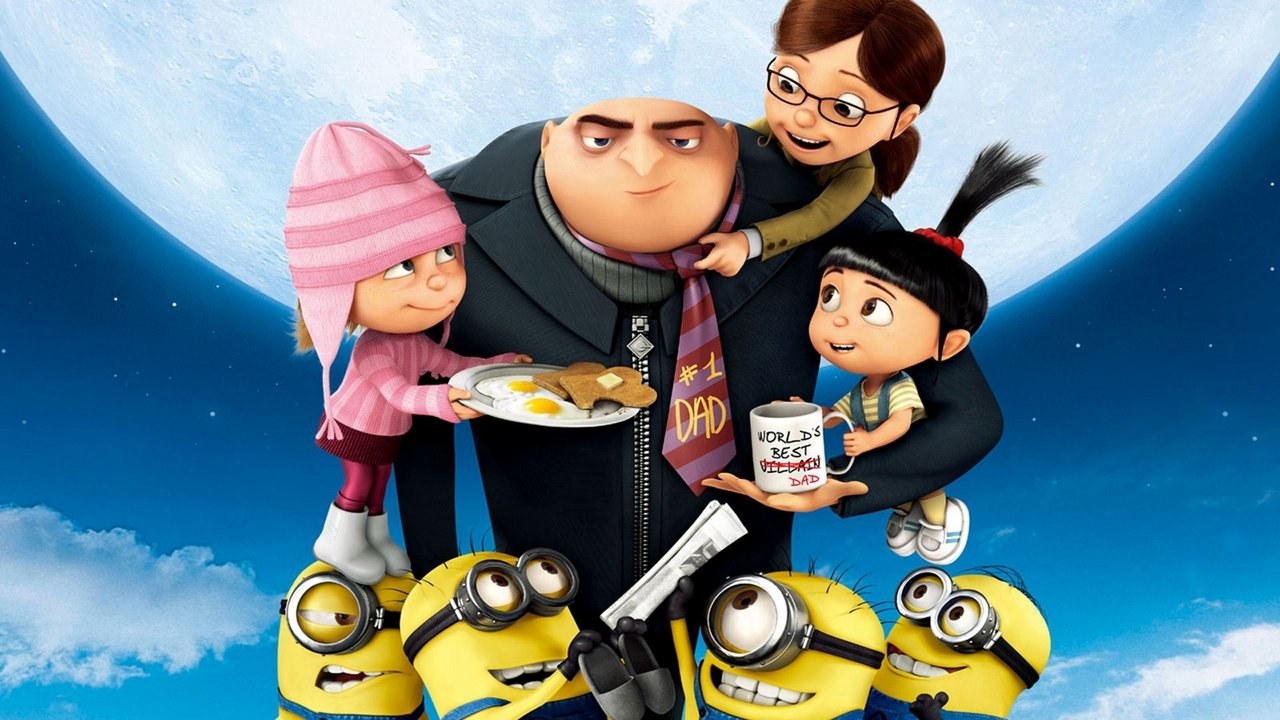
Gru is a supervillain whose career and reputation have grown stale, overshadowed by a younger, flashier rival named Vector, prompting Gru to plan an audacious heist to steal the moon itself in order to reclaim his standing as the world’s greatest villain. To acquire a crucial shrink ray he needs for the plan, currently in Vector’s heavily fortified lair, Gru adopts three orphan girls – Margo, Edith, and Agnes – purely as instruments, intending to use their status as cookie-selling scouts to infiltrate Vector’s compound and then discard them once the theft succeeds.
Despite his initial purely transactional intentions, Gru finds himself gradually, reluctantly drawn into genuine affection for the girls as he cares for them day to day, attends their dance recital under pressure, and witnesses their vulnerability and trust in him deepen in ways he did not anticipate or initially want. His loyal but easily distracted army of small yellow Minions assist him throughout, offering comic relief while also modeling their own straightforward loyalty to Gru regardless of his moral trajectory.
As Gru’s heist plan proceeds and the girls are placed in real danger by Vector, who briefly kidnaps them as leverage, Gru is forced to choose definitively between completing his lifelong villainous ambition or risking everything, including the heist itself, to rescue the children he had originally intended only to use. His choice to prioritize the girls’ safety over his own villainous legacy marks his genuine transformation from self-serving supervillain to a father in every way that matters, formalized by his eventual legal adoption of all three girls.
Analysis
Love Transforming Instrumental Use into Genuine Care
Gru’s initial relationship to the girls is entirely transactional – they are tools for his heist, valued only for their usefulness to his plan, with no regard for their own needs or wellbeing beyond what serves his purpose. The film traces, with real attentiveness, how sustained daily proximity and care, even undertaken for selfish reasons at first, can gradually give rise to genuine affection that eventually overrides the original selfish motivation entirely.
This transformation suggests something important about the formative power of ordinary caretaking itself – that acting lovingly toward someone, even when begun for the wrong reasons, can itself cultivate real love, rather than love needing to precede right action in every case.
Choosing Fatherhood Over a Lifelong Ambition
Gru’s decision to abandon his moon heist, the culmination of his entire villainous career and identity, in order to rescue the girls represents a complete reordering of his priorities – from personal legacy and professional reputation toward the concrete, immediate needs of three children who have come to depend on him.
This choice is presented as costly and genuine specifically because Gru’s villainous ambition was not a trivial or easily discarded goal; the film insists that becoming a good father required him to relinquish something he had spent his entire life working toward, giving his transformation real moral weight rather than presenting fatherhood as a costless, obviously superior alternative he simply hadn’t noticed before.
Vulnerability That Invites Responsibility
The girls’ own vulnerability and evident need for stable care and affection – having been shuffled through an orphanage system that offers little warmth or security – creates a claim on Gru that he did not anticipate and initially resists, yet which grows more difficult to ignore the more directly he witnesses their trust and dependence on him specifically.
This dynamic suggests that genuine need in another person, once directly witnessed and understood rather than kept at a comfortable distance, tends to generate real moral claims on those capable of responding to it, regardless of whether the relationship began through choice or circumstance.
Questions for Discussion
1. Gru initially adopts the girls purely as instruments for his heist, intending to discard them afterward. What allows sustained daily care, even begun for selfish reasons, to eventually produce genuine affection?
2. Gru ultimately abandons his lifelong villainous ambition to rescue the girls. What does the cost of this choice – giving up something he had worked toward his entire life – add to the meaning of his transformation?
3. The girls’ vulnerability and need for stable care create a claim on Gru that grows harder to ignore the more he witnesses it directly. What does this suggest about how proximity to another’s need shapes our sense of responsibility toward them?
4. Is Gru’s transformation from villain to father complete and genuine by the end of the film, or does the story suggest transformation is an ongoing process? Defend your answer.
5. What role do the girls themselves play in Gru’s transformation, beyond simply being recipients of his eventual care? How does their trust in him shape his own growth?
6. The Minions remain loyal to Gru throughout, regardless of his moral trajectory from villain toward father. What does their simple, steady loyalty contribute to the film’s portrait of Gru’s household?
7. What does the film suggest about the relationship between action and feeling – does loving action require love to come first, or can loving action itself cultivate genuine love over time?
8. How does Gru’s rivalry with Vector, another supervillain seeking status and recognition, help clarify what Gru ultimately comes to value more than his former ambitions?


