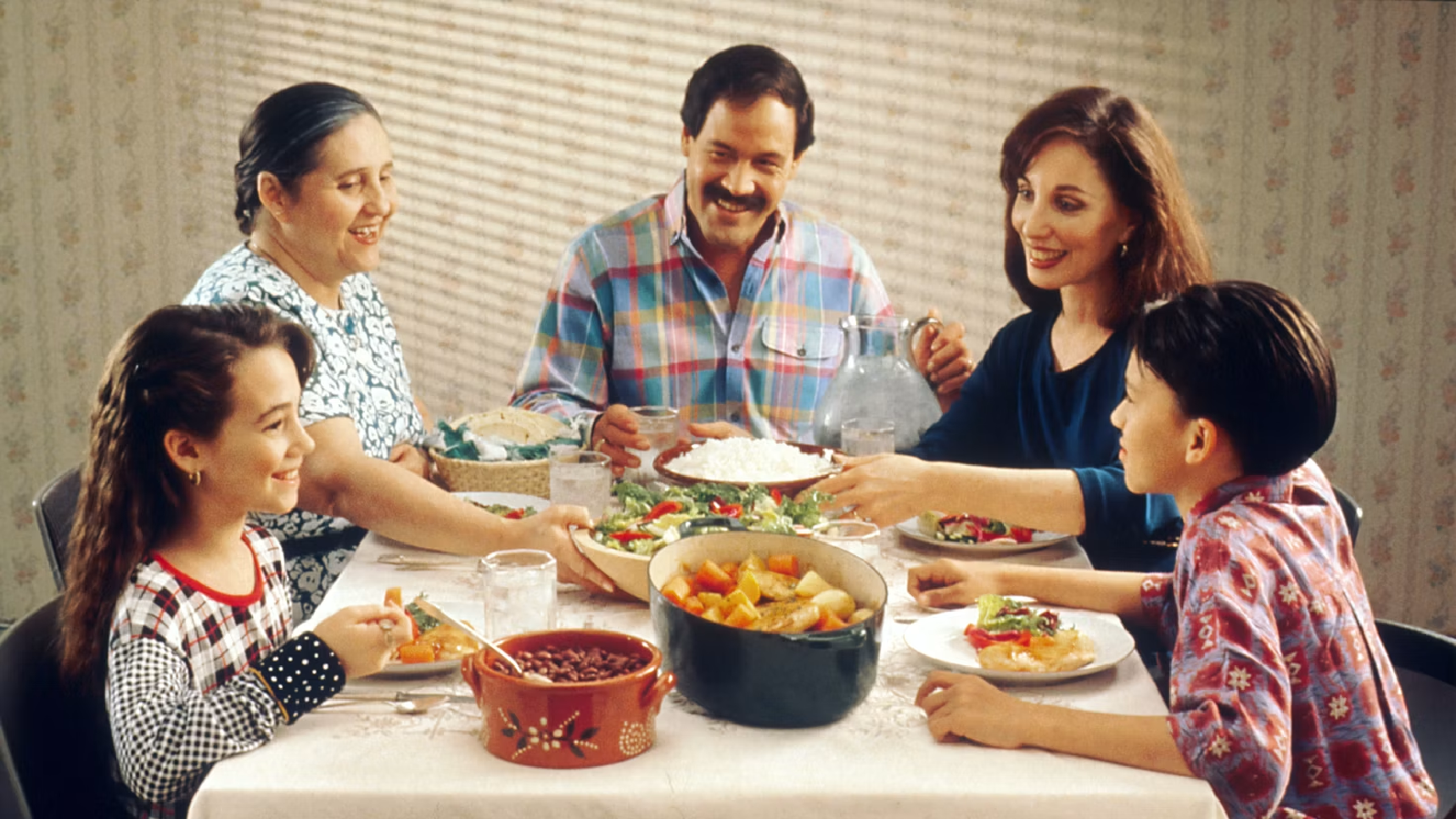
The family meal is one of the simplest institutions of family life, yet it has become increasingly difficult to preserve. Work, school, sports, commuting and many other commitments compete for the same hours of the day. In some homes, family members leave early and return at different times; in others, evening activities make a regular dinner almost impossible. It is easy for meals to become something each person fits into his own schedule, often eating alone or in front of a screen. Yet when families lose the habit of sitting down together, they lose more than a convenient way of eating. They lose one of the ordinary settings in which family life is built.
A family meal is valuable not primarily because of the food but because of the togetherness it creates. Around the table, parents and children see one another, talk about what has happened during the day, tell stories, laugh and sometimes discuss matters that would never have arisen in a more formal conversation. No elaborate program is required. The simple fact of being together regularly creates opportunities for communication that are difficult to reproduce in other ways.
Research over several decades has confirmed what families have long known intuitively. Children and adolescents who regularly share meals with their families tend to do better in a number of areas. Studies have associated frequent family meals with healthier eating, stronger relationships with parents, better academic outcomes and lower rates of several forms of risky behaviour. These findings should not be interpreted mechanically, as though sitting at the same table automatically produced good children. Families that eat together may also share other healthy habits. Nevertheless, the consistency of the association points to something important: regular shared meals provide a setting in which family bonds can grow.
The benefits begin with something very ordinary—conversation. Parents often wonder how to remain connected with children as they grow older, particularly during adolescence. Formal attempts to “have a serious talk” can sometimes make a young person retreat. At the dinner table, conversation develops more naturally. A comment about school can lead to a discussion of friendship; a story from work can raise questions about honesty or responsibility; something in the news can open a conversation about values. Much of a child’s formation occurs in these apparently casual exchanges.
Parents also learn about their children through these conversations. They begin to notice who their friends are, what worries them, what they enjoy and what difficulties they may be encountering. A child who would never announce that something is troubling him may reveal it indirectly while talking about his day. Regular contact gives parents a better chance of noticing changes in mood or behaviour before a problem becomes serious.
The same is true in the other direction. Children need to know their parents as persons. At meals they hear stories about their parents’ work, childhood, relatives and experiences. They discover how adults think about ordinary problems and how they make decisions. Family culture is transmitted in this way, often without anyone deliberately setting out to teach it.
Stories are especially important. Families gradually develop a shared memory made up of events that are retold over the years: something amusing that happened on a vacation, a grandparent’s sacrifice, a childhood mishap or the way the family faced a difficult period. These stories give children a sense that they belong to something larger than themselves. They learn where they come from and what their family values.
For a Christian family, the table has an additional meaning. Our Lord chose meals as the setting for many important moments of his earthly life. He ate with friends and sinners, accepted hospitality in people’s homes and attended the wedding feast at Cana. After the Resurrection, he appeared to his disciples in the context of meals, and the Eucharist itself was instituted during the Last Supper. Christianity does not treat eating as merely a biological necessity. A shared table can become a place of communion.
This does not mean that every family dinner must become a religious exercise. The Christian character of the meal is often expressed very simply: grace before eating, gratitude for the food, respect for one another and an atmosphere in which everyone is welcome. Faith becomes part of ordinary family life rather than something confined to church or formal prayer.
Saying grace is particularly valuable because it reminds us that food is a gift. We live in a culture in which meals can easily be treated as products to be consumed quickly. A brief prayer restores perspective. We acknowledge that what is before us comes ultimately from God and that many people have contributed to bringing it to the table. Gratitude changes the tone of a meal because it teaches us to receive rather than simply consume.
The family table can also teach service. Someone prepares the food, someone sets the table and someone clears it afterward. Children should gradually participate in these tasks according to their age. This is not merely a way of reducing the parents’ workload. It teaches that family life depends upon contribution. We do not simply arrive to be served; we help create the home we share.
These small responsibilities are especially important because much of modern life encourages children to think of themselves as consumers. Meals can easily reinforce this if parents function as short-order cooks and every child expects food tailored to his preferences. A family meal offers a different lesson. We receive what has been prepared, express gratitude and learn that our preferences are not always the centre of family life.
Of course, reasonable flexibility is necessary. Families differ, children have genuine dietary needs and not every meal will please everyone. The goal is not rigidity. It is to cultivate an atmosphere in which food is received gratefully and the effort of the person who prepared it is respected.
The quality of the meal matters less than the quality of the encounter. Families sometimes abandon regular meals because they imagine that eating together requires elaborate cooking. It does not. Sandwiches, soup, leftovers or a simple breakfast can provide the same opportunity for connection. The essential thing is that people sit down together and give one another attention.
This is why flexibility matters. Dinner is often the natural family meal, but it is not the only possibility. For some families, breakfast works better. Others may be able to gather more reliably on weekends. When schedules make a full meal impossible, a shared snack or dessert can still create a regular moment of contact. The important thing is not to wait for an ideal arrangement that may never come.
Families can begin modestly. If everyone currently eats separately, trying immediately to establish seven formal dinners a week may produce frustration. One regular meal is a beginning. Once the habit is established, additional opportunities may become possible. What matters is consistency more than perfection.
The meal should also be protected from unnecessary distractions. Phones are among the greatest threats to the family table because they allow everyone to be physically present while mentally elsewhere. A message, video or social-media notification can easily become more compelling than the person sitting across the table. Putting phones away for the duration of the meal sends a simple but important message: the people here deserve our attention.
Television can create the same problem. There may be occasions when a family deliberately eats while watching a special event, but if a screen dominates every meal, conversation disappears. The table becomes another place for passive consumption rather than encounter.
The atmosphere matters as much as the absence of screens. Family meals should not normally become interrogation sessions. Parents understandably want to know about grades, homework and responsibilities, but if every dinner becomes an examination of performance, children may begin to dread coming to the table. Difficult matters sometimes need to be discussed, yet the meal should ordinarily remain a welcoming place.
Humour has an important role. Families need to laugh together. Shared jokes and amusing stories create affection and help everyone recover from the tensions of the day. A family that can laugh at itself is often more resilient because minor irritations do not acquire unnecessary importance.
Parents set the tone. If they arrive at the table absorbed in their phones, complain continually or use the meal mainly to criticize, children will learn that this is what family dinner means. If parents show interest in others, tell stories, listen and contribute to a pleasant atmosphere, children gradually learn the same habits.
Conversation does not always arise automatically, particularly with adolescents. Some young people answer every question with a word or two. Parents may need patience and imagination. Asking “How was school?” often produces “Fine.” A more specific question about something that happened that day may lead further. Sometimes the best conversations begin not with direct questioning but with a parent telling a story and allowing the discussion to develop naturally.
Silence should not be feared either. Not every meal needs constant animated conversation. Family members can be tired. The value of the table lies partly in simply being together. Regularity creates a secure background to family life even when nothing memorable is said.
The family meal also provides an opportunity to welcome others. Friends of the children, relatives, neighbours or someone who would otherwise eat alone can sometimes be invited to join. Hospitality teaches children that the home is not a closed world. There is room at the table for others.
The Gospel repeatedly connects meals with hospitality. Jesus accepts invitations from people of very different backgrounds. He eats in the homes of Pharisees and tax collectors. Zacchaeus’s conversion unfolds after he welcomes Jesus into his house. Martha and Mary receive him at Bethany. These scenes remind us that a table can become a place where friendship grows and where people experience something of God’s welcome.
For this reason, a Christian home should have a certain openness. Hospitality need not be elaborate. Guests often remember warmth and conversation more than the quality of the food. A simple meal shared generously can communicate more affection than an impressive dinner accompanied by anxiety.
Family meals also provide occasions for celebrating. Birthdays, anniversaries, feast days and personal achievements naturally gather people around a table. These celebrations mark the passage of family life and teach us to rejoice in one another’s good. They need not be expensive. Their value lies in giving attention to a person or event and creating shared memories.
Sunday has traditionally had a special place in this rhythm. For Christians, Sunday is the Lord’s Day, centred above all on the Eucharist. A leisurely family meal can extend something of its festive character into the home. In a culture that often treats Sunday as merely another day for errands, shopping or organized activities, protecting time for worship, rest and family life helps preserve its meaning.
The family meal also teaches patience because people who live together inevitably irritate one another. Someone arrives late, spills something, complains about the food or dominates the conversation. These small frictions provide ordinary opportunities to grow in charity. Family life is not formed only in dramatic sacrifices. Much of it is built through repeated acts of patience and consideration.
This is one reason perfectionism is so damaging at the table. The idealized family dinner in which everyone is cheerful, the food is excellent and conversation flows beautifully is not normal life. Children argue, parents become tired and meals sometimes go badly. If we expect perfection, we may abandon the practice because reality does not match the image.
The goal is not a perfect meal but a family that continues to gather. Some evenings will be memorable; others will be rushed or uneventful. The accumulated effect matters more than any individual occasion. Over years, thousands of ordinary meals create a pattern of presence.
This regularity can become especially important during difficult periods. A teenager going through emotional struggles, a family coping with illness or parents under financial pressure may not know how to solve the problem immediately. Continuing to gather provides stability. The table says, in effect, that despite everything happening around us, we still belong to one another.
Divorce, separation, shift work and other circumstances can make family meals more complicated. We should avoid defining the family table so narrowly that people in difficult situations feel they cannot have one. A single parent eating regularly with a child is a family meal. A grandparent, older sibling or caregiver can help create the same atmosphere of attention and connection when parents cannot be present.
What matters is not achieving a particular picture of family life but making the most of the circumstances we actually have. We cannot always control work schedules, school commitments or family structure. We can usually find some moments, however modest, in which people can sit down together and give one another undivided attention.
The same principle applies to residences, communities and households made up of people who are not related by blood. Shared meals can create a family spirit among people living under the same roof. Eating together regularly helps transform a building into a home because relationships grow through repeated ordinary contact.
This is especially valuable for young adults living away from their families. University students and others who have recently left home can easily fall into irregular habits, eating alone at different times and spending much of their free time behind screens. A common meal provides structure and companionship. It creates a daily point at which people come together, notice one another and share what is happening in their lives.
The meal can become one of the strongest instruments for building community because it is so ordinary. Formal events have their place, but relationships are often formed more deeply through repeated informal contact. People who eat together learn one another’s personalities, humour, concerns and habits. They become less anonymous to one another.
A true family spirit requires participation. If some members regularly avoid common meals without good reason, something is lost. Their absence affects not only themselves but the group. Community is created by presence. We cannot expect a strong family atmosphere while treating shared life as optional whenever something more personally attractive appears.
This does not mean that everyone must attend every meal or that legitimate obligations should be ignored. Work, study and other responsibilities sometimes intervene. The point is one of priority. When shared meals are valued, people make reasonable efforts to protect them rather than allowing them to disappear casually from the schedule.
The table also teaches us to take an interest in people beyond our closest friends. In a household or residence, it is easy to sit always with the same small group. A family spirit grows when we sometimes choose to speak with someone we know less well, include a newcomer or notice a person who seems isolated.
These gestures are small, but they shape the culture of a home. Someone who has just arrived may decide within a few meals whether he feels welcomed. A person going through a difficult period may be helped simply because another member notices that he seems unusually withdrawn. The table gives us repeated opportunities to practice this attentiveness.
For Christians, such attention has a supernatural dimension. Christ tells us that what we do for others we do for him. The person sitting beside us at dinner is not merely another occupant of the house or another member of the family. He is someone created and loved by God. Ordinary courtesy and conversation can therefore become acts of charity.
The Eucharist gives the deepest Christian meaning to the symbolism of the table. We should not confuse an ordinary meal with the sacred banquet of the Mass, but the Eucharist teaches us something about communion. Christ gathers people into one family and gives himself as food. Our ordinary tables should reflect, however imperfectly, something of this unity, gratitude and self-giving love.
The word “companion” itself comes from roots associated with sharing bread. Human beings have always recognized that eating together creates a bond. We do not merely consume food in the same place; we share something necessary for life. The meal becomes an expression of belonging.
Modern life makes this harder because efficiency encourages us to treat eating as one more task to complete quickly. Food can be ordered instantly, eaten while travelling or consumed alone while working. These conveniences are useful, but if they become the normal pattern, something human is lost. Meals have always been one of the ways people stop working long enough to be with one another.
Recovering the family meal therefore requires a deliberate choice. We may need to simplify schedules, accept less elaborate food, put away devices or say no occasionally to activities that fragment family life. The sacrifice is usually modest compared with what is gained.
We should also resist turning the family meal itself into another achievement to optimize. The research on its benefits is valuable, but families do not need to count meals anxiously or feel guilty because their schedule does not match an ideal number. The point is not to satisfy a statistic. It is to create regular opportunities for communion.
One good meal together is better than none. If that becomes two or three, so much the better. What matters is that the family recognizes the value of gathering and protects it as much as circumstances reasonably allow.
The fruits often appear slowly. A single dinner may seem unremarkable. A child may say very little, and nothing important may appear to happen. But over months and years, the repeated experience of sitting together communicates something powerful: we belong here, we have time for one another and our lives are connected.
Children who grow up with this experience may not appreciate it fully until later. What seemed ordinary becomes part of their understanding of home. They remember familiar conversations, family jokes, the food that appeared repeatedly and the people who occupied their usual places. The table becomes part of the architecture of memory.
For adults as well, these meals can become some of the most precious moments of life precisely because they are ordinary. We often imagine that relationships are built mainly through exceptional experiences, but love depends much more on repeated presence. The family meal gives that presence a regular place.
There will always be pressures competing for our time. We cannot eliminate every scheduling conflict, nor should family life become rigid. But we can recognize that eating together is not merely one activity among many. It is one of the basic ways a family becomes and remains a family.
If we preserve the table as a place of gratitude, conversation, humour, service and welcome, it can nourish far more than the body. It helps children grow, strengthens relationships, creates memories and gives faith a natural place in daily life. In a society in which people are increasingly connected electronically while often isolated personally, the simple act of sitting down together has acquired renewed importance.
We do not need a perfect meal, an elaborate menu or an ideal family situation. We need a table, something to share and the willingness to give one another our attention. From such ordinary things, much of the richness of family life is built.
By the Via Virtutis team
Photo by National Cancer Institute on Unsplash