Synopsis
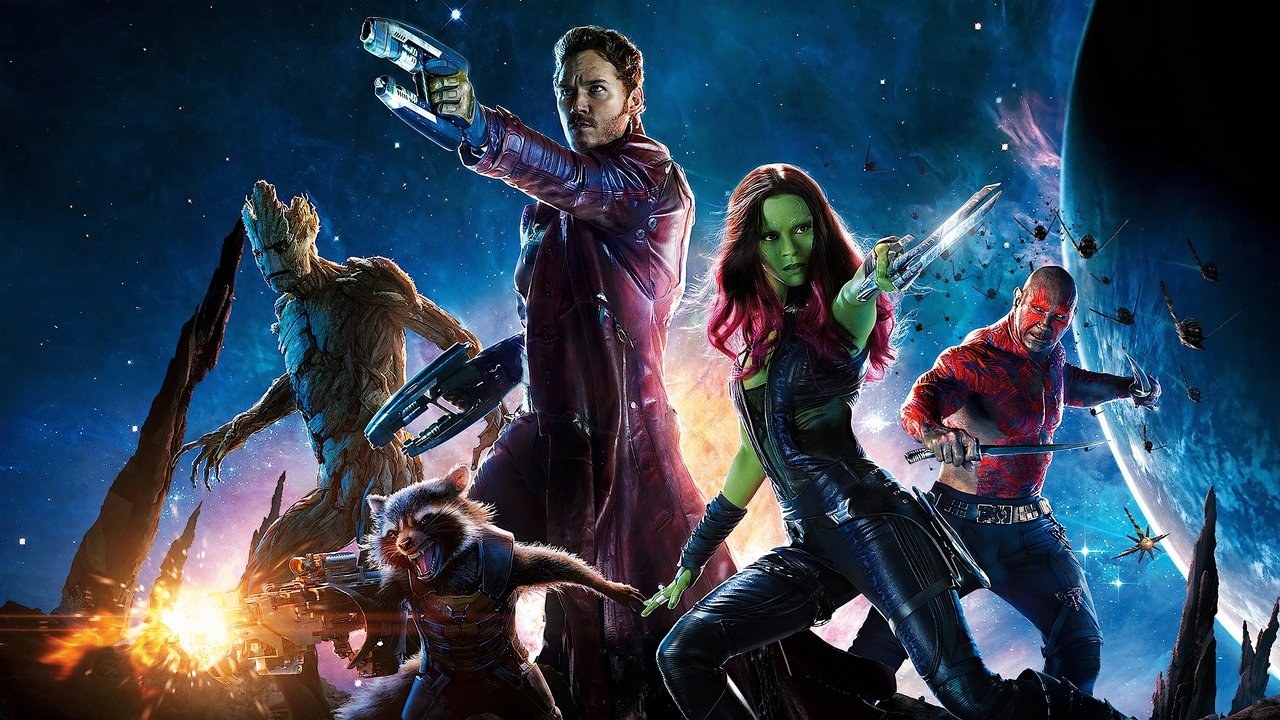
Peter Quill, a human abducted from Earth as a child and raised among space pirates known as Ravagers, steals a mysterious orb on a distant planet, unaware that it contains one of the universe’s most powerful and dangerous objects, coveted by the fanatical Kree warlord Ronan the Accuser, who intends to use it to annihilate an entire planet. Quill’s theft draws the attention of an assassin named Gamora, a bounty-hunting duo consisting of a genetically engineered raccoon named Rocket and a tree-like being named Groot, and eventually a vengeful warrior named Drax, whose family was murdered by Ronan.
After a chaotic confrontation lands all five in a high-security prison together, the group reluctantly forms an alliance, initially motivated purely by self-interest and the orb’s substantial bounty, planning to sell it to the highest bidder rather than involve themselves in any larger conflict. As they come to understand the true, catastrophic danger the orb poses in Ronan’s hands, and as their individual grudges, grief, and loneliness gradually give way to genuine loyalty toward one another, the group chooses to abandon their profit-driven plan and instead risk their lives to stop Ronan themselves.
In the climactic battle above the planet Xandar, the newly formed team – self-styled “Guardians of the Galaxy” – combines their disparate skills and, crucially, their willingness to trust and rely on one another, to defeat Ronan and safeguard the orb, choosing collective responsibility over individual profit or personal vengeance alone.
Analysis
Found Family Assembled from Isolated Grief
Each member of the eventual team begins the film isolated by loss – Quill by abduction from his dying mother’s side, Gamora by being raised as a weapon after her family’s murder, Rocket and Groot by exploitation and experimentation, Drax by the massacre of his wife and daughter. Their initial alliance is transactional, but it gradually transforms into something closer to a chosen family, formed precisely because each recognizes in the others a similar, unspoken wound.
This transformation from mutual usefulness to mutual loyalty suggests that genuine community can emerge even among people whose first instinct, shaped by loss, is self-protective isolation – provided they are given enough shared risk and time to recognize each other as more than merely useful.
Choosing Responsibility Over Profit
The team’s original plan is purely mercenary: sell the orb to the highest bidder and walk away with the proceeds, regardless of what the buyer intends to do with it. Their eventual decision to intervene directly against Ronan, at great personal risk and with no guarantee of profit or even survival, marks a decisive shift from self-interest to a sense of responsibility for consequences they did not create but now understand themselves capable of preventing.
This shift is not portrayed as an easy or obvious choice; each character has genuine reasons to prioritize self-preservation or personal vengeance over collective risk, which makes their eventual unified commitment to stopping Ronan feel earned rather than automatic.
Vulnerability as the Basis of Genuine Strength
The team’s eventual victory depends less on any single member’s individual power than on their willingness to be vulnerable with and reliant upon one another – trusting each other with their lives in ways that each character’s traumatic past would ordinarily make nearly impossible. Quill’s insistence, in the film’s climactic moment, that the team join hands together to share the burden of holding the orb’s overwhelming power reflects this theme directly and literally.
This image – power made survivable only through shared burden rather than individual heroism – offers a clear statement about the film’s understanding of strength: not the ability to stand entirely alone, but the willingness to be genuinely dependent on others when the stakes exceed what any one person could bear.
Grief Transformed Rather Than Erased
None of the team’s losses are undone or forgotten by the film’s end; Quill still lost his mother, Gamora and Drax still carry their respective griefs, Rocket remains shaped by the trauma of his creation. What changes is not the fact of their losses but their isolation within them, as each character finds, through the others, a way to carry grief that no longer requires total self-sufficiency.
This distinction between erasing pain and finding companionship within it offers a more honest model of healing than a simple resolution would provide, suggesting that community does not eliminate suffering so much as make it more bearable.
Questions for Discussion
1. Each member of the team begins the film isolated by some form of loss or trauma. What allows their initial, purely transactional alliance to grow into genuine loyalty?
2. The team’s original plan is to sell the orb for profit, regardless of the consequences. What causes them to abandon this plan in favor of directly confronting Ronan?
3. Quill asks the team to join hands to share the burden of the orb’s power in the final battle. What does this image suggest about the film’s understanding of true strength?
4. Is the team’s eventual heroism primarily motivated by a sense of responsibility, personal loyalty to one another, or a combination of both? Defend your answer with specific moments.
5. Drax’s family was murdered by Ronan, giving him a strong personal motive for revenge. How does his eventual willingness to fight alongside the team, rather than pursue vengeance alone, change the nature of his response to his grief?
6. What does the film suggest about the relationship between vulnerability and genuine strength, particularly in how the team ultimately defeats Ronan?
7. None of the characters’ past losses are undone by the film’s end. What does the film suggest instead about how community can help a person carry, rather than erase, grief?
8. Rocket, in particular, resists forming attachments throughout much of the film due to his traumatic origins. What finally allows him to commit to the team despite this resistance?


