Synopsis
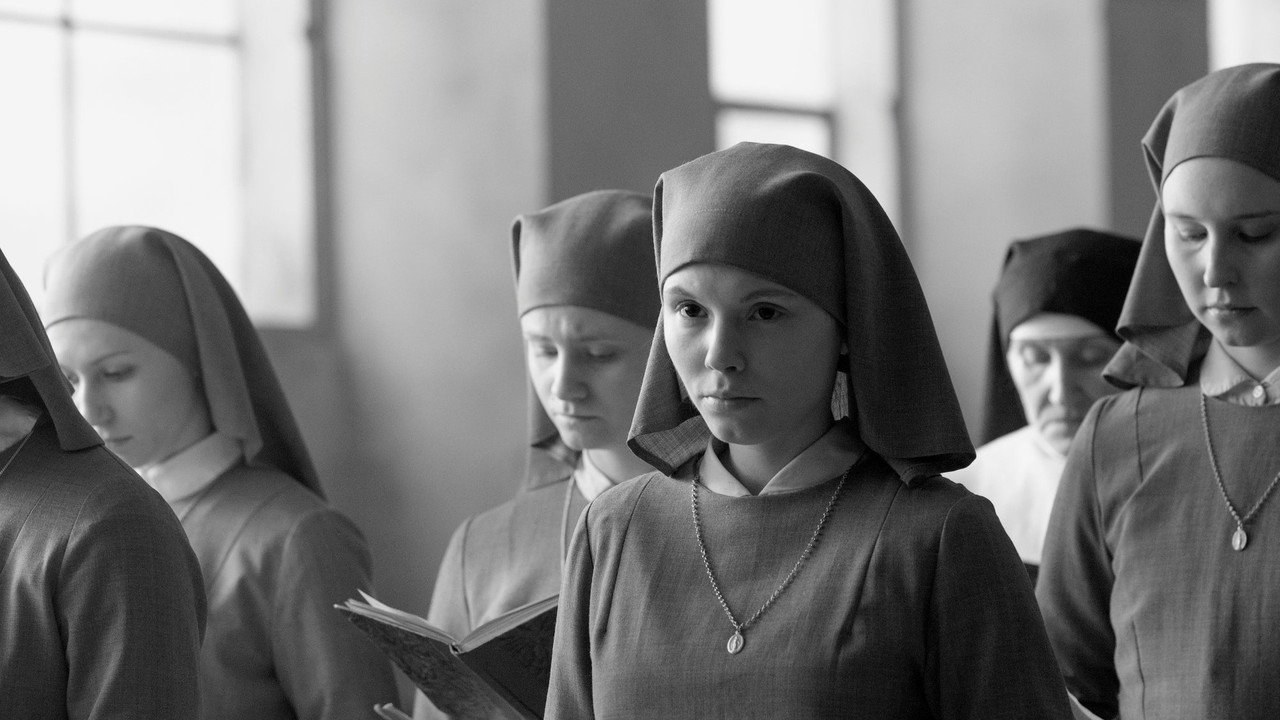
In 1960s Communist Poland, Anna, a young novice about to take her final vows at the convent where she was raised as an orphan, is instructed by her Mother Superior to visit her only living relative, an aunt named Wanda, before formally committing herself to religious life. Anna reluctantly travels to meet Wanda, a hardened, cynical former state prosecutor who reveals, almost immediately and without gentleness, that Anna’s real name is Ida, and that her parents were Jewish, murdered during the German occupation.
Wanda, whose own past includes sending people to their deaths as a Stalinist prosecutor and who now drinks heavily and drifts through casual affairs to numb an unspoken grief of her own, agrees to help Ida locate her parents’ graves and learn the full truth of what happened to them. Their journey together takes them to the rural farm where Ida’s parents were hidden and ultimately killed by the Polish family sheltering them, once fear of discovery overcame whatever charity had first moved them to help.
The trip forces both women to confront uncomfortable truths – Ida about an identity and history the convent walls had shielded her from entirely, Wanda about a role in Poland’s postwar violence she has never fully reckoned with. After learning the full, painful truth and briefly tasting the ordinary pleasures of life outside the convent, including a tentative romance with a jazz musician, Ida ultimately chooses to return to the convent and take her vows, while Wanda, unable to bear the accumulated weight of her past, ends her own life.
Analysis
A Vocation Tested Rather Than Assumed
The Mother Superior’s insistence that Ida meet her aunt before taking vows reflects a conviction that a vocation accepted without genuine knowledge of the world being renounced is not yet a fully free or examined choice. Ida’s journey outside the convent is not framed as a temptation to be resisted at all costs, but as a necessary confrontation that either confirms or reveals the hollowness of a calling formed entirely within sheltered walls.
Ida’s eventual return to the convent, after experiencing grief, family history, romantic attraction, and ordinary worldly pleasure, carries far more weight than it would have if she had simply taken her vows without ever being tested by an alternative. The film treats her choice as more genuinely free, and therefore more meaningful, for having been actually chosen rather than merely inherited.
Two Women Carrying Incompatible Burdens
Ida and Wanda represent two radically different responses to trauma and history – Ida’s formation within the disciplined, ordered life of the convent, and Wanda’s descent into numbness, cynicism, and eventual despair after years spent complicit in state violence and unable to process her own losses. Their brief companionship allows each woman to see, however incompletely, a path she did not take.
The film does not suggest that Ida’s path is simply right and Wanda’s simply wrong; rather, it presents two genuinely different ways of carrying an unbearable history, one sustained by structure and faith, the other collapsing under the weight of unprocessed guilt and grief, without formation or grace to carry it.
The Ordinary Complicity of Fear
The Polish family who murders Ida’s parents did not begin as murderers; they had, at real risk to themselves, sheltered a Jewish family during the German occupation, only for fear of eventual discovery and punishment to eventually overcome whatever charity had first motivated their help. The film’s unflinching portrayal of this shift – from courage to fear to murder – refuses to reduce complicity in atrocity to simple, cartoonish villainy.
This honesty about how ordinary fear can corrupt even genuine, costly charity into betrayal is one of the film’s most disturbing and important observations, offering no easy reassurance that good intentions, once tested by sustained danger, will necessarily hold.
Grace Available Even After Full Knowledge
Once Ida learns the full truth of her family’s murder and briefly experiences the pleasures and freedoms of secular life, she does not return to the convent out of ignorance or naivety, but with complete knowledge of both the horror in her past and the ordinary happiness available to her outside religious life. Her choice to return is thus not an escape from reality but a decision made in full view of it.
This distinguishes her vocation from one that might collapse the moment it encountered genuine hardship or temptation; having faced both fully, her choice to embrace religious life carries the weight of a decision made with eyes entirely open, which the film presents without either romanticizing or undermining it.
Questions for Discussion
1. The Mother Superior insists Ida meet her aunt before taking her vows. What does this insistence suggest about what makes a vocation genuinely free rather than merely inherited?
2. Ida and Wanda represent two very different ways of carrying difficult histories. What distinguishes Ida’s path from Wanda’s, and what allows Ida to endure what Wanda ultimately cannot?
3. The family who murders Ida’s parents had originally sheltered them at real risk to themselves. What does this progression from courage to betrayal suggest about the fragility of even genuine moral courage under sustained pressure?
4. Wanda’s history as a Stalinist prosecutor complicates any simple reading of her as merely a victim of circumstance. How does the film balance sympathy for her grief with honesty about her own past complicity in violence?
5. Ida chooses to return to the convent after fully experiencing the alternative life available to her. Does this full knowledge make her vocation more or less meaningful than if she had simply taken her vows without ever leaving?
6. Is Wanda’s eventual suicide presented as an inevitable consequence of her past, or as a failure to find any path toward reconciliation with it? What, if anything, might have offered her a different outcome?
7. What does the film suggest about the relationship between structured religious life and the capacity to carry an unbearable history, compared to a life without such structure or faith?
8. The film is shot in stark black and white with a distinctive, often static visual style. How might this visual choice reinforce the film’s themes of austerity, discipline, and confrontation with difficult truth?


