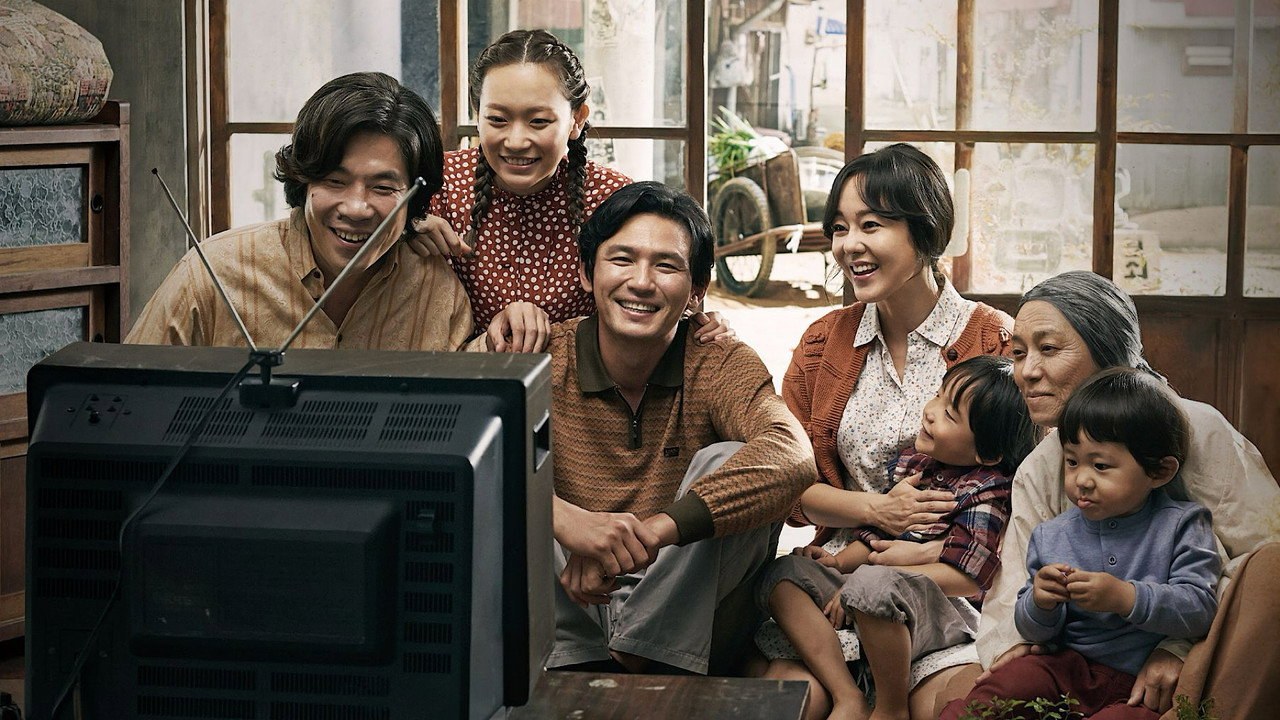
Synopsis
Deok-soo is a young boy in 1950 when the Korean War forces his family to flee their northern home during the chaotic Hungnam evacuation, and in the crush of the crowd boarding an evacuation ship, he loses his grip on his younger sister, who is swept away in the chaos. His father goes back into the crowd to find her, entrusting Deok-soo, as the eldest son, with the responsibility of caring for the rest of the family before disappearing himself, leaving Deok-soo burdened for the rest of his life with guilt over the separation and a promise to his father that he would keep the family together and safe.
Across the following decades, Deok-soo repeatedly sacrifices his own dreams and ambitions – abandoning his own education, working as a miner in West Germany, volunteering for dangerous work during the Vietnam War, all to provide for his mother and siblings and to fund a shop his father had wanted the family to run – always carrying the unresolved hope that his father and sister might somehow still be found and the family reunited.
As an old man, Deok-soo participates in a televised program reuniting families separated by the war, in one of the film’s most devastating threads, in the hope of finally locating his lost sister. Looking back across a lifetime spent almost entirely in service of a promise made as a frightened child, Deok-soo reflects, with a mixture of exhaustion and quiet pride, on a life defined less by his own choices than by unwavering, largely unacknowledged devotion to a family that does not always seem to recognize the full scope of what his sacrifice actually cost him.
Analysis
A Promise That Shapes an Entire Life
Deok-soo’s promise to his father, made as a frightened child in the chaos of evacuation, becomes the organizing principle of his entire adult life, directing every major decision he makes for decades afterward. The film treats this promise with genuine reverence, presenting Deok-soo’s fidelity to it as a form of profound, if largely invisible, heroism rather than mere passivity or lack of ambition.
This portrayal invites reflection on how a single moment of commitment, made under duress and without full understanding of its eventual cost, can nonetheless become a legitimate and binding source of lifelong purpose and identity.
Sacrifice That Goes Largely Unseen and Unthanked
Deok-soo’s family, particularly his siblings who benefit directly from his sacrifices, do not always fully recognize or acknowledge what his devotion has actually cost him – the education he never received, the dreams he set aside, the dangers he faced in West Germany and Vietnam specifically to fund their comfort and opportunities. The film does not resolve this imbalance sentimentally; Deok-soo’s sacrifice remains, in significant part, unseen even by those who benefit most from it.
This honesty about unacknowledged sacrifice gives the film’s portrait of familial devotion a bittersweet, rather than purely triumphant, quality – suggesting that some of the deepest forms of love and duty are rendered, and received, without the recognition they might seem to deserve.
Grief Without Resolution, Carried Rather Than Healed
The unresolved separation from his father and sister remains an open wound throughout Deok-soo’s entire life, never fully healed even as he builds a stable family and successful business of his own. His participation in the televised family-reunion program as an old man reflects a hope that has never fully died, despite decades without any confirmation that his search might succeed.
The film’s willingness to let this grief remain largely unresolved, rather than providing a tidy reunion, reflects the actual historical reality faced by many Korean families divided by the war, refusing to offer the audience a comfort that history itself did not offer the real people whose experience the film depicts.
Individual Sacrifice Within a National Tragedy
Deok-soo’s personal story of loss, labor, and devotion unfolds against the backdrop of Korea’s broader twentieth-century upheavals – the war, labor migration to Germany, the Vietnam War – situating his individual sacrifice within a much larger pattern of a generation that bore enormous, often unacknowledged burdens to rebuild a devastated nation.
The film’s interweaving of personal and national history suggests that Deok-soo’s story, however singular in its details, represents countless similar stories of quiet endurance carried by an entire generation, whose sacrifices made possible the prosperity and stability later generations would inherit largely without full awareness of their cost.
Questions for Discussion
1. Deok-soo’s promise to his father, made as a frightened child, shapes his entire adult life. What does this suggest about how commitments made under duress can nonetheless become legitimate sources of lifelong purpose?
2. Deok-soo’s family does not always fully recognize what his sacrifices have cost him. What does the film suggest about the nature of devotion that goes largely unseen or unacknowledged by those who benefit from it?
3. Deok-soo’s grief over his lost father and sister remains unresolved for decades. Why might the film choose not to offer a full, comforting resolution to this particular thread?
4. How does the film use Deok-soo’s personal story to illuminate the broader historical experience of a generation of Koreans who lived through war, migration, and rapid national rebuilding?
5. Is Deok-soo’s lifelong sacrifice ultimately presented as heroic, tragic, or both? Defend your answer with specific moments from the film.
6. What responsibility, if any, do those who benefit from a family member’s sacrifice owe to acknowledging or honoring that sacrifice, even belatedly?
7. Deok-soo volunteers for dangerous work in West Germany and Vietnam specifically to provide for his family. What does this willingness to face danger for the sake of others suggest about his understanding of duty?
8. By the end of his life, Deok-soo reflects on a life shaped almost entirely by devotion to others rather than his own ambitions. Do you think he views this life as fulfilling, as a loss, or as something more complicated? Explain your reasoning.


