The Gospel of St. John tells us of a man who had been ill for thirty-eight years, lying near the pool of Bethesda in the hope of a cure. When Jesus saw him and knew that he had been there a long time, he asked a question that at first seems almost unnecessary: “Do you want to be healed?” The sick man answered simply that he had no one to help him into the pool when the water was stirred, since someone else always went down ahead of him before he could reach it. Jesus then said, “Rise, take up your pallet, and walk,” and at once the man was healed, took up his pallet, and walked.
That question—”Do you want to be healed?”—reaches far beyond physical illness, for Christ can address it to each of us regarding our defects, our weaknesses, our bad habits, and our deeply rooted tendencies. Do we truly want to change? Do we still believe change is possible, and are we ready to use the means patiently and perseveringly even when progress is slow? God’s goodness always exceeds our calculations, and he stands ready to give us the grace we need in every situation, but grace calls for a response. We cannot make peace with the defects that separate us from God or make life harder for those around us, and we should never simply say, “That is the way I am,” as though our temperament or our past made growth impossible. Nor should repeated failure become an excuse to give up. Perhaps we have fought the same fault for years—losing our temper, seeking attention, judging others, procrastinating, complaining, sinking into discouragement, or repeating some weakness we sincerely wish we had left behind long ago—and though we have confessed it many times and made many resolutions, we keep discovering that it is still there. The temptation then is discouragement, the sense that our efforts have achieved nothing and that real change is beyond us. Yet the paralytic at Bethesda had waited thirty-eight years, and his long waiting did not empty his hope; it prepared the way for an encounter with Christ.
The spiritual life asks for this same union of determination and patience. Determination without patience can harden into harshness toward ourselves, while patience without determination softens into complacency, and Christian struggle needs both: an uncompromising desire to grow together with a peaceful acceptance that growth is ordinarily gradual. We have to distinguish patience with our defects from tolerance of them, since being patient with ourselves does not mean pretending our faults do not matter but refusing to lose heart when, despite sincere effort, they persist. Love for Christ should make us decisive in confronting whatever hinders our friendship with him, so that we identify our dominant defects, use concrete means against them, and seek the virtues that oppose them; and that same love should make us patient when the struggle lasts longer than we hoped. Perhaps God will ask us to fight a particular weakness for many years, and the battle itself may become one of the chief places where our love matures, because every time we fall and begin again, resist even imperfectly, or humble ourselves and ask for grace, we are learning perseverance.
A well-known spiritual principle speaks of the art of profiting from our faults, which does not mean that faults are good or that we may stop trying to overcome them, but that once a failure has occurred we should not waste it. Our defects can teach us humility, exposing the illusion of self-sufficiency and reminding us how much we depend on grace; they can make us gentler toward the weaknesses of others, give us prudence by showing us where we are most vulnerable, and deepen our self-knowledge and mature our judgment. In this way even a failure can become material for growth when it leads to sincere contrition and renewed effort. The real danger is not primarily that we fall, since human weakness makes falls inevitable in many areas, but that we stop getting up. St. Josemaría often stressed the need to begin and begin again, for the interior life holds victories and defeats, advances and setbacks, and no one is exempt from this instability; what matters is that we use the means God gives us and resolve to start over as often as necessary. This attitude is deeply hopeful, because we do not measure the value of our struggle by immediate results alone but also by fidelity. A person may fight impatience for years and still lose his temper on occasion, yet perhaps he now sees the danger sooner, recovers more quickly, apologizes more readily, and does less harm; perhaps what once happened daily now happens only now and then, and perhaps he has grown humbler and more compassionate through the struggle itself. Growth is often like this—real without being dramatic.
We naturally want rapid transformation, so that once we recognize a defect we would like to be rid of it at once. Grace does sometimes bring striking changes, but ordinarily virtue is formed through repeated acts over time. A farmer does not plant seed in the morning and expect a harvest by evening; St. James reminds us that he waits patiently for the precious fruit of the earth, receiving the early and the late rains, and spiritual growth asks for a similar patience, since virtue is not usually acquired through occasional bursts of enthusiasm but grows through continuity—trying again today, tomorrow, and the day after, always supported by grace. This is why small, concrete resolutions tend to be more effective than grand intentions. If we struggle with impatience, we might resolve to pause before answering when irritated; if we are inclined to criticize, we might make a deliberate effort to say something positive; if we procrastinate, we can begin the hard task at a fixed time rather than waiting to feel motivated. The remedy should be practical and suited to the particular defect. At the same time, we should not try to fight everything at once, for a person who attempts to correct every weakness simultaneously soon grows exhausted and discouraged; it is usually wiser to concentrate on one or two areas while keeping up the ordinary struggle in the rest. Good spiritual direction helps us see what matters most and choose realistic means, since the defect we find most embarrassing is not always the one doing the greatest harm, and we need humility to see ourselves objectively and to accept guidance.
Patience is all the more necessary because our defects are often bound up with temperament, habits, and experiences accumulated over many years. Grace can transform us, but it ordinarily respects the human way in which character develops. Someone naturally quick-tempered may never become temperamentally placid, yet he can learn self-control, patience, and charity; a naturally timid person may keep feeling fear while acquiring genuine courage; someone inclined toward sadness may still know periods of melancholy while learning to live in hope. Holiness does not erase personality but purifies and elevates it. We should therefore avoid comparing our struggle with anyone else’s, because what is easy for one person may cost another a heroic effort, and we see external behavior while rarely knowing the interior battle behind it—but God sees the effort. One person may seem calm simply because calmness comes naturally to him, while another stays silent for thirty seconds only by fighting an intense inner battle not to answer in anger; outwardly the second has done almost nothing, and yet before God that small victory may hold great love. This perspective keeps us patient with ourselves: we want real progress without demanding that our path resemble someone else’s.
Patience also asks us to accept the humiliation of recurring weakness, and few things wound our pride more than finding that a defect we thought conquered has come back. We may have enjoyed a stretch of improvement and started to think the problem was behind us, only to have the old reaction reappear under fatigue, stress, or unexpected pressure. Such moments can be discouraging, but they also tell the truth, since virtue is not merely the absence of temptation under favorable conditions but a stable disposition that has to be strengthened over time; a relapse does not erase all our earlier progress and may simply show that the virtue needs deeper roots. We should respond without drama—acknowledging the failure, asking forgiveness, repairing any harm, and asking whether some practical lesson can be drawn—and then continue. Excessive self-reproach can itself be a disguised form of pride, since we are sometimes shocked not so much because we have offended God or hurt another person as because the failure contradicts the flattering image we held of ourselves. Humility reacts differently: it is sorry for the fault but not astonished by human weakness, and it turns at once toward God. Contrition is therefore very different from discouragement. Contrition is sorrow born of love, sorrow that we have failed to respond to someone who loves us infinitely, and it moves us toward God, toward Confession when needed, toward reparation and renewed struggle; discouragement turns us inward, so that we brood over the failure, pity ourselves, and lose the energy to go on. One produces hope, the other paralysis.
The servant in Christ’s parable who could not pay his enormous debt had no resources adequate to his situation and could only appeal for mercy, and we often stand before God in exactly the same way, our own resources insufficient while his mercy remains inexhaustible. This dependence is not a defect in the Christian life but its very foundation, for we do not become holy by finally reaching a point where we no longer need God; we become holy by depending on him more completely. Our repeated weaknesses can teach us this dependence if we let them, each fall becoming a renewed prayer: “Lord, without you I cannot do this. Give me the grace to begin again.” Such a prayer is the opposite of resignation, since we ask for grace precisely so that we can keep struggling—hope and effort belong together.
The same patience we need with ourselves must extend to others, which can be harder because the defects of other people touch us directly. Someone is disorganized, insensitive, slow, irritable, forgetful, or inconsiderate, and we bear the consequences; and when we live or work closely with people, their weaknesses grow so familiar that we begin to assume they will never change. Patience is especially necessary at that point. It does not mean pretending defects are not there or never correcting anyone, since charity sometimes requires correction, particularly when we are responsible for another person’s formation, work, or well-being—but correction only bears fruit when prudence and love guide it. Timing matters, tone matters, and the relationship matters. A true observation made at the wrong moment can close a person’s heart, and a necessary correction delivered with irritation may accomplish less than silence, so that at times the most effective response is to wait: a short delay lets our own emotion settle and helps us speak more objectively, and it may also leave the other person more receptive, so that a calm word, a smile, or a positive beginning makes possible a conversation that impatience would have ruined. St. John Chrysostom compared the work of helping another person to a painter who keeps adjusting and retouching an image, and if an artist takes such pains over a mere likeness, how much more patience should we bring to helping a human person grow. People are not projects to be completed on our timetable; they have freedom, history, temperament, wounds, and struggles we may only partly understand, and growth cannot simply be imposed from outside.
This is particularly important for parents, teachers, mentors, and anyone entrusted with forming others. We may see clearly what someone needs to change and grow frustrated when he does not respond at once, but knowing what a person needs is not the same as knowing how quickly he can receive it, and formation requires patience because love respects freedom. We propose, encourage, correct, accompany, and pray, and then we let grace work in ways and at a pace we may not be able to see. God himself gives us the model, for his patience with us is astonishing: he gives grace again and again, forgives our offenses, encourages our smallest progress, and grants us countless chances to begin once more. If God has treated us so patiently, we have little ground for demanding instant perfection from others, and remembering our own weakness makes this easier, since the person whose defect irritates us may be struggling as sincerely as we are against faults that others find hard to bear in us. This does not remove the need for correction, but it changes its spirit, so that we correct as fellow sinners rather than as superior beings.
Patience is likewise necessary in the apostolate. We may pray for someone, speak with him about the faith, invite him to activities, and try to offer good example, and still see little response—perhaps he seems uninterested, perhaps he listens politely and does nothing, perhaps years go by—and the temptation is to give up. But God does not give up on people. The paralytic at Bethesda said, “I have no one to put me into the pool,” and those words should stay in the heart of every Christian engaged in the apostolate, so that no one around us can ever say, in effect, that there was nobody who cared enough to help. We cannot force anyone to respond to grace, but we can remain present—continuing to pray, offering friendship, giving good example, and watching for the right moment to speak—for sometimes the most important apostolic work is simply not disappearing. A person may seem indifferent for years and only later recall a conversation, an example, or a friendship that had gently prepared the way for grace, since we rarely know what God is doing in another soul. This is why apostolic patience must be joined to supernatural hope: if we depend only on visible results we will soon be discouraged, whereas we sow and water and leave it to God to give the growth. Prayer and sacrifice are therefore essential, for when words seem useless we can keep helping through intercession, and this does not mean multiplying anxious efforts but entrusting the person to God while remaining available. Friendship itself is already a great gift, and we should never make anyone feel that our affection depends on his religious response, because authentic apostolate loves the person for his own sake.
Patience also teaches us to tell apart what can be changed and what must be accepted. Some defects improve greatly with effort, while others may remain in some form throughout life, since age, illness, temperament, or psychological limitations can set real boundaries on what is possible, and maturity consists partly in recognizing those limits without abandoning the desire to grow. We do what we reasonably can and accept what we cannot immediately change, and this applies both to ourselves and to others. We may spend great energy wishing another person had a different temperament, when what is really needed is a more realistic acceptance of who he is; likewise we may grow frustrated at lacking qualities God never intended to give us in the same measure as someone else, forgetting that grace perfects the person God created rather than turning us into somebody else. There is peace in accepting this. Yet acceptance must never become an excuse for selfishness, for “that is my personality” can never justify behavior that wounds others; temperament explains our tendencies but does not remove our responsibility. A naturally forceful person can learn gentleness, a sensitive person can grow in resilience, a reserved person can learn to show affection, and an impulsive person can acquire prudence—growth remains possible, and the question is never whether we will become flawless but whether we keep letting grace transform us.
Sometimes our progress is hidden precisely because we remain so aware of the struggle. We may think, “I am still impatient after all these years,” without noticing that the struggle itself has grown quicker and more effective, which is why we should look back now and then with gratitude as well as honesty, for perhaps God has already changed us more than we realize. Gratitude guards us against discouragement, letting us acknowledge how far we still have to go while recognizing the grace already received. The paralytic waited thirty-eight years, but the decisive moment came at last when Christ stood before him, and our own long struggles can likewise become places of encounter with Christ. A defect that continually drives us to prayer may keep us close to him, a weakness that repeatedly humbles us may guard us from pride, and a battle that never seems fully finished may teach us perseverance more deeply than an easy victory would have. We should not, then, measure God’s action only by whether he removes the struggle, for sometimes his grace shows itself in the strength to stay faithful within it. St. Paul prayed again and again that his thorn in the flesh be taken away, and the Lord answered, “My grace is sufficient for you, for my power is made perfect in weakness.” We do not always know why a particular weakness remains, but we do know that weakness does not prevent holiness. The saints were not people without defects or struggles; they were people who let grace work through their humanity and who kept returning to God, and their holiness was not a self-perfection achieved by willpower but the fruit of love, grace, and perseverance. This should fill us with hope.
We live in a culture that often expects rapid results, wanting immediate improvement, measurable progress, and efficient solutions, but the spiritual life follows a more organic rhythm. A tree grows slowly, its roots deepening unseen before any fruit appears, and character develops through thousands of small choices, so that patience simply gives grace the time it needs to work. This is not a reason to postpone conversion, for we should respond today—yet we respond today without demanding that today complete the whole work, since our task is only ever the next faithful step. If we fall, we rise; if we fail again, we rise again; and if the same defect humiliates us for the hundredth time, we return to Christ for the hundredth time. There is something deeply loving in this perseverance, because every new beginning says, “Lord, despite my weakness, I still want you,” and that desire matters. Christ’s question remains—”Do you want to be healed?”—and we answer yes not only in words but by continuing to use the means: we pray, we examine ourselves, we receive the sacraments, we seek advice, we make practical resolutions, we apologize when we have hurt others, and we repair what we can. And then we begin again.
Over time this repeated struggle forms virtues deeper than we may realize—humility, patience, perseverance, hope, and dependence upon God—so that the defect we most dislike can become the very ground on which some of our greatest virtues are formed. This is one of the paradoxes of grace: God does not cause our faults, but he can draw good from the struggle against them, turning humiliation into humility, failure into prudence, weakness into dependence, and repeated new beginnings into steadfast love, so that in Christ what looks sterile becomes fruitful. The prophet Ezekiel describes water flowing from the Temple and bringing life wherever it goes, so that living creatures flourish wherever the river runs and even the waters of the sea are made wholesome; Christ is the true source of that life-giving water. We bring him what is wounded, weak, and seemingly unchangeable, and though he does not always transform it in the way or at the speed we expect, nothing placed sincerely in his hands is wasted. Our struggle can become prayer, our failures can become humility, our contrition can deepen love, our patience with ourselves can teach us patience with others, and our long waiting can prepare us for a deeper encounter with Christ.
We should therefore never make a pact with our defects, and yet we need not be frightened by the length of the battle, because the Christian path is not one of instant perfection but of faithful perseverance. We struggle seriously and peacefully, hoping without demanding immediate results; we correct ourselves without contempt and correct others without impatience; and we trust that grace is at work even when progress seems slow, beginning again whenever we must. Perhaps, like the man at Bethesda, we will find in the end that the long years of struggle were not empty after all, but years in which God was teaching us to wait, to hope, to grow humble, and to recognize that healing comes finally from Christ. His question stands before us each day—”Do you want to be healed?”—and our answer is the perseverance of a lifetime.
By the Via Virtutis team
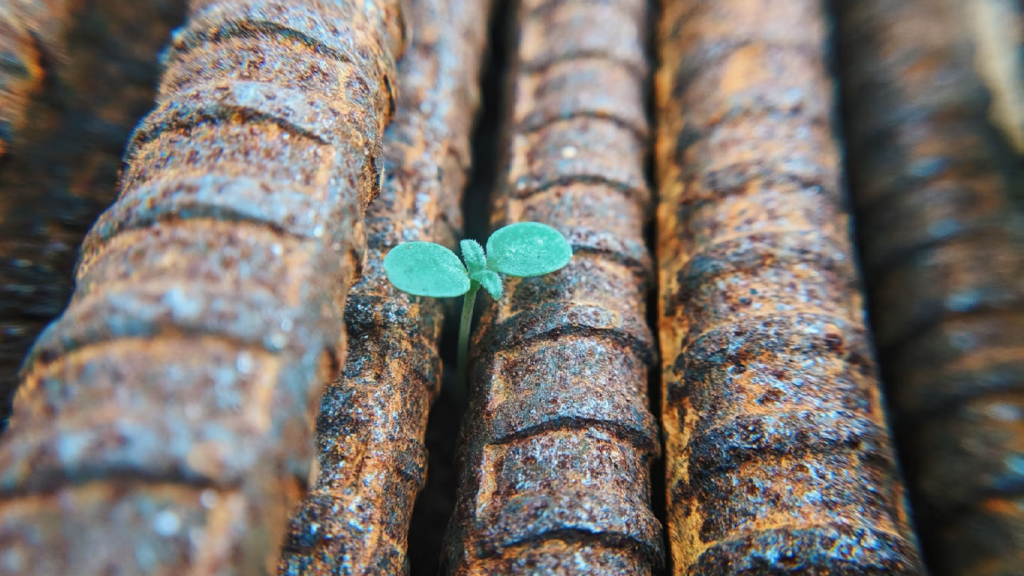
Photo by Joshua Earle on Unsplash