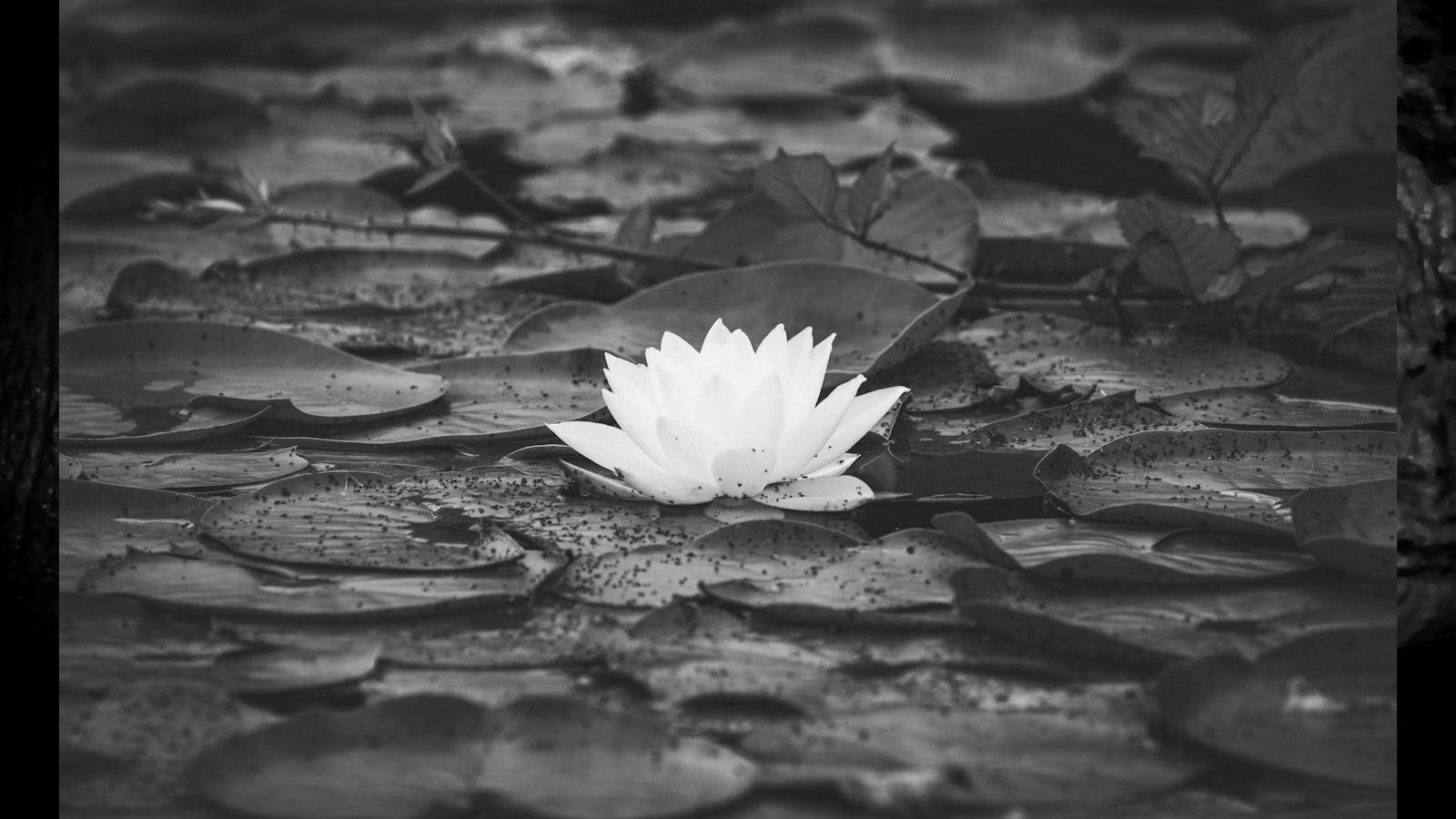
To follow Christ is to give him our whole heart. Christianity is not simply a set of beliefs or moral rules added to an otherwise ordinary life; it is a personal response to Christ, who calls us to belong entirely to him. For this reason the Christian vocation necessarily includes purity of heart and chastity according to each person’s state in life, and St. Paul gives the teaching a striking foundation: “Your body is a temple of the Holy Spirit within you, whom you have from God. You are not your own; you were bought with a price. So glorify God in your body.”
Christian purity begins with this extraordinary affirmation of human dignity. The body is not something shameful from which the soul must escape, nor is it mere biological material that we may use however we please. It belongs to the person; through it we express love, form relationships, serve others, and live out our vocation, and it too has been redeemed by Christ and is destined for resurrection. St. John Paul II therefore described purity as “the glory of the human body before God” and “the glory of God in the human body,” and this positive vision is essential. Chastity is sometimes presented almost entirely as a collection of prohibitions—do not look, do not touch, do not imagine, do not desire—and certain prohibitions really are necessary, because love requires boundaries. But they do not reveal the deepest meaning of the virtue, whose essence is love. Chastity orders our sexuality so that it serves authentic love rather than selfish possession, teaching us to see another person not as an object for gratification but as someone created in the image of God, with a dignity that must always be respected.
Purity, then, is not simply sexual restraint but the integration of sexuality within the whole person, so that body, emotions, imagination, affections, desires, intelligence, and will work together according to truth and love. Original sin has wounded this harmony. We experience desires that do not always correspond to what reason recognizes as good; our imagination can move in directions we did not choose; our affections attach themselves in ways that are not well ordered; and sexual desire, itself part of God’s creation, can become detached from its proper meaning. The Christian should not be surprised by this struggle, since Baptism removes original sin without removing all its consequences, and concupiscence remains. Chastity therefore requires formation, grace, and personal effort—but effort should never be confused with pessimism, for the fact that something is hard does not make it impossible. The first Christians lived in a culture where many forms of sexual immorality were accepted and even normalized, and St. Paul reminded the Corinthians that some of them had once lived that way; yet he did not tell them that holiness was unrealistic but that they had been washed, sanctified, and justified in Christ. Christianity has always proclaimed the possibility of transformation.
We should therefore reject the modern assumption that sexual desire is irresistible or that self-control is somehow unhealthy. Human beings are capable of governing desire, and genuine freedom in fact requires this capacity, since a person who must obey every impulse is not free at all. Freedom means being able to recognize what is good and choose it even when another desire pulls the other way, which is why chastity is a virtue of freedom: it does not destroy sexuality but liberates it from the domination of impulse and places it at the service of love. This holds in every vocation. For the unmarried person, chastity means abstaining from sexual relations and living one’s sexuality in a way suited to friendship, service, and one’s present state. For married persons it does not mean permanent abstinence but living marital sexuality according to the truth of marriage—faithful, exclusive, generous, and open to the full meaning of the conjugal gift. Marriage itself needs chastity, because without it even a spouse can begin to treat the other as an object for gratification; chastity teaches husband and wife to respect one another’s dignity, circumstances, and needs, and it makes real tenderness possible by freeing love from the rule of mere appetite. For those called to celibacy or virginity for the Kingdom of God, chastity takes another form again: they renounce the great good of marriage and sexual intimacy in order to give their heart more directly and universally to God and to others. Such renunciation makes sense only because marriage and sexuality are genuinely good, so Christian celibacy is never a rejection of sexuality but the sacrifice of one good for the sake of another vocation. In every state of life, then, chastity is ultimately about the ordering of love.
This is why purity of heart is broader than sexual morality. Christ says, “Blessed are the pure in heart, for they shall see God,” and a pure heart is undivided: it wants God sincerely and does not try to serve two masters. Sexual purity belongs within this larger interior unity. When our desires become disordered they can cloud our judgment; we begin to rationalize what we want and stop seeing another person clearly, because desire projects its own meaning onto him or her, and we may call something love when it is really possession, dependence, vanity, or sensual attraction. Purity restores clarity and lets us see persons as persons, which is one reason the tradition has always linked chastity with the ability to perceive spiritual realities. A heart absorbed in gratification grows blind to much; a pure heart is freer to recognize God, beauty, friendship, vocation, and the deeper meaning of human relationships.
None of this means a chaste person never feels temptation, and here an important distinction must be kept: temptation is not impurity. An unwanted thought, image, feeling, or bodily reaction is not itself a sin, since moral responsibility begins with what we freely choose, and people can become needlessly anxious about temptations they never deliberately sought. We should neither panic over temptation nor toy with it; we recognize it, refuse consent where consent would be given, redirect our attention, and continue in peace, rather than turning the spiritual life into an endless audit of whether every passing thought was sinful. At the same time we should not be naïve, because temptation often grows when we voluntarily stay near what stimulates it, and humility teaches us to know our own weakness. The person who says “this cannot affect me” is often in greater danger than the one who knows he must be careful. Avoiding unnecessary occasions of sin is prudence rather than cowardice, and we do the same thing naturally in other areas of life: someone recovering from alcoholism does not prove his freedom by spending idle hours in a bar, and a person trying to master a gambling habit does not keep testing his strength in a casino. In the same way, a Christian who knows that certain situations, media, or relationships repeatedly lead him toward sexual sin should not deliberately place himself in them without sufficient reason. Grace does not eliminate prudence; it perfects it.
The digital environment makes all of this newly urgent. Never before has sexually provocative material been so easily available: a phone can put before us images that earlier generations would have had to seek out deliberately, algorithms learn what holds our attention and then feed us more of it, and pornography is accessible privately, instantly, and often anonymously. This creates a new ascetical setting in which custody of the eyes must now include custody of our screens, and anyone serious about purity should not rely on willpower alone. Practical measures may be necessary—filters, accountability software, limits on private browsing, keeping devices out of vulnerable moments, reducing time on social media, changing habitual patterns—and these are not signs of immaturity but of understanding how habits actually work. The aim is not to live anxiously hemmed in by prohibitions; the aim is freedom.
Pornography deserves particular attention because it so directly contradicts the meaning of sexuality. It separates sexual stimulation from personal communion and turns human bodies into products for consumption, so that the viewer learns to look at persons without relationship, responsibility, or self-gift, and repeated use can reshape the imagination and one’s expectations until real relationships grow harder; it can also become compulsive. The Christian response has to hold moral clarity and hope together. Pornography is seriously wrong, yet a person caught in it should never conclude that he cannot change, because habits can be broken, grace is real, and practical help exists. Sincerity is essential here, since secrecy is precisely what gives destructive habits their power, and the person who keeps falling should bring the struggle honestly to Confession and, where fitting, to spiritual direction; if the behavior has become deeply compulsive, competent professional help may also serve, and there is no contradiction between grace and human assistance, for the two can work together.
Sincerity is in fact one of the great safeguards of purity. The temptation to hide is ancient, and shame whispers that if anyone knew about the struggle we would be judged or cast off, which can leave a person isolated exactly when help is most needed. But shame loses much of its force once it is brought into the light. We speak with discretion, of course—intimate matters are not for casual or indiscriminate conversation—yet with a confessor, a spiritual director, or another suitable person, clarity brings freedom. We tell the truth without dramatizing and without minimizing, which guards us against two opposite errors, one that excuses everything and another that magnifies every difficulty until we are discouraged; the truth lies between denial and despair, and once humility accepts the facts, grace can begin to work. The Sacrament of Penance matters enormously in this. Confession is not merely a place where guilt is recorded but an encounter with Christ’s mercy: when we fall we return, accuse ourselves simply, receive absolution, make a practical resolution, and begin again. Discouragement is never a useful response to sin. Contrition turns us toward God, while discouragement turns us in upon ourselves; where the perfectionist says, “I cannot believe I did this again,” humility says, “I am weak, but God is merciful, and I will begin again,” and that attitude is essential for perseverance.
Some struggles pass quickly and others may last for years, and progress is rarely a straight line—there can be seasons of victory followed by unexpected falls—so we should measure growth over time rather than by a single bad day. A person may be making real progress while still experiencing temptation: perhaps temptations are resisted more quickly, falls come less often, occasions are avoided more intelligently, sincerity has deepened, or he rises more promptly after a failure. These are genuine signs of growth. We should never make peace with sin, but neither should we demand instant perfection, and God often uses the very struggle to teach humility, perseverance, compassion, and dependence on grace. This does not make sin good; it means God can draw good even out of our weakness when we respond with repentance and trust.
Purity also asks for custody of the imagination, because images can linger within us long after the eyes have looked away, and what we habitually watch, read, and fantasize about forms an interior world. The imagination is a powerful faculty that feeds creativity, memory, empathy, and even prayer, but when it is continually fed with sensual imagery it becomes a source of temptation, so we need to choose what we let into it. This is not a matter of growing fearful of beauty or of the human body—Christianity has produced some of the greatest artistic depictions of the body precisely because it sees the body as meaningful and dignified—and the real question is not the mere presence of the body but the way we look at it. Do we perceive the person, or do we reduce the person to whatever stimulates us? Custody of the eyes is finally custody of the way we see, and what we want is to acquire Christ’s own gaze. Jesus looked at people with truth and with love: he saw the Samaritan woman’s disordered history without reducing her to it, defended the woman caught in adultery without pretending adultery was harmless, and looked at the rich young man and loved him even as he asked for a difficult conversion. Purity teaches us that kind of gaze, in which we see the whole person.
This becomes especially important in relationships between men and women. Sexual attraction is natural and good and should not be treated as though its mere existence were sinful, but attraction needs to be integrated, so that a person can recognize another’s beauty without turning that recognition into possession or fantasy, letting attraction remain within the truth of the relationship. Friendship should stay friendship, courtship should respect the stage of commitment actually reached, and marriage has its own exclusive intimacy; confusion arises when emotional or physical closeness runs ahead of what the relationship really is, and chastity protects love from exactly this confusion by making room for people to know one another as persons. In dating, this means that physical affection should express commitment rather than manufacture it, because when physical intimacy grows too intense too early it can create a sense of union the relationship has not yet earned, judgment becomes harder, and a couple may find themselves emotionally bound before they have seriously weighed compatibility, character, faith, vocation, and the capacity for marriage. Chastity protects freedom and lets love mature in truth.
This is no rejection of affection, for human affection is good, and tenderness, warmth, and appropriate physical expressions of love have a real place in our relationships. Chastity does not make a person cold; if anything it should make affection more genuine, since it frees tenderness from exploitation. St. Josemaría wrote that chastity keeps love young in every state of life, and the insight is profound, because impurity consumes while chastity cherishes. Impurity asks what it can get from another person; love asks what is good for that person, and the difference transforms every relationship. So purity requires custody not only of the body and imagination but of the heart. Our affections can grow disordered even without any overt sexual sin: we may become emotionally dependent on someone in a way incompatible with our vocation, or cultivate an intimacy that properly belongs elsewhere. A married person, for instance, may form an emotionally exclusive bond outside marriage that slowly draws affection away from the spouse; nothing explicitly sexual need have happened, and yet the heart is moving in a dangerous direction. Purity notices these movements early and asks whether our affections are ordered according to truth. The heart is made for love, but love needs an order in which God comes first and then the concrete duties and relationships of our vocation, and far from impoverishing affection, this order protects it, so that a person who loves rightly can love many people deeply without ever confusing the nature of each relationship.
Vanity can threaten purity too. The desire to attract attention, to be admired, or to provoke desire in others can become a subtle way of using our own sexuality for self-validation, and a person who intends no explicitly sexual act may still enjoy the power of being desired, which can shape how he dresses, behaves, converses, and presents himself online. Modesty answers this tendency, though it is often reduced to rules about clothing when in fact it is broader: the virtue that guards the mystery and dignity of the person, shaping how we present ourselves and how we respect others. Dress matters because the body communicates, but modesty also governs speech, humor, gestures, our use of social media, and the degree of intimacy we display in public, and its purpose is not shame but reverence. A modest person does not treat the body as dirty but as meaningful, and because sexuality is powerful and deeply personal, it deserves a fitting privacy. This avoids two extremes—one that treats the body with suspicion and embarrassment, and another that treats exposure as if it were automatically liberation. Christian modesty rejects both: the body is good, and precisely because it is good it should not be trivialized.
Purity is also helped enormously by ordinary industriousness. Idleness creates a climate in which temptation grows, which does not mean every moment must be crammed with frantic activity, since rest too is necessary, but purposeless drifting, especially combined with unrestricted digital access, easily becomes dangerous. A well-ordered life makes a real difference: work and study, exercise and friendship, service and prayer, healthy recreation and enough sleep all give structure to desire, and many spiritual battles are simply easier when life itself has direction. Physical exercise can be especially helpful, because sexuality belongs to an embodied person; it reduces stress, improves sleep, and channels physical energy constructively. This is no magic solution, but virtue is genuinely aided by sensible human habits, and temperance tends to be unified, so that a person who learns moderation in food, drink, entertainment, and comfort often grows stronger in other areas as well. Small acts of self-denial train our freedom by teaching us that we do not have to satisfy every desire at once, which is the deeper logic of mortification. Christian mortification is not hostility toward pleasure but training in love: we freely give up some legitimate satisfactions so that the will grows freer, choosing not to eat something we could eat, getting up promptly, finishing a task before seeking entertainment, or limiting unnecessary time on a screen. These small acts strengthen our capacity to say no when something genuinely wrong presents itself, since freedom grows through exercise and a person who always yields to small appetites will find larger ones harder to resist. Yet asceticism must be prudent, because extreme measures can breed discouragement or an unhealthy preoccupation; the goal is not to punish the body but to bring it into harmony, for the body is an ally in holiness, not an enemy. St. Paul’s language about disciplining the body has to be read alongside his equally strong teaching that the body is a temple of the Holy Spirit, and Christian asceticism always respects what it disciplines.
Prayer remains indispensable through all of this, because no set of practical techniques can produce purity on its own; chastity is finally a fruit of grace, and it grows out of a living relationship with Christ. Temptation is harder to resist when the spiritual life is empty, since the heart always seeks something to love, and mere repression leaves a vacuum that only love can fill. The Eucharist therefore stands at the center of the struggle: in Holy Communion we receive Christ himself, body and blood, soul and divinity, and the very body we seek to keep pure is united sacramentally with the Body of Christ, which gives chastity a profoundly Eucharistic meaning. We belong to him; our body belongs to him; our capacity for love belongs to him. Prayer before the Blessed Sacrament can gradually purify desire as we bring Christ our whole interior world without pretending, saying simply, “Lord, you know my weakness; you know what attracts me, what frightens me, and where I fall—give me a clean heart.” That prayer is deeply biblical: “Create in me a clean heart, O God.” Purity is not something we manufacture by ourselves; it is something God creates in us with our cooperation.
Devotion to Our Lady has a special place here as well. Christian tradition has long called Mary the Mother of Fair Love, and her purity is neither coldness nor distance; she is capable of the deepest human tenderness precisely because her heart belongs entirely to God, and she shows us that purity and love are not rivals but that purity enlarges love. Turning to her in temptation can be very simple—a Hail Mary, a glance at an image, a short aspiration—small acts that redirect the heart toward someone whose love is completely pure. We should also cultivate good friendships, because isolation makes many temptations stronger, whereas real friends draw us out of ourselves and offer companionship, humor, accountability, and perspective. A healthy community makes chastity easier by placing sexuality within a richer world of human relationships, and a person who knows meaningful friendship is far less likely to seek all his intimacy through sexual gratification. This matters especially for the unmarried, since celibate chastity does not mean emotional isolation; we all need affection and friendship, and the answer to loneliness is not impurity but genuine communion. Families, friendships, communities, and apostolic bonds all help build that communion, and the Church herself should be a family in which people find that they are known and loved. Where this dimension is missing, moral teaching can start to sound like a demand for loneliness, which it is not—Christian chastity is ordered toward communion and refuses false forms of intimacy precisely so that authentic ones can flourish.
We must also speak realistically about wounded sexuality. Some people carry experiences of abuse, exploitation, rejection, or early exposure to pornography, and these can shape how they understand their body, their desire, and their relationships. Moral formation is still needed, but so may be healing, and a person should not assume that every difficulty is simply a failure of willpower, since past wounds can shape present reactions. Professional therapy is sometimes appropriate and should be approached with the same prudence we would bring to any other significant psychological wound; healing does not remove moral responsibility, but it can make our freedom more complete. Christianity offers a particularly powerful word to anyone weighed down by shame about the past: no past sin or wound defines the deepest identity of the person, because Christ redeems, and the Gospel is full of new beginnings. St. Paul’s words to the Corinthians breathe hope—”such were some of you”—and the emphasis falls on were, for the past need not become our destiny. This does not mean consequences vanish at once; habits may remain, memories may remain, and healing may take time. But grace opens a future. A person who has lived unchastely can become chaste, someone who has been addicted can become free, and an imagination that has been wounded can gradually recover a cleaner way of seeing. The Christian message is never “you have ruined yourself” but “Christ makes all things new,” and this hope must accompany every word we say about sexual morality. Without truth, mercy collapses into sentimentality; without mercy, truth is heard as condemnation—and Christ gives us both, telling the woman caught in adultery, “Neither do I condemn you; go, and do not sin again.” Mercy and conversion belong together, and the Church must speak in the same way, neither redefining sin so that people feel accepted nor reducing people to their sins, since every person is greater than his failures and purity is always available as a path of renewed love.
All of this is especially important in a culture confused about sexuality, one that often presents sexual expression as essential to personal fulfillment, so that to deny a sexual desire is taken to mean denying one’s very identity. Christianity proposes a different anthropology. Our desires are real, but they do not define the whole person, for we also possess reason, freedom, relationships, vocation, and a destiny in God, and not every desire should be acted upon. This principle is not unique to sexuality, since human flourishing always requires the ordering of desire; we become free not by obeying every impulse but by learning to love what is truly good, and chastity is one expression of that larger freedom. It tells us that sexuality has a meaning we receive rather than invent, that the body is not meaningless material, and that the difference between man and woman, the capacity for union, and the orientation of sexual love toward the generation of life belong to the objective meaning of sexuality, which Christian morality seeks to respect. This is why chastity cannot be reduced to consent alone. Consent is indispensable, and any sexual act without genuine consent is a grave violation of human dignity, but consent by itself does not make every sexual act morally good, because human actions must also correspond to the truth of the person, of marriage, and of sexuality. Two people can consent to something that nonetheless harms them or contradicts an objective good, so Christian ethics asks more than whether both people agreed; it asks whether the action expresses authentic love according to the truth of the human person. The standard is demanding, but it protects sexuality from becoming merely subjective, for love is not whatever we happen to feel but the seeking of another’s true good, and chastity educates desire toward that good.
Such education takes time, and young people especially need formation before habits become deeply set. They should hear a positive vision of sexuality rather than only warnings, and they need to understand why the Church teaches what she teaches, since rules without meaning are fragile; once a person sees that chastity protects freedom, love, marriage, fidelity, human dignity, and the capacity for self-gift, sacrifice becomes intelligible. Formation should therefore be frank but delicate, because silence simply leaves people to learn from the internet, entertainment, and their peers, sources that usually present sexuality stripped of its full human meaning. Parents, educators, and spiritual guides should not be afraid to speak clearly, yet clarity must respect age, circumstances, and personal dignity; the goal is not to create fear but to form judgment, so that young people learn that temptation is normal, that struggle is possible, that failure is not the end, and that help is available. They should also learn practical prudence—that alcohol, for example, can lower judgment and self-control, that some social settings deliberately intensify sexual pressure, and that private situations can become occasions of temptation even when intentions began well. Prudence anticipates these realities and makes important decisions before desire grows intense, which is why a couple who wants to live chastely does well to agree on reasonable boundaries before repeatedly finding themselves where those boundaries are hard to keep. This is not legalism but intelligent preparation: athletes prepare before the competition and soldiers train before the battle, and virtue likewise prepares before temptation. We should know ourselves and ask when we are most vulnerable—when tired, lonely, discouraged, after drinking, late at night with a device, or after conflict—because temptation tends to follow patterns, and recognizing them lets us intervene earlier. Often the most effective spiritual strategy is remarkably practical: go to sleep, leave the room, put down the phone, call a friend, take a walk, start some useful work. We need not turn every temptation into an elaborate interior drama when frequently we simply need to change our circumstances, though at other times deeper prayer really is called for, and prudence learns to tell the difference.
Purity also grows through gratitude. If we see sexuality only as a problem, the whole struggle turns negative, whereas we do better to thank God for the body, for masculinity and femininity, for marriage and family, for friendship, and for the very capacity to love. Gratitude purifies desire by teaching us to receive creation as gift rather than to seize it as possession; we do not need to grasp, because we receive. This is especially important for those who are unmarried and long for marriage. That longing is good, but if it becomes absolute, loneliness can make compromise start to look reasonable, and a person may enter an unhealthy relationship or cross moral boundaries out of fear that the chance for intimacy is slipping away. Trust in God restores our freedom, because marriage is a great good but not the ultimate good—Christ is—and no human relationship can satisfy the deepest hunger of the heart. Recognizing this does not diminish marriage; it keeps marriage from becoming an idol. Married people need the same truth, since no spouse can be expected to fulfill every emotional and spiritual need, and only God can occupy the center of the soul; when he does, human love itself becomes freer. Purity thus has a contemplative dimension: the pure heart sees God because it is not forever grasping at created things as though they could give ultimate fulfillment, but receives them in God. Chastity is in this way closely bound up with hope, for we renounce what is disordered because we believe a greater love is possible. Every act of chastity says that immediate gratification is not the highest good, that there is something worth waiting for and worth protecting, and ultimately Someone worth belonging to.
This is what makes chastity joyful. The struggle may be hard, but the virtue itself is not grim, and a chaste person should grow more capable of friendship, tenderness, humor, and affection, not less. If our idea of purity leaves us suspicious of everyone or afraid of ordinary human warmth, something has gone wrong, because purity does not shrink the heart; it expands it. The saints show this, since their love was often extraordinarily personal—they remembered names, formed deep friendships, showed affection, and gave themselves generously—and their purity did not make them less human but made their humanity more transparent to grace. That is the goal: not merely avoiding certain sins but becoming capable of greater love. We can therefore examine ourselves in a positive key. Do I see others as persons, or mostly in terms of what they give me? Do I guard what enters my imagination, and am I honest about the occasions that weaken me? Do I seek help when I need it, and are my friendships healthy? Are my affections ordered according to my vocation, do I use digital media prudently, do I live a structured and purposeful life, and do I return quickly to God after failure? Most important of all, is Christ at the center of my heart—because if he is, the other elements gradually find their proper order.
Purity is not won by staring endlessly at impurity. We overcome darkness mainly by turning toward the light, which does not mean ignoring danger but recognizing that the deepest strategy is a positive one: fill the heart with God, fill the imagination with what is beautiful, fill our time with meaningful work and service, cultivate good friendships, love the Eucharist, go regularly to Confession, and turn to Our Lady. Then the struggle against temptation takes place within a much larger life, which is crucial, because a person cannot build an identity around “trying not to sin sexually.” The Christian vocation is infinitely richer—we are called to friendship with God, to service, work, apostolate, intellectual growth, human friendship, joy, and finally eternal life—and chastity exists to protect this larger vocation by keeping the heart free. There will still be battles, and at times they may be intense, but we need not be frightened by them; temptation can even become an occasion to renew our love, for each time we say no to something disordered we are saying yes to something greater—yes to Christ, yes to the dignity of another person, yes to our vocation, yes to freedom. This gives ascetical struggle its positive meaning: the Christian does not merely flee impurity, he runs toward love, and when he falls he does not stay on the ground but rises, receives mercy, learns, and begins again.
Over time, repeated choices form virtue, and what once demanded enormous effort can become easier: the imagination grows cleaner, the eyes more disciplined, relationships more peaceful, the heart less divided. This is the ordinary work of grace and virtue, and we should be patient with the process while remaining demanding in the struggle, since patience without struggle drifts into complacency and struggle without patience curdles into discouragement, and we need both. Above all we need confidence in God. No temptation is stronger than his grace, no past is beyond his mercy, and no habit is so deeply rooted that we should surrender hope. Our weakness is real, but it is not the final reality; Christ has bought us with a price, and we belong to him. The body that feels temptation is also a temple of the Holy Spirit, and the heart that wrestles with disorder is also a heart created for eternal love. This is why purity is worth fighting for. It is not a marginal virtue concerned with one narrow corner of morality; it protects our capacity to love, preserves our interior freedom, and helps us see others with reverence. It strengthens marriage and friendship, gives unity to celibate self-gift, clears the heart for prayer, and prepares us to see God.
We turn finally to Mary, Mother of Fair Love. In her we see purity not as restriction but as complete availability to God: her heart is undivided, and her love is tender, strong, and free. She teaches us that purity reaches its perfection not when the heart loves less but when it loves more truly, and we ask her to help us acquire that clean heart—a heart that does not use and does not grasp, that can admire beauty without possessing it, give affection without selfishness, and sacrifice without growing bitter, a heart that belongs first to God and for that very reason becomes able to love every other person according to truth. That is the purpose of Christian purity: not fear of the body, not the repression of love, not an anxious preoccupation with sin, but the integration of the whole person in the service of love. To follow Christ is to give him our heart, our body, our imagination, our affections, and our future, and when all of these are gradually purified and united in him, we become more free to fulfill the great vocation for which we were created—to love God with our whole being and to love others with the clean, generous, and joyful love of Christ.