Synopsis
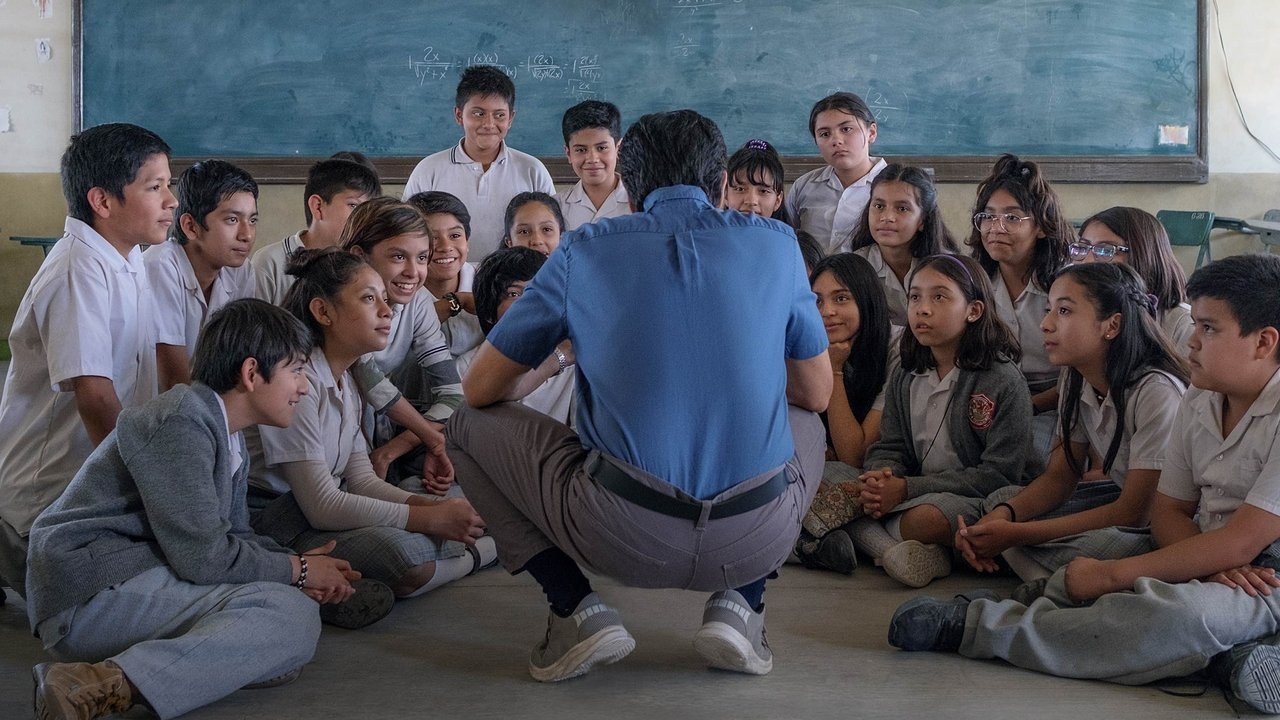
Sergio Juárez, a burned-out, disillusioned sixth-grade teacher in a poor, cartel-influenced town in Matamoros, Mexico, arrives at a severely under-resourced public school plagued by violence, apathy, and dismal academic outcomes, determined to try an unconventional, student-led teaching method he calls the Sergio Method, encouraging his students to pursue open-ended, self-directed problem-solving and genuine curiosity rather than the rote memorization and standardized testing that has consistently failed both the students and the broader system around them.
Sergio’s unconventional approach meets significant resistance and skepticism from the school’s exhausted administration and fellow teachers, who have grown accustomed to simply managing rather than genuinely educating students within a system starved of resources and constantly threatened by cartel violence and family circumstances that make sustained academic engagement extraordinarily difficult, even as several of Sergio’s students – including Paloma, an exceptionally gifted girl whose father works as a garbage collector, and Nico, a boy whose family increasingly pressures him toward cartel-connected work – begin to respond with genuine enthusiasm and remarkable intellectual growth to Sergio’s methods.
As Sergio’s students, particularly Paloma, achieve remarkable, previously unimaginable academic success under his unconventional guidance, culminating in Paloma’s qualification for a prestigious national academic competition, the film traces both the genuine transformative power of Sergio’s belief in his students’ capability and the persistent, unresolved reality that individual educational transformation, however genuine and remarkable, cannot single-handedly overcome the severe structural poverty, violence, and lack of resources that continue to constrain the broader community’s opportunities and options.
Analysis
Genuine Belief in Capability Unlocking Previously Suppressed Potential
Sergio’s unconventional teaching method succeeds significantly because it operates from a foundational, genuine belief in his students’ actual intellectual capability, in stark contrast to a surrounding system and set of low expectations that had effectively trained both students and teachers to expect and accept minimal academic achievement as simply the inevitable outcome of their circumstances.
This portrayal of genuine belief in capability unlocking previously suppressed potential suggests that a significant portion of underachievement in under-resourced educational contexts may stem not from any actual lack of capability among students, but from a surrounding system of low expectations that never gives students genuine opportunity or encouragement to discover and exercise their actual intellectual potential.
Innovation Resisted by Institutional Exhaustion
The school’s administration and fellow teachers’ resistance to Sergio’s unconventional methods stems significantly from genuine institutional exhaustion and the accumulated weight of operating within a severely under-resourced, constantly threatened system, rather than simple stubbornness or lack of care for students’ genuine wellbeing and education.
This portrayal of innovation resisted by institutional exhaustion offers a compassionate account of how sustained operation within severely difficult circumstances can produce reasonable caution about unconventional approaches, even among educators who genuinely care about their students, complicating any simple judgment of Sergio’s colleagues as merely obstacles to be overcome.
Individual Transformation Insufficient to Overcome Structural Constraint
Despite Paloma’s and other students’ remarkable individual academic transformation under Sergio’s guidance, the film insists on acknowledging that such individual achievement, however genuine and impressive, cannot single-handedly overcome the severe structural poverty, cartel violence, and lack of resources that continue to constrain the broader community’s opportunities well beyond any single student’s or teacher’s capacity to address.
This honest acknowledgment of individual transformation’s insufficiency against structural constraint resists a falsely triumphant narrative in which one teacher’s dedication and one student’s success fully resolve or overcome the broader systemic challenges facing their entire community, insisting instead that genuine, sustained change requires addressing these structural conditions directly, not merely producing individual exceptions to them.
Family Pressure Complicating a Child’s Genuine Potential
Nico’s family’s increasing pressure toward cartel-connected work, driven by genuine economic desperation and immediate survival concerns, complicates and threatens his own genuine potential and Sergio’s investment in his education, illustrating how a child’s individual capability and a caring teacher’s investment can remain insufficient against the immediate, pressing economic realities facing that child’s family.
This portrayal of family pressure complicating genuine potential offers a sobering account of how educational opportunity and individual capability alone cannot simply overcome the immediate economic desperation that can pull a promising student toward paths a caring teacher and the student’s own evident potential would otherwise seem to argue strongly against.
Questions for Discussion
1. Sergio’s teaching method succeeds significantly because it operates from genuine belief in his students’ capability, unlike the surrounding system’s low expectations. What does this suggest about how much underachievement stems from actual lack of capability versus a system that never gives students opportunity to discover their potential?
2. The school’s administration resists Sergio’s methods due to genuine institutional exhaustion rather than simple stubbornness. What does this compassionate account of their resistance suggest about the challenges of introducing innovation within severely under-resourced systems?
3. Despite Paloma’s remarkable individual success, the film insists this cannot single-handedly overcome the structural poverty and violence facing her community. What does this honest acknowledgment suggest about the limits of individual transformation against systemic constraint?
4. Nico’s family pressures him toward cartel-connected work despite his genuine potential and Sergio’s investment in his education. What does this suggest about how economic desperation can compete with and complicate a child’s educational opportunity?
5. What responsibility does the broader Mexican educational system and government bear for the severe under-resourcing and violence affecting schools like Sergio’s, beyond what any individual teacher can address?
6. Is Sergio’s unconventional method vindicated by his students’ success, or does the film suggest more traditional methods might have offered comparable benefits under better-resourced circumstances? Explain your reasoning.
7. How does Paloma’s specific circumstances – her father’s work as a garbage collector, her own evident exceptional gifts – shape your understanding of what genuine opportunity actually requires beyond a dedicated teacher’s belief in a student’s potential?
8. What do you think the film ultimately suggests is required to address the kind of systemic educational and economic challenges it depicts – individual teacher dedication, structural reform, or both together?


