Synopsis
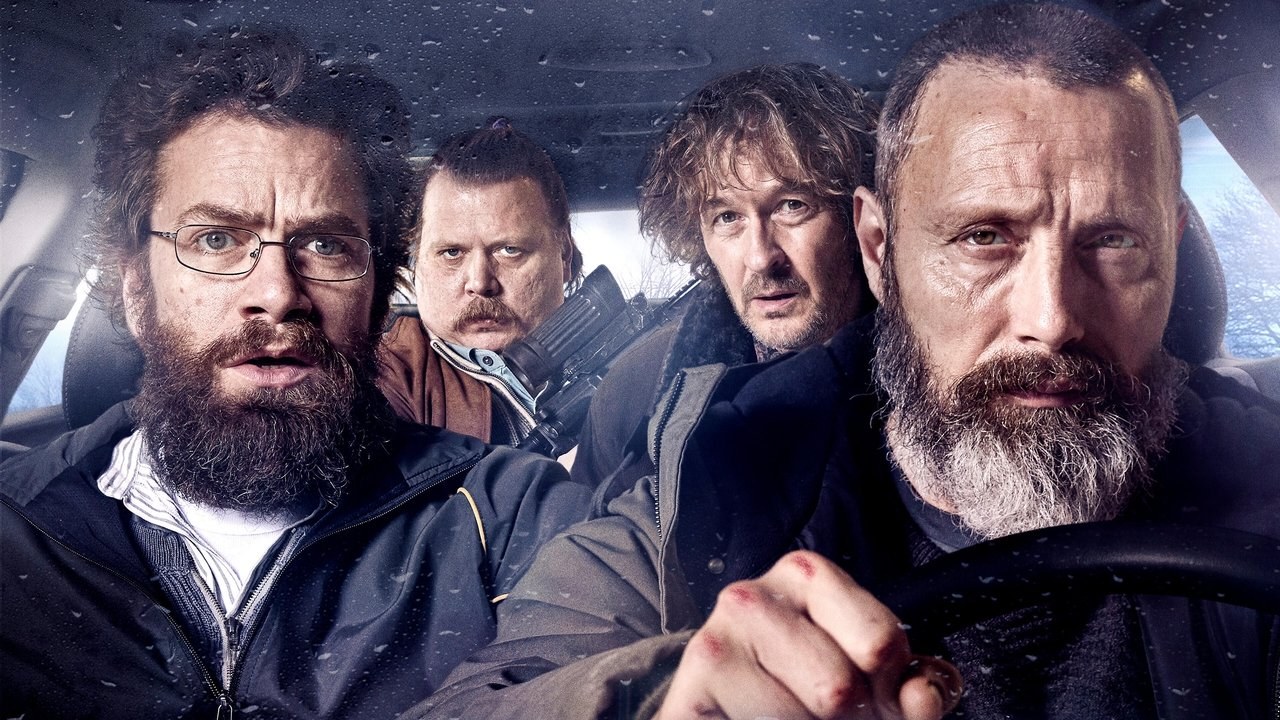
Markus, a stern, emotionally reserved career soldier, returns home from deployment after his wife is killed in a seemingly random train accident, left to care for his teenage daughter Mathilde alone while struggling to process grief through anything other than controlled anger and continued professional detachment. Otto, a socially awkward statistician who survived the same accident, becomes convinced through careful data analysis that the crash was not accidental but a deliberate act connected to a biker gang facing trial, and recruits two eccentric colleagues to help investigate further.
When Otto and his colleagues approach Markus with their theory, he initially dismisses their evidence as implausible, yet gradually becomes consumed by the possibility that his wife’s death was not random, embracing this explanation partly because it offers him a concrete target for the controlled violence he understands and can act upon, in contrast to the far more difficult, ambiguous task of actually processing grief and reconnecting emotionally with his traumatized daughter.
As Markus and his unlikely allies pursue increasingly violent retribution against the biker gang they believe responsible, the film gradually reveals the genuine uncertainty underlying their theory – whether the crash was truly a deliberate act or simply, as statistics would suggest, one of many essentially random tragedies humans instinctively resist accepting as meaningless – while Mathilde’s own unaddressed grief and her father’s continued emotional unavailability, now channeled entirely into violent investigation rather than genuine connection, create a parallel tragedy the film insists matters just as much as the question of the crash’s true cause.
Analysis
Meaning Sought as an Alternative to Unbearable Randomness
Markus and Otto’s shared conviction that the train crash was a deliberate, meaningful act rather than a random tragedy reflects a deeply human resistance to accepting senseless, random suffering, offering both men a form of comprehensible meaning and, in Markus’s case, a concrete target for action that raw, meaningless grief cannot provide.
This portrayal of meaning actively sought as an alternative to unbearable randomness offers a pointed psychological insight into why humans so readily construct explanatory narratives around tragedy, even absent sufficient evidence, suggesting that the search for meaning sometimes serves less to uncover objective truth than to make otherwise unbearable suffering feel comprehensible and, crucially, actionable.
Action Substituted for Genuine Emotional Reckoning
Markus’s consuming pursuit of violent retribution against the biker gang allows him to channel his grief into the kind of controlled, purposeful action his military training has prepared him for, functioning simultaneously as a genuine pursuit of justice and as an avoidance of the far more difficult, uncertain work of actually processing his grief and reconnecting emotionally with his daughter.
This portrayal of action substituted for genuine emotional reckoning suggests that even superficially purposeful, seemingly justified activity can sometimes function as a sophisticated form of avoidance, allowing a person to appear engaged and active while actually evading the more difficult, internal work genuine healing requires.
A Daughter’s Grief Overshadowed by a Father’s Violent Focus
Mathilde’s own significant, unaddressed grief over her mother’s death receives far less attention from Markus than his own investigation and pursuit of the biker gang, illustrating how a parent’s own unprocessed trauma and consuming focus on action can inadvertently neglect a child’s equally significant, if quieter, need for genuine presence and emotional support.
This parallel tragedy, in which Mathilde’s grief goes largely unaddressed while her father pursues his violent investigation, insists that the human cost of avoided grief extends beyond the person avoiding it, affecting those who depend on that person’s genuine emotional presence and availability even more directly than the person’s own eventual reckoning with their loss.
Uncertainty That Resists the Comfort of Clear Explanation
The film’s ultimate ambiguity about whether the crash was truly a deliberate act or simply one of many statistically inevitable random tragedies refuses to grant its characters, or its audience, the comfort of a fully confirmed, meaningful explanation, insisting instead on genuine uncertainty that mirrors real life’s frequent refusal to offer clear, satisfying answers to why terrible things happen.
This refusal to fully resolve the central question suggests that some of life’s most devastating events may simply resist the kind of clear, meaningful explanation humans instinctively crave, and that learning to live with this genuine uncertainty, rather than constructing a comforting but potentially false narrative, may itself be part of what genuine grief eventually requires.
Questions for Discussion
1. Markus and Otto both find comfort in the theory that the crash was deliberate rather than random. What does this preference for meaningful explanation over unbearable randomness suggest about how humans process tragedy?
2. Markus channels his grief into violent investigation and retribution rather than emotional processing and connection with his daughter. What does this substitution of action for genuine emotional reckoning suggest about how grief can be avoided even through seemingly purposeful activity?
3. Mathilde’s own grief receives far less attention than Markus’s investigation throughout the film. What does this parallel tragedy suggest about the cost of a parent’s unprocessed trauma on the children who depend on them?
4. The film ultimately leaves ambiguous whether the crash was truly deliberate or simply random. Why might the film refuse to fully resolve this question, rather than providing a clear, satisfying answer?
5. Is Markus’s pursuit of the biker gang morally justified if their theory about the crash proves accurate, morally troubling regardless of the theory’s accuracy, or does the film suggest this question resists a simple answer? Defend your reasoning.
6. What responsibility does Markus bear for his continued emotional unavailability to Mathilde, even accounting for his own genuine grief and trauma?
7. How does Otto’s statistical expertise, ironically employed to argue against randomness, complicate or deepen the film’s exploration of how we seek meaning in tragedy?
8. What do you think the film ultimately suggests is required for genuine healing after tragedy – finding a meaningful explanation, accepting genuine uncertainty, or something else entirely?


