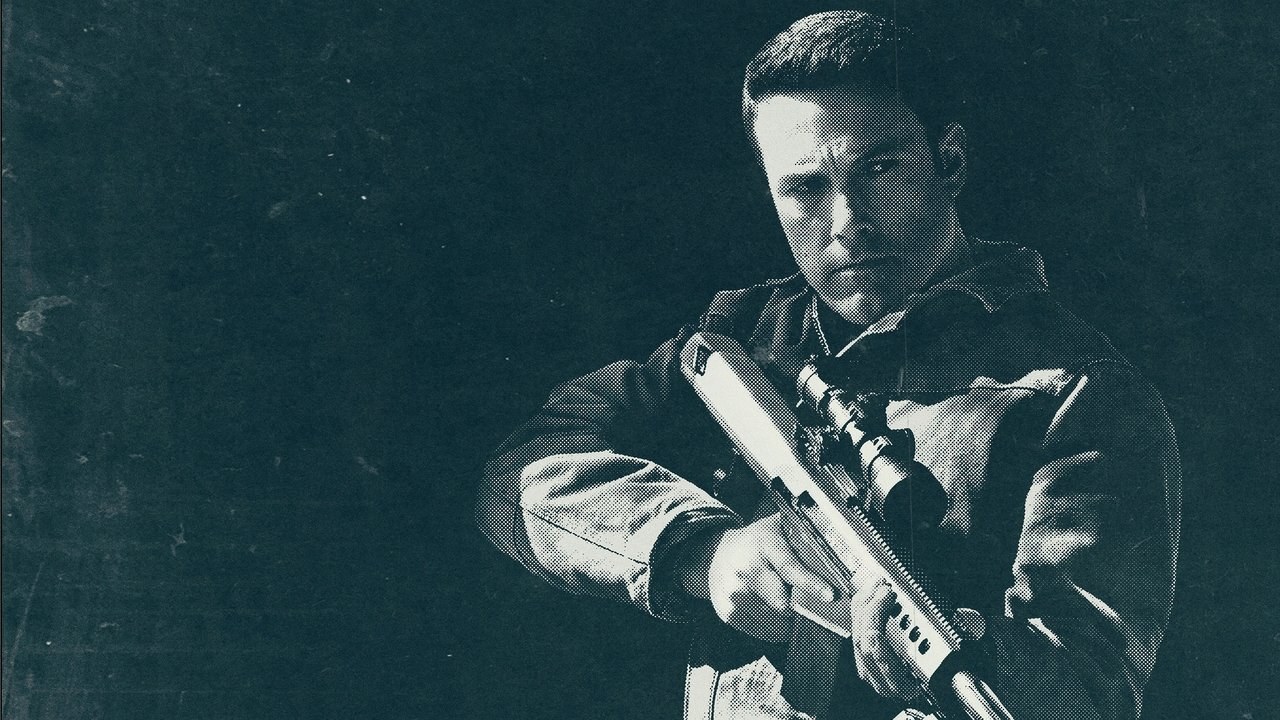
Synopsis
Christian Wolff is a forensic accountant with high-functioning autism who uncrooks the books for dangerous criminal organizations around the world, using the discipline and pattern-recognition instilled in him by his demanding father, a military psychological-operations officer who raised Christian and his brother to treat every challenge, including Christian’s condition, as something to be met with rigorous, even brutal, training rather than accommodation.
Hired to audit a legitimate robotics company after an in-house accountant, Dana Cummings, discovers irregularities in the books, Christian uncovers evidence of large-scale embezzlement, drawing the attention of both the company’s leadership and a Treasury agent who has spent years trying to identify the elusive accountant known only by reputation to the criminal underworld. As the embezzlers move to eliminate anyone who has seen the evidence, including Dana, Christian is forced to protect her using skills far beyond accounting.
The film gradually reveals Christian’s estranged relationship with his brother Braxton, separated years earlier after their father’s harsh methods and a violent confrontation drove them apart, and the story builds toward a reunion between the brothers that is both a reconciliation and a final, decisive act of protection, as Christian works to ensure Dana’s safety and set his own life, however unconventional, on steadier ground.
Analysis
A Father’s Harsh Love, Rightly and Wrongly Applied
Christian’s father refuses to let his son’s autism become an excuse for the world to write him off, subjecting both his sons to intense martial and mental training meant to ensure Christian could survive and function in a world with little patience for his differences. The film treats this refusal to coddle with genuine ambivalence: it clearly gave Christian real capability and discipline, yet it also deprived both brothers of an ordinary childhood and drove a permanent wedge between them.
This ambivalence is the film’s most interesting moral question: whether a parent’s determination to prepare a vulnerable child for a harsh world can itself become a harm, even when it comes from real love and produces real strength. The film does not resolve this tension neatly, leaving the audience to weigh what was gained against what was lost.
Competence as a Form of Dignity
Christian’s autism is never presented as an obstacle to be cured or as a source of pity; his particular way of perceiving patterns and numbers is shown, repeatedly, as a genuine strength that allows him to see what trained professionals miss. The film’s respect for his competence, rather than his differences alone, treats him as a person whose worth is not diminished by how he experiences the world.
This is reinforced by Dana’s growing respect for Christian’s work rather than pity for his condition; she comes to trust his judgment and skill on their own terms, which the film presents as a truer form of acceptance than sympathy alone could offer.
Loyalty Strained but Not Severed
Christian and Braxton’s estrangement is rooted in real harm – a violent confrontation with their father that each brother experienced and processed differently – and years of separation have not fully healed the rift between them. Yet when Christian is genuinely in danger, Braxton’s loyalty resurfaces immediately, suggesting that some bonds, however strained, do not simply dissolve with time and distance.
Their eventual reunion is not sentimental or fully resolved; both brothers remain shaped by very different responses to the same difficult upbringing. The film’s honesty about this incomplete reconciliation gives their loyalty more weight than an easy, complete resolution would have.
Protecting the Vulnerable at Personal Risk
Christian’s decision to protect Dana once the embezzlers move against her goes well beyond his contracted work as an accountant, placing him at considerable personal risk to shield someone who has no particular claim on his loyalty beyond having worked alongside him briefly. His willingness to step far outside his comfort zone and routine to do this reveals a moral seriousness beneath his unconventional exterior.
This protective instinct complicates any simple reading of Christian as merely a skilled operator working for whoever pays him; his choice to intervene for Dana, without being asked or paid to do so, suggests a code of loyalty and protection that operates independently of his usual professional transactions.
Questions for Discussion
1. Christian’s father refuses to let autism excuse his sons from rigorous training. Do you think this approach helped or harmed Christian in the end? Can it be both at once?
2. Christian’s condition is portrayed as a genuine strength rather than primarily a limitation. How does this framing affect your understanding of neurodivergence more broadly?
3. Braxton and Christian remain estranged for years after a violent confrontation with their father, yet Braxton’s loyalty resurfaces the moment Christian is in danger. What does this suggest about the durability of family bonds even after serious harm?
4. Dana comes to respect Christian’s competence rather than simply pitying his condition. Why might this distinction matter for how people with disabilities are treated more broadly?
5. Christian protects Dana at real personal risk despite having no strong prior claim on his loyalty. What does this choice suggest about the code he lives by, beyond his paid work?
6. Is Christian’s father’s harsh training method ultimately vindicated by Christian’s later competence and survival, or does the film suggest it came at too high a cost? Defend your answer.
7. What responsibility, if any, does a parent have to prepare a vulnerable child for a harsh world, even at the cost of a gentler childhood?
8. By the end of the film, Christian and Braxton’s relationship remains imperfectly resolved. Why might the film choose not to offer a full, neat reconciliation?


