The Gospel often teaches us through scenes that seem almost insignificant. St. Mark tells us that during the final days before the Passion, Jesus sat opposite the treasury in the Temple and watched people placing their offerings into the receptacles. Many contributed large sums, but Our Lord drew no special attention to them. Then a poor widow approached and deposited two tiny coins, the smallest coins in circulation. To anyone keeping a record of the day’s offerings, her contribution would scarcely have seemed worth mentioning. Yet Jesus immediately called his disciples and told them that she had given more than all the others, because they had contributed from their abundance while she, in her poverty, had given everything she had.
The scene reveals how differently God and we often measure the value of things. We are naturally impressed by what is large, visible or unusual. We notice achievements that attract attention and sacrifices that appear heroic. God certainly values great deeds when they are done with love, but he also sees what others overlook. The widow’s coins made almost no sound as they fell into the treasury, yet Christ saw the love with which she gave them. What seemed negligible in human terms had immense value before God.
Most of us will rarely be asked to perform extraordinary deeds. Our lives are made up largely of ordinary duties, familiar relationships and small decisions that seem to leave little trace. The Gospel of the widow teaches us that these ordinary circumstances are precisely where much of our love for God is expressed. St. Josemaría wrote that human love consists of little things and that divine love does as well. Affection is normally shown not through occasional dramatic gestures but through attention, fidelity and the countless details by which we make another person’s life better.
The same is true in our relationship with God. A task that appears unimportant can acquire great value when it is offered to him and carried out with love. The external size of the action is not what determines its supernatural worth. What matters is the love, rectitude of intention and generosity with which we do it. The widow’s two coins teach us that very little can become very great when we place it entirely in God’s hands.
This gives extraordinary significance to ordinary life. St. Francis de Sales observed that great opportunities to serve God are rare, while small ones occur continually. Eating, working, resting, studying, speaking with others and carrying out household responsibilities can all become occasions for holiness. We do not need to wait for exceptional circumstances in order to give ourselves to God. The present moment already contains opportunities to love him.
The difficulty is that familiarity makes small things easy to neglect. We often imagine that holiness will require some future sacrifice while overlooking the concrete duties directly before us. We may dream of responding generously in a serious crisis but arrive late, leave work unfinished, neglect a small promise or fail to give our full attention to someone speaking with us. Yet our response in these ordinary matters forms the habits with which we will face larger demands.
Our Lord himself tells us that the person who is faithful in very little will also be faithful in much. Fidelity in small things prepares the soul for greater responsibilities because virtue develops through repeated acts. A person does not ordinarily become generous through one dramatic decision. Generosity grows through many choices to give time, attention and effort when it would be easier to keep them for oneself.
This is especially evident in our work. It is not enough that the work we do be morally good; we should also try to do it well. St. Thomas Aquinas teaches that virtue concerns both what we do and the way we do it. A job can be substantially completed and yet remain careless because we have neglected the final details that would make it truly well finished.
Those final details often require disproportionate effort. The first part of a task may be interesting, while finishing it properly demands patience. We have to check what we have written, put things back in order, correct an error, clean the tools we used or complete some small administrative detail. These things may seem secondary, but they often distinguish work done merely to get it over with from work offered to God.
Christ’s hidden life at Nazareth gives us the model. For many years he lived a life that appeared entirely ordinary: family life, work, prayer and relationships with neighbours. The Son of God sanctified these ordinary realities by living them perfectly. Nothing in those years was insignificant simply because it was hidden from public view.
We too can sanctify ordinary work by doing it with competence, order and love. This does not mean becoming perfectionistic or spending unreasonable amounts of time on details that do not matter. Christian care is governed by prudence. There is a difference between doing something well and becoming absorbed in an unnecessary pursuit of flawlessness.
Love gives little things their proper measure. Without love, attention to detail can become rigid or obsessive. The Pharisees were capable of carefully observing minor prescriptions while neglecting justice and mercy. Christ condemned precisely this distortion. Small things matter when they express and serve what is greater.
We should therefore avoid turning the spirituality of little things into a spirituality of fussiness. Not every detail has equal importance, and circumstances sometimes require us to leave something imperfect in order to attend to a greater duty. A parent may need to abandon a carefully planned task because a child needs attention. Someone at work may have to accept a less polished result because another responsibility has become more urgent. Love helps us judge what matters here and now.
The widow’s offering shows us the right spirit. She was not concerned with impressing anyone through the exactness of her gesture. She simply gave what she had. Her two coins were valuable because they represented a sincere gift of herself.
Our small offerings acquire their fullest meaning when we unite them to Christ. By themselves, our actions may seem insignificant, but through grace they can be joined to his perfect offering to the Father. St. John Paul II compared this to the widow’s mite: what is small in itself becomes acceptable and precious when united to Christ’s sacrifice.
The Mass makes this reality especially clear. We bring to the altar the ordinary material of our life: work completed, fatigue endured, acts of service, difficulties accepted and efforts to love. These things may appear very small, but when united to Christ’s offering they acquire a supernatural value that we cannot measure.
This is one reason the Church encourages us to make a morning offering or otherwise place the coming day in God’s hands. We can offer beforehand the work, conversations, interruptions and sacrifices that will arise. Then the ordinary events of the day become part of a conscious response of love.
Care for little things also protects us from lukewarmness. Spiritual decline rarely begins with a deliberate decision to abandon God. More often, we gradually become careless. We shorten prayer without good reason, become casual about punctuality, allow distractions to dominate, neglect small duties or stop making the effort to overcome minor faults. None of these things seems decisive by itself, but together they can weaken the spirit of generosity.
The danger is that this decline can occur almost unnoticed. We become accustomed to doing less and begin to regard what once troubled our conscience as normal. Small compromises prepare the way for larger ones because they gradually change what we expect of ourselves.
The opposite is also true. Small acts of fidelity strengthen love. Arriving punctually for Mass, making a reverent genuflection, recollecting ourselves before prayer or giving proper attention to a spiritual commitment may require only a small effort, but such acts express what we believe. They help form our interior dispositions and can also strengthen the faith of others.
The liturgy itself teaches us the value of details. Bodily postures, gestures of reverence and the careful handling of sacred things may appear small when considered in isolation. Their meaning comes from the One toward whom they are directed. As Pope Paul VI observed, nothing is small in the sacred liturgy when we consider the greatness of God.
A genuflection, for example, takes only a moment. Yet when made with faith it expresses adoration of Christ truly present in the Eucharist. Someone who sees another person make that gesture with genuine reverence may himself be reminded of the reality of the tabernacle. A very small action can therefore nourish faith beyond the person who performs it.
Punctuality for Mass is another ordinary detail that can express love. We make an effort to arrive on time, or a little early when possible, not because God is measuring minutes with legalistic severity but because we are preparing to meet someone we love. The same principle applies to recollection in church and to the care with which we participate in the liturgy.
These practices should never become occasions for judging others. We do not know why another person arrives late, seems distracted or behaves differently from us. Attention to little things should make us more loving, not more critical. If our devotion leads us to compare ourselves favourably with others, we have misunderstood its purpose.
The same spirit applies to mortification. Most Christians are not called to extraordinary penances. Our normal mortifications are woven into daily life. We get up when we should, eat with moderation, work when we would rather postpone the task and accept small inconveniences without making them everyone else’s problem.
These sacrifices are valuable partly because they are ordinary and repeatable. A dramatic sacrifice made once may require courage, but daily fidelity forms character. The person who learns to deny himself in small matters becomes freer when greater sacrifices are required.
We should choose such mortifications intelligently. There is little value in inventing unusual penances while neglecting obvious duties. It may be more pleasing to God to answer an email we have been postponing, keep our room in order, finish work on time or listen patiently to someone than to undertake a sacrifice of our own choosing.
Ordinary life continually provides these opportunities. We do not need to search far for a cross. The effort to be punctual, the inconvenience of an interruption, the need to adapt to another person’s preferences or the discipline required to finish an unpleasant task can all become acts of love when accepted freely.
The value of little things is perhaps most evident in charity. Relationships are built or damaged through small actions repeated over time. We rarely destroy a friendship through one enormous act, and we rarely build one through a single grand gesture. More often, love grows through attention, patience and the willingness to serve.
Taking a genuine interest in what another person is saying can be a significant act of charity. We may have heard the story before or be preoccupied with something else, but giving someone our attention tells him that he matters. Listening is one of the simplest ways of giving ourselves.
We can also make life easier for the people around us without drawing attention to what we are doing. We put something back where it belongs, clean up after ourselves, anticipate a need or take care of a task before someone else has to ask. Such acts may never be noticed, but they help create the atmosphere of a home, workplace or community.
St. Josemaría called this an “apostolate of little things.” We serve others in ways that make their path more pleasant. The purpose is not to accumulate small acts as though holiness could be counted. It is to become attentive enough to notice where love is needed.
This attentiveness often requires us to move beyond our own concerns. We naturally become absorbed in what interests or troubles us. Someone may begin speaking while our mind is elsewhere, and charity asks us to put aside our preoccupation for a moment and enter into his world.
Small acts of charity also include refusing to become annoyed over trivial matters. Much of the friction in daily life comes from things that are objectively minor: someone leaves something out of place, interrupts us, forgets a small request or has a habit we find irritating. If we react strongly to every inconvenience, we make life burdensome for ourselves and others.
Maturity helps us distinguish what genuinely needs correction from what should simply be overlooked. Not every fault requires a comment. Sometimes the most charitable response is to absorb a small inconvenience without making it an issue.
This does not mean suppressing legitimate concerns until resentment builds. Important matters should be addressed calmly and honestly. But a great deal of daily peace depends on our willingness to let small things remain small.
Gratitude is another expression of this spirit. We often notice large favours but take ordinary service for granted. Someone prepares a meal, answers a question, opens a door, completes a routine task or remembers something we needed. A simple thank you recognizes the person behind the action.
The habit of gratitude also protects us from entitlement. When we notice the small things others do for us, we become more aware of how much of our life depends upon gifts. We stop assuming that everything should simply happen according to our expectations.
The spirituality of little things also applies to prayer for others. We may not be able to solve another person’s problem, but we can remember him before God. A brief prayer offered during the day may be invisible to everyone else, yet it is a real act of charity.
We can likewise resist the critical thoughts that arise so easily. We may notice a person’s weakness and be tempted to dwell on it or mention it unnecessarily. Choosing instead to pray for him, interpret him favourably when possible and remember our own faults is another small victory of love.
These little victories matter because they gradually shape the heart. Virtue is not normally formed by isolated acts but by patterns of choice. Every time we choose patience rather than irritation or service rather than self-absorption, we become slightly more capable of choosing the same good again.
This does not mean that spiritual growth can be reduced to habit formation. Grace is always primary. Yet grace normally works through our freedom, and repeated acts help dispose us to respond more readily.
The same principle applies to our particular examination of conscience. Choosing one concrete area of struggle and returning to it faithfully can produce more fruit than making many vague resolutions. We may work on punctuality, order, patience in a particular relationship or some recurring defect.
Progress may seem very small. We may fail repeatedly. What matters is perseverance. A little victory today and another tomorrow can gradually change a deeply rooted habit.
We should not despise small beginnings. Christ compares the Kingdom of God to a mustard seed and to leaven hidden in dough. God often works through realities whose importance is not immediately visible.
This is encouraging when our efforts seem insignificant. A parent may repeat the same lesson to a child many times without seeing immediate results. A teacher may never know how a brief word affected a student. A friend may offer support that seems inadequate but is remembered for years.
We cannot measure the full consequences of small acts of love. The widow in the Temple almost certainly did not know that her two coins would be remembered throughout the world for centuries. She simply did what love moved her to do.
This should free us from the need to see results. We offer what we can and leave the fruit to God. A small act performed with love may have effects far beyond what we can perceive.
There is also freedom in knowing that holiness is accessible in ordinary life. We do not need unusual circumstances, exceptional talents or public responsibilities. Everyone has small duties and daily opportunities to love.
A person confined by illness can offer discomfort patiently, pray for others and receive those who care for him with gratitude. Someone with demanding work can sanctify the effort required to do it well. A student can study conscientiously and help a classmate. The external circumstances differ, but the principle is the same.
What matters is not whether our life appears important by worldly standards. God sees the love contained within it. The widow’s offering was almost worthless economically, yet Christ judged it greater than the large donations around her.
This divine way of measuring should give us confidence when our contribution seems small. We may compare ourselves with people who possess greater talents, responsibilities or opportunities and conclude that what we do has little importance. Such comparisons miss the point.
God does not ask us to offer what someone else has. He asks us to give what has been entrusted to us. The widow could not give a large sum, but she gave generously from what she possessed.
Our sanctification therefore takes place within the life we actually have. We should certainly develop our talents and respond generously when new responsibilities arise, but we should not postpone holiness until circumstances become more interesting. God is waiting for our love in the present duty.
Attention to little things also gives unity to the day. Instead of dividing life into important spiritual moments and insignificant ordinary ones, we begin to see every circumstance as capable of becoming an offering. Prayer, work, meals, rest and conversation can all belong to the same relationship with God.
This does not make every action equally important. Some duties are objectively more serious than others. The point is that nothing good needs to be spiritually empty. Love can enter the smallest legitimate activity.
When this outlook becomes habitual, we begin to live more fully in the present. We are less tempted to imagine that real life will begin later, when our circumstances change or when some great opportunity appears. The present moment becomes the place where God is actually asking for our response.
This gives depth even to routine. Repetition can feel monotonous because the same duties return day after day. Yet love itself often repeats. Parents care for children through thousands of similar acts. Friendship is sustained by repeated attention. Fidelity in marriage is expressed through daily service over many years.
Our love for God grows in the same way. We pray again, begin work again, make the same small sacrifices and return to the same duties. The repetition does not make them meaningless. It gives us repeated opportunities to renew our love.
We will not always perform these things perfectly. Sometimes we will be careless, distracted or selfish. The spirituality of little things should never become a source of discouragement or perfectionism. When we fail, we begin again.
A small act of repentance is itself valuable. We recognize that we were impatient, apologize if necessary and try to respond better the next time. Holiness is built not only from small successes but also from humble new beginnings.
Our Lady is a perfect model of this hidden fidelity. Much of her earthly life was lived far from public attention. At Nazareth she carried out the ordinary responsibilities of family life while living in complete union with God. The greatness of her life did not depend on external visibility.
We can ask her to teach us to recognize the value of what is small. She helps us understand that love does not need to be spectacular in order to be complete. A simple duty done well, a sacrifice accepted without complaint or a small service offered with affection can become precious before God.
At the end of life, we may discover that many of the moments God valued most were ones we scarcely noticed. A patient response when we were tired, an unnoticed act of service, a duty finished carefully or a brief prayer for someone in need may have had greater eternal significance than achievements that received public recognition.
This is not because large achievements are unimportant. Great responsibilities should be carried out generously when God gives them to us. But even great works are ultimately composed of small acts of fidelity. Their value also depends on the love with which they are done.
The lesson of the widow therefore applies to every Christian life. God’s measure is not the world’s measure. He sees what is hidden and knows what each act costs us. He sees the love contained in an offering that others might consider insignificant.
We should learn to see our days in the same way. Each day contains many small opportunities to choose love: doing our work carefully, being punctual, listening, serving, praying, accepting an inconvenience and resisting a small selfish impulse. None of these actions will normally attract attention, but together they form the fabric of holiness.
If we are faithful in these ordinary things, we gradually become people capable of greater love. The habits formed in small decisions prepare us for larger sacrifices when they come. More importantly, they allow us to give ourselves to God now rather than waiting for some imagined future opportunity.
The two coins of the poor widow continue to teach us this lesson. Their monetary value was almost nothing, but because they represented her loving self-gift, Christ declared them greater than all the rest. We too can place our ordinary life in God’s hands, trusting that he knows how to give eternal value to what we offer with love.
Then no day is insignificant. Work, prayer, family life, friendship, rest and the countless details that fill our hours can all become part of our path to holiness. We need only learn to recognize the opportunities already before us and respond with love.
We can ask Our Lady to help us live this spirit in every ordinary circumstance. Under her guidance, we learn not to despise what is small, not to seek attention for what we do and not to postpone generosity until some great occasion arrives. We offer God what we have today, however modest it may seem, confident that in his eyes nothing done with genuine love is ever truly little.
By the Via Virtutis team
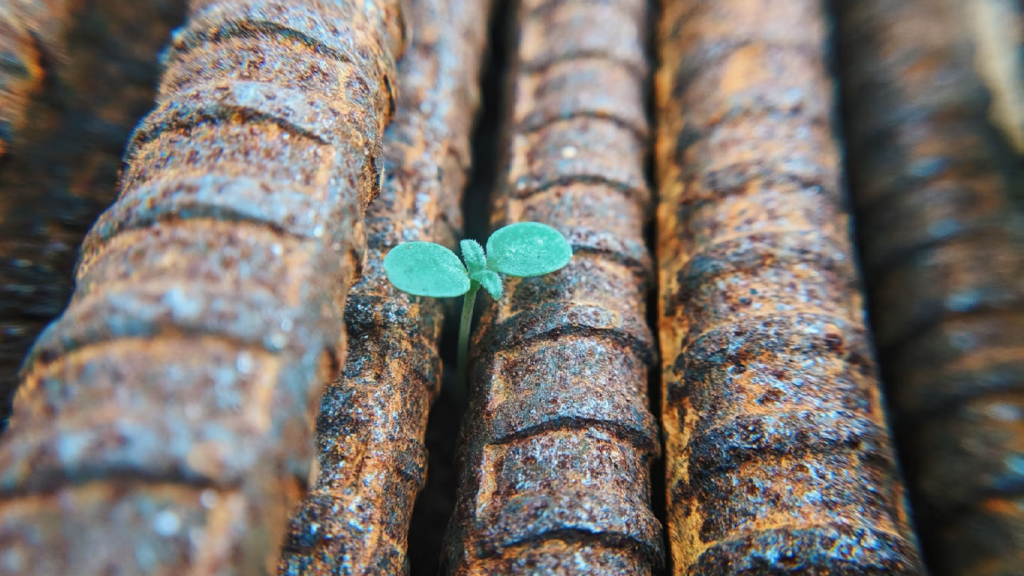
Photo by Manas Manikoth on Unsplash