Synopsis
Daniel Plainview, a ruthless, relentlessly ambitious silver miner turned oil prospector in early twentieth-century California, builds a formidable oil empire through sheer determination, technical skill, and an increasingly naked willingness to deceive, manipulate, and dominate everyone around him, including the young son, H.W., he raises largely as a business asset and public prop of paternal respectability rather than out of genuine, uncomplicated love.
Plainview’s acquisition of oil-rich land in the small town of Little Boston brings him into sustained conflict with Eli Sunday, a young, similarly ambitious and manipulative evangelical preacher who competes with Plainview for influence and legitimacy within the community, each man using the other’s public performance of virtue – Plainview’s paternal devotion, Eli’s religious authority – as leverage in an escalating, mutually corrosive rivalry that neither man’s stated principles can survive intact.
As Plainview’s wealth and isolation both grow to extreme proportions, his contempt for nearly everyone in his life, including H.W., whom he eventually disowns after the young man, now an adult, chooses to start his own competing oil business, curdles into a consuming, almost total misanthropy. The film’s brutal final confrontation between Plainview and Eli, in which Plainview forces Eli to renounce his own faith before killing him in a fit of contemptuous rage, offers a devastating final portrait of a man whose relentless pursuit of dominance has consumed every relationship and every possibility of genuine connection in his life.
Analysis
Ambition That Consumes Its Own Foundations
Plainview’s extraordinary drive and competence build a genuine empire, yet the film insists on tracing the corresponding cost of this ambition in full: every relationship he might have sustained, including with his own adopted son, is gradually sacrificed to his relentless pursuit of dominance and control, until virtually nothing remains in his life beyond the wealth and power he has accumulated.
This portrayal offers an unflinching account of ambition pursued without any countervailing commitment to relationship or genuine human connection, suggesting that such single-minded pursuit of achievement, however impressive its material results, ultimately consumes the very foundations – family, community, trust – that might have made that achievement meaningful.
Religious and Commercial Ambition as Mirror Images
Eli Sunday’s manipulative use of religious authority for personal advancement and community influence mirrors, in a different register, Plainview’s own ruthless commercial ambition, with both men deploying performances of virtue – paternal devotion, religious conviction – as instruments for advancing their own power and interests rather than as genuine expressions of the values they publicly claim.
This parallel between corrupted religious and corrupted commercial ambition suggests that the specific domain in which ambition operates matters less than the underlying orientation of the ambitious person – whether their pursuit of influence remains subordinated to genuine service and truth, or whether truth and service themselves become mere instruments deployed toward self-aggrandizement.
A Son Treated as Asset Rather Than Beloved
Plainview’s relationship with H.W., publicly presented as devoted fatherhood but functionally organized around H.W.’s usefulness as a business prop conveying trustworthy paternal respectability, reveals the hollow core beneath Plainview’s carefully cultivated public image, a hollowness that becomes undeniable once H.W., grown and independent, is unceremoniously discarded and disowned.
This portrayal of a parent-child relationship instrumentalized for public advantage rather than grounded in genuine love offers a stark warning about how easily even the most intimate human relationships can be corrupted into mere instruments when a person’s fundamental orientation toward others is one of use and control rather than genuine care.
Total Victory as Total Isolation
The film’s devastating final scene, in which a wealthy, powerful, but utterly isolated Plainview murders Eli in a fit of contemptuous rage after forcing him to renounce his faith, presents a portrait of complete material triumph coinciding with complete relational and spiritual ruin, with Plainview possessing everything he originally sought except any remaining capacity for genuine human connection or peace.
This ending offers the film’s starkest final statement about the ultimate cost of Plainview’s chosen path: that a life organized entirely around dominance and accumulation, however successful by its own narrow measures, culminates not in satisfaction but in a totalizing isolation indistinguishable from a kind of living damnation.
Questions for Discussion
1. Plainview’s ambition builds a genuine empire while consuming nearly every relationship in his life. What does the film suggest about the relationship between single-minded ambition and the capacity for genuine human connection?
2. Eli Sunday’s religious authority and Plainview’s commercial ambition are presented as mirror images of each other. What does this parallel suggest about how any domain of legitimate authority or influence can become corrupted by self-interested ambition?
3. Plainview’s relationship with H.W. is publicly presented as devoted fatherhood but functions primarily as a business asset. What does this revelation suggest about the difference between genuine love and its mere public performance?
4. The film ends with Plainview possessing immense wealth and power but total isolation. What does this ending suggest about the ultimate cost of a life organized entirely around dominance and accumulation?
5. Is Plainview’s cruelty toward H.W. and others primarily a product of his ambition, or does the film suggest a deeper, preexisting misanthropy that his ambition merely gave expression to? Defend your answer.
6. What responsibility does a community bear for elevating and empowering figures like Eli Sunday, whose religious authority masks self-interested ambition, simply because that authority is dressed in the language of faith?
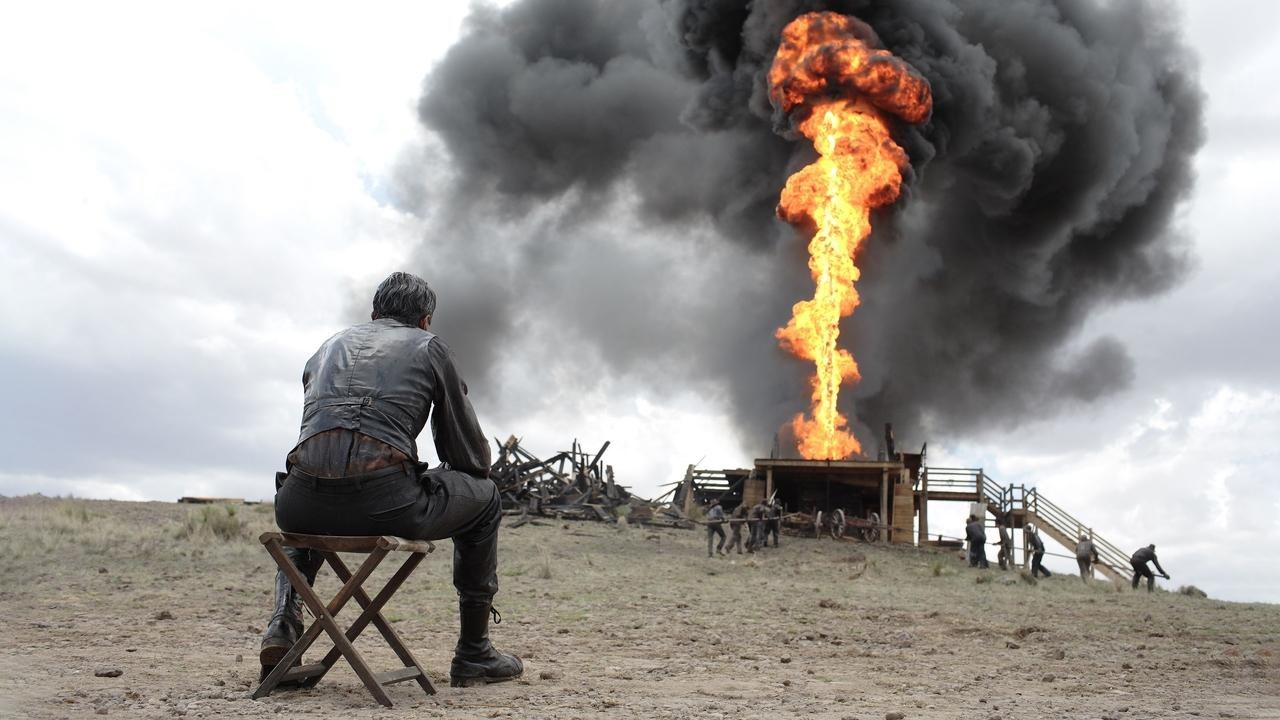
7. How does the film’s portrayal of the oil business itself – its physical danger, its transformation of the landscape and community – reflect or reinforce its broader themes about the costs of unchecked ambition?
8. What do you think the film ultimately suggests is the relationship between achieving one’s ambitions and achieving a genuinely good or meaningful life?


