Synopsis
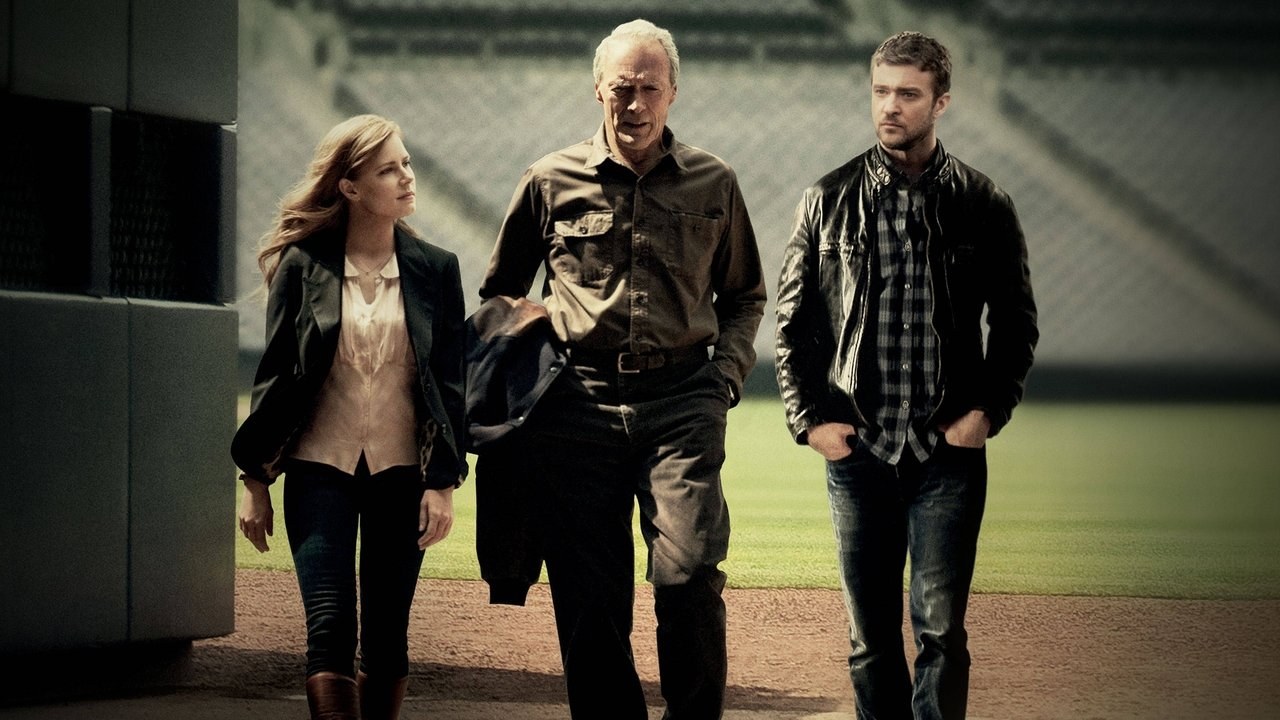
Gus Lobel, a veteran baseball scout for the Atlanta Braves whose eyesight and health are failing as age catches up with him, faces mounting pressure from a younger colleague eager to replace his old-fashioned, experience-based scouting methods with newer statistical approaches, all while the organization debates whether to finally retire him despite his decades of accumulated wisdom and success in identifying genuine baseball talent through direct observation rather than raw numbers alone.
Gus’s estranged daughter Mickey, a talented, driven lawyer on the verge of making partner at her firm, reluctantly agrees to accompany her father on a crucial scouting trip after a colleague expresses concern about Gus traveling alone given his declining eyesight, an arrangement that forces both father and daughter to confront years of accumulated distance and unresolved hurt stemming from Gus’s inadequate presence during Mickey’s own childhood, particularly following her mother’s early death.
As Gus and Mickey travel together evaluating a promising young prospect, their forced proximity gradually surfaces both their genuine mutual love, obscured for years by Gus’s emotional reticence and guilt over his parental shortcomings, and Mickey’s own complicated relationship to a sport that both connected her to her father in childhood and represented, in some sense, the very thing that had repeatedly taken his attention away from her, culminating in a reconciliation that allows both to finally address the accumulated hurt and genuine love that had coexisted, largely unspoken, for years.
Analysis
Wisdom Earned Through Experience Versus Data Alone
Gus’s scouting method, built on decades of direct, embodied observation and intuitive judgment about players’ character and potential that resists easy quantification, faces genuine challenge from newer statistical approaches that promise greater objectivity and consistency, raising a genuine question about the relative value of hard-won experiential wisdom compared to more systematic, data-driven methods.
This tension, rather than resolving simply in favor of either approach, suggests that genuine excellence in evaluation may benefit from both forms of knowledge – the accumulated wisdom of direct experience and the rigor of systematic analysis – resisting an easy dismissal of either older experiential wisdom or newer analytical rigor as sufficient on its own.
Absence Explained Without Being Fully Excused
Gus’s emotional distance and physical absence during much of Mickey’s childhood, particularly following her mother’s death, is gradually explained by his own grief, guilt, and emotional limitations rather than any lack of genuine love for his daughter, though the film does not suggest this explanation fully excuses the real, lasting hurt his absence caused her.
This portrayal of absence explained without being fully excused offers an honest account of how genuine love can coexist with real parental failure, suggesting that understanding the reasons behind a parent’s shortcomings, while valuable for eventual reconciliation, does not simply erase the legitimate hurt those shortcomings caused.
Reconciliation Requiring Forced Proximity and Honest Reckoning
Mickey and Gus’s reconciliation becomes possible only once circumstances force them into sustained, direct proximity during the scouting trip, providing an opportunity for honest conversation and shared experience that their more comfortable, avoidant pattern of distant, limited contact had never previously allowed.
This portrayal suggests that certain long-standing relational wounds may require deliberately forced proximity and shared circumstance to finally surface and be addressed honestly, since avoidant patterns of limited, comfortable distance can otherwise persist indefinitely without ever requiring the parties involved to confront their unresolved hurt directly.
A Shared Love Redirected Toward Renewed Connection
Baseball itself, which had once represented both a genuine point of connection between Gus and young Mickey and, later, a symbol of his repeated absence and prioritization of work over family, becomes by the film’s end a renewed, healthier point of shared connection between father and daughter, now approached with greater mutual honesty and presence.
This transformation of a previously fraught shared interest into a renewed, healthier point of connection suggests that even sources of past hurt and division can, with genuine reconciliation and honest reckoning, be reclaimed as legitimate sources of shared meaning and connection between estranged family members.
Questions for Discussion
1. Gus’s experience-based scouting method faces challenge from newer statistical approaches. Does the film ultimately favor one approach over the other, or suggest that both forms of knowledge have genuine value? Explain your reasoning.
2. Gus’s absence during Mickey’s childhood is explained by his own grief and emotional limitations, without being fully excused. What does this distinction between explanation and excuse suggest about how we should understand parental failure?
3. Mickey and Gus’s reconciliation becomes possible only through forced proximity during the scouting trip. What does this suggest about the limits of more comfortable, avoidant patterns of distant family contact in resolving long-standing hurt?
4. Baseball represents both a source of connection and a symbol of Gus’s absence for Mickey. How does the film’s ending suggest this can be transformed into a healthier, shared point of connection?
5. What responsibility does Gus bear for the lasting impact of his emotional distance on Mickey, even given the genuine grief and guilt that shaped his behavior?
6. Is Mickey’s initial reluctance to accompany her father on the trip, and her general distance from him, a reasonable response to his past absence, or does the film suggest she also bears some responsibility for their estrangement? Explain your view.
7. How does the film’s baseball scouting plot function as a vehicle for exploring the more personal father-daughter reconciliation at its center?
8. What do you think is ultimately required for genuine reconciliation between an emotionally distant parent and an adult child carrying years of accumulated hurt, based on Gus and Mickey’s journey in the film?


