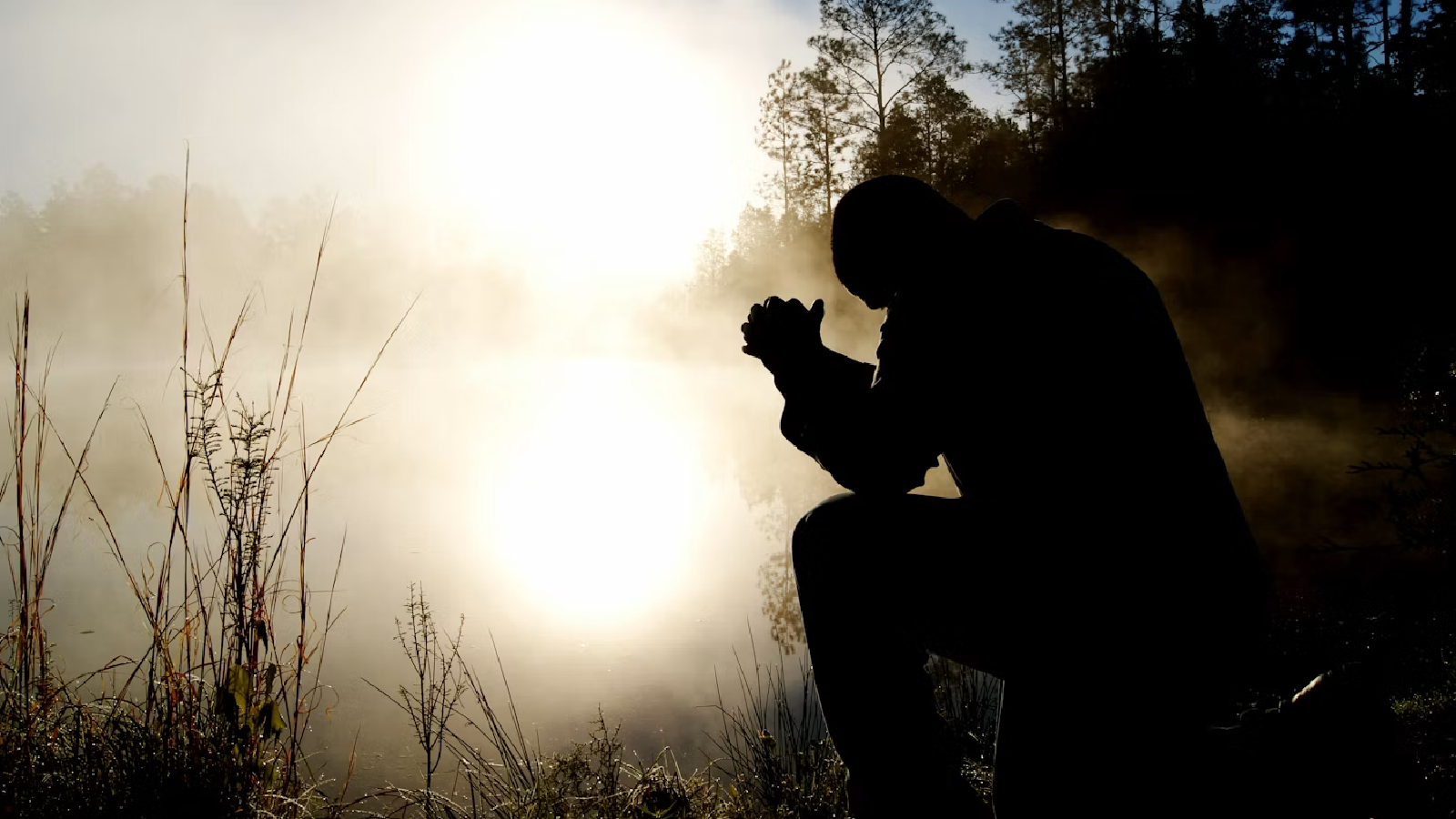
The need for prayer
Jesus prefaces the parable of the Pharisee and the tax collector by insisting to his followers that they ought always to pray and not lose heart. Taking into account all of his teachings, Jesus spoke more often about the need for prayer than about any other matter apart from faith and charity. The Master tells us in many different ways that prayer is absolutely necessary if we are to follow him. At the beginning of his Pontificate, Pope John Paul II declared: For me, prayer is the first priority. Prayer is the basic prerequisite to service of the Church and the world…Every believer should always think of prayer as an essential and indispensable component of one’s vocation. It is the ‘opus divinum’ which precedes and overshadows every work. We well know that faithfulness to prayer, or its neglect, is a test of the vitality of religious life, apostolate and Christian fidelity. Without prayer, we cannot hope to follow Christ in the middle of the world. We need prayer as much as we need food to eat and air to breath. This explains why the devil endeavors to keep Christians from praying with superficial excuses.
Some days before giving this address, the Pope had reminded a gathering of clergy and religious: A constant danger with priests, even zealous priests, is that they become so immersed in the work of the Lord that they neglect the Lord of the work. This is certainly a danger that faces every Christian. For of what good is the most energetic apostolate if it is accomplished at the cost of one’s friendship with the Lord? The achievement would end up worthless. This would have been a human endeavor where we sought only ourselves. The remedy for this malady is clear: We must find time, we must make time, to be with the Lord in prayer. Prayer is indispensable for you, today as yesterday.
Let us look and see whether our prayer, our friendship with Jesus, really influences our life of work, our family life, our friendship, our apostolate…We know that everything is different once we have talked it over with Jesus. It is in our prayer that the Lord gives light to understand his truths. Without the help of this light all would be darkness. This divine light will permit us to penetrate the mystery of God and of existence.
Humble and trusting prayer. The parable of the Pharisee and the tax collector.
The purpose of the parable of the Pharisee and the tax collector is to teach us the difference between true piety and false piety. As we read in the Book of Sirach: The prayer of the humble pierces the clouds… It always reaches God and attains its end.
St Luke points out that the Lord told this parable to some who trusted in themselves that they were righteous and despised others. The Lord uses two figures who were familiar to his audience: Two men went up into the temple to pray, one a Pharisee and the other a tax collector. Right from the start of the parable we can see that the men share an external purpose but have entirely different agendas. The Pharisee did not come to pray to God. He is really talking to himself instead. There is no love for God in his words, nor any vestige of humility for that matter. The Pharisee stands before God and gives thanks for his own rectitude. He compares this upright behavior with that of other people and finds himself justified. It would appear that he does not really need God after all.
The tax collector stood afar off. Because he did not thrust himself forward, God was able to approach him the more easily. He who would not lift up his eyes to heaven now had the Lord of the Heavens within him…Whether the Lord is near or far actually depends on you. Love, and He will approach. God is very attentive to everything we say to him. The tax collector won God over through his humility and trust, because God opposes the proud, but gives grace to the humble. The parable teaches us that our prayer should be full of humility, attentive and trusting. We should avoid acting like the ‘praying’ Pharisee with his self-centered monologue.
Jesus reminds us that humility has to be the foundation of our dealings with God. He wants us to pray like needy children desirous of his mercy. St. Alphonsus Liguori advises us: God wants us to go to him with confidence. Bring to him your work, your projects, your fears and whatever interests you. Act with a trusting and open heart. For God does not speak to those who never speak to him. Let us flee from the prayer of self-sufficiency, which is evidenced by complacency in our apostolate and pride in our interior struggle. Let us also avoid negative attitudes which reflect a lack of trust in God’s grace. Pessimism may be a manifestation of hidden pride. The time spent in true prayer should always be a time of joy, confidence and peace.
Perseverance in prayer. Difficulties.
Let us prepare well our time of prayer. St Teresa has written: Mental prayer is nothing else, in my opinion, but being on terms of friendship with God, frequently conversing in secret with Him Who, we know, loves us. Let us draw strength from our prayer to sanctify our daily work, to convert our contradictions into blessings, to overcome all difficulties. We will be strong to the extent that our prayer is authentic. When we begin our prayer, we need to ready our heart, like someone who is tuning a guitar. We can offer up all of our day’s work to the Lord, along with small mortifications, our interior recollection…When we make our act of the presence of God, we have begun our special time of conversation with him. A short prayer may help to begin our dialogue. We should pray with devotion and attention: I firmly believe that you are here, that you see me, that you hear me…God sees us. Our recognition of this reality is itself prayer, even though we may not say a word. He understands us and we understand him. We ask many things of him and He asks of us more generosity, more love, more struggle…
We may not experience any special feelings in our prayer. This should not bother us. For the person who makes a serious effort there will, however, be moments in which he seems to be wandering in a desert and, in spite of all his efforts, he ‘feels’ nothing of God. He should know that these trials are not spared anyone who takes prayer seriously…In these moments, his prayer, which he will resolutely strive to keep to, could give him the impression of a certain ‘artificiality’, although really it is something totally different: in fact it is at that very moment an expression of his fidelity to God, in whose presence he wishes to remain even when he receives no subjective consolation in return.
We may think that our struggle in prayer is not bearing fruit, while God himself is immensely happy at our progress. The Lord will always give us his peace and his strength so that we may accomplish his work. We should never abandon our prayer. St Teresa of Avila has advised that to lose one’s way is – so it seems to me – nothing else but the giving up of prayer. Perhaps this is one of the more serous temptations which can afflict souls committed to the Lord’s service: to abandon this daily conversation with God for apparent lack of fruit, for the sake of ‘more important’ things, even for apostolic activities…
Nothing is more important than our daily appointment with Jesus. He is waiting for us. At all costs, the decision to persevere in devoting a set time to private prayer daily must be made and carried out inflexibly. It does not matter if one can do no more than remain on one’s knees for the period and battle with complete lack of success against distractions; one is not wasting time. When we spend time with the Lord we will always in the end be the richer for it.
Let us ask Our Lady that she teach us how to deal with her Son. We will follow her example in Nazareth and the years of Christ’s public life. Let us firmly resolve never to neglect our prayer, and simply do our best to overcome distractions in this time of personal conversation with the Lord.
By Francisco Fernández, In Conversation with God, Vol. 5, pp. 324-329
Photo by Aaron Burden on Unsplash


