Of all the important things that can happen in our life, unquestionably the most crucial, that which illuminates and explains all the others, is our vocation. When we discover what our vocation is-what God is calling us to-we likewise discover the true purpose of our existence.
It can come to us when we are young. It can also reach our ears when we are older, when our life is settled, after having embarked on a profession and marriage. Regardless of our state, circumstances, age and health, God wants us to commit ourselves to living fully our Christian vocation: to aspire at all costs and by all means to know, love and serve him and to share this life with others.
It is not enough to be a “good” Catholic, to do a little extra. God wants us to pledge ourselves entirely to living the first commandment, whether in celibacy or marriage. It is never too late nor too soon. Frequently it is a case of discovering the vocational dimension of marriage, perhaps of a marriage that began years ago. If we listen, if we want to hear, we will probably sense that God is calling us to “go up higher,” to enter into a greater intimacy with him, to commit ourselves once and for all to correspond to his unfailing, boundless love for us.
Many people, especially the young, show a certain reserve when faced with the possibility of a vocation. They are on their guard as if to defend themselves from some danger. Such an attitude is manifested in a cautious avoidance of going beyond certain limits in their relations with God. He might demand too much…everything. In this way a certain insincerity, a deep-rooted and subtle falseness, very often unconscious, clouds their lives and frequently constitutes an obstacle to their living Christianity fully. This jealous watchfulness over one’s own independence, an instinctive fear of losing one’s complete freedom, is understandable when we consider the make-up of human nature. But if we consider the true meaning of vocation, this fear becomes clearly absurd.
God desires all men to share his life. God puts no limits to his love, unlike men. In addition to this universal call to sanctity, God has a specific role for each of us. We might call it a personal vocation whereby he indicates to us where and how we are to ratify that general calling. It is to this second call that most people restrict the concept of vocation. Yet we sometimes forget that it is the same God who calls men to marriage or celibacy, to this profession or that, to this particular age of history or to that. Regardless of things that have happened to us or of choices we have made, God is eager for us to make the most of them, instead of using apparently adverse circumstances as excuses. God only wants to have his love repaid. Once we see that, our only fear should be that of following our own will, instead of God’s, lest in our futile attempts to make ourselves happy we forfeit the divine offer to make us supremely happy.
How God speaks
At one moment or another, God speaks to us, not physically, not in a manner perceptible to our senses, but in a thousand other ways. If all creatures belong to God, it is possible for him to talk to us through them. God wishes to show us the way for each of us to reach him. Sometimes it is a new way; other times it is a prompting to rediscover the way we are already traveling.
But no one can demand the appearance of an angel. God reveals his will to us in ways that respect our freedom. It might be an event that makes an impression on us, a conversation with a friend, a recalled phrase from Scripture, the example of a certain person…. Frequently it is not a sudden revelation, but a small light that grows and gradually overcomes our doubts.
Every vocation implies a call on the part of God to orient our lives in a certain direction, to serve him in a concrete way. The message is something objective, independent of our will. Consequently we must brake our natural tendency to heed our subjective feelings and tastes, our whims and inclinations. After all it is God who calls.
God accommodates himself to each of his unique creatures. He sends an archangel to Mary, as was only fitting. Since God uses what is best in each case, the means of communication vary. An apathetic person, for example, requires a very different treatment than someone of an impulsive nature. For some people it may be a tragedy or disaster which opens their eyes to transcendent reality. Others need a message aimed more at the mind, free from distractions that disturb their peace. Generally speaking, of course, this is better. The more the call is free of alien elements, the better is the guarantee of its authenticity.
God does not care for ostentation; the unique simplicity of his being marks all his works. Neither does God wait for some special psychological moment. On the contrary, it is when a man is completely normal, in his ordinary life-not to be confused with a superficial, provincial life-that God usually communicates his message. Only if his mind is clear and calm can man distinguish the extraordinary-what comes to him from outside and infringes on his normal existence-from the ordinary. Only those who are full of themselves are unable to hear God. Their lives are so noisy they cannot detect more delicate and profound voices. But their deafness does not mean God is not calling them.
Tugs at the heart
When God first contacts us, before calling us definitively, we are usually filled with an obscure and vague fear. There is something within human nature that resists everything final or total, any movement toward a point of no return. The prudence of the flesh of which St. Paul speaks, in opposition to the prudence of the spirit, is deeply rooted in our being. It shows itself with strength and cunning during the most important moments of our lives. Normally this reluctance is one of the strongest allies of the devil whose hatred for God tries to get men to rebel against the divine plan. This natural fear of finality, when a person hears God’s persistent and increasingly clear call, can be observed in even the strongest personalities.
The reaction of Jonas to God’s call is noteworthy. He physically flees from God. He wants to hide where he cannot hear him, where he can forget and disregard God completely. Isaiah shudders at the first moment of his vocation. Jeremiah makes excuses when God calls him directly. In one way or another we all react like Moses. He felt inadequate and scared; he told God to send his brother Aaron.
A Christian, indeed every human being, should fully accept the will of God as soon as he knows it. But how can one know whether this or that particular path is, in fact, the will of God? This is the defensive question that a person frequently asks, either implicitly or explicitly, when he feels he is in danger of being overcome. How do I know this is truly a call from God and not some transitory feeling? What guarantee have I that this or that particular person or event is the occasion used by God to show me his will?
This is a trying moment, often accompanied by great interior suffering. It is difficult to determine where the objective ends and the subjective begins. It is a time when there is grave need for the light of God’s word “more piercing than any two-edged sword and reaching into the division of the soul and the spirit, of the joints also and the marrow” (Heb 4:12).
A vocation to dedicate oneself to God requires changes in a person’s most fundamental attitudes, if not also in his way of life. It means adapting oneself to God’s plans, shelving even very good aspirations because God has better, higher goals for us. This renunciation, however, is naturally painful because we are soft and self-indulgent.
Very often God prepares in a slow and gradual way the souls of those whom he chooses to work for him. An uneasy feeling of expectation or presentiment is experienced by many souls. From time to time one feels a vague uneasiness without knowing why. This unsettled feeling does not come from a sinful conscience: the soul is in friendship with God. It is as if the heart were tied with an invisible thread which someone pulls at the most unexpected moments. It is a feeling of emptiness, of dissatisfaction, even amid abundance.
In themselves these feelings do not indicate that God is calling us. Sometimes interior restlessness in people who live habitually in the state of grace is simply a sign of secret pride. Other times these feelings may originate in something amiss in God’s eyes, either past or present. If there are no natural causes such as sickness, fatigue or nervousness, these moods should be analyzed and discussed with a trustworthy priest. They may indeed be a preparation for God’s calling us. He might be trying to detach us from the world around us so he can invite us on an apostolic adventure.
Our fears, our blindness
I have already spoken of the natural fear that people have of being called to serve God. The fear of a vocation is logical, but it is illogical for us not to try to overcome it, to shut God’s will out of our lives by becoming superficial and confused, by avoiding him. Rather, we should face the question squarely and solve it with cheerful abandonment, trust and submission to his will.
There is no reason to be afraid. The angel put Mary’s mind at rest: “Do not be afraid” (Lk 1:30). How could we possibly be afraid of God our Father? The only thing we have to fear is the selfishness and sluggishness that stop our ears and cover our eyes. We do not want to be numbered among those who isolate themselves from God. Unable to find a purpose in life, they try to create a goal to suit their own fancy. Men thus forfeit their chance of happiness, relying entirely on their own strength in a whirlwind of circumstances that oppress them on every side.
We must see life from God’s perspective. A superficial outlook-keeping God at arm’s length, paying excessive attention to things that pass with scarcely a thought for supernatural realities to be discovered beyond them-is the reason why so many Christians fritter away their earthly lives and put their souls in eternal peril. It is very probable that if we Christians knew the gospels-which unfortunately is rare-we would realize that, as in the case of the blind man of Jericho, our lives depend on adopting his anxious and touching request: “Lord, that I may see!” (Mk 10:51). It is so sad not to see; one is so useless!
We need to be very sincere with ourselves. The natural resistance to all that is final offers a thousand apparently logical and weighty reasons, excuses and arguments. Without sincerity we can hardly hope to find interior peace, for we are in constant danger of deceiving ourselves. There are minor attachments, petty interests and subtle compensations that block the complete sincerity we need to see the question exactly as it is. “How difficult it is for a man to extract the practical consequences of his intellectual convictions when they demand a sacrifice! How long is the road from the head to the heart,” says Holzner.
When it faces up to God, our inner being can be torn apart by two strong and opposing forces: the mind that sees and the heart that does not want to see and resists. Then human nature damaged by sin rises with all its faults. It weighs us down, awakening inside a thousand screams that drown out the voice of God calling us. Deep within us, nevertheless, we sense and feel the reality of God’s call. At the same time we feel an instinctive fear of facing the issue and of solving it once and for all.
We often try to resolve this internal tension by looking for “ways out.” It is then that we give undue importance to things we always considered trivial. We become confused and refuse to consider that our vocation does not depend on physical make-up or nervous system or the state of our digestion. One seeks a contrary sign, some human evidence. The Church, with the wisdom and experience of age, has set down certain conditions or signs without which there can be no authentic vocation. It is necessary to have a right intention, to be suitable and to be accepted.
God’s message is usually revealed gradually. Perhaps the most characteristic case is that of St. Paul. When he surrendered himself to God and asked, “What will you have me do?” (Acts 9:5), the Lord merely told him to go to a certain place and await instructions. From then on God gradually let Paul know what he expected of him, at times through his own agency, at other times through the Church, until at last his mission as apostle to the Gentiles was confirmed. It is only by being faithful to the little whisperings of God, by following the impulses of grace with great docility, that we are finally led to the fullness of our vocation. Some arrive at this discovery slowly and smoothly, without any anguish. Others, perhaps because they are too attached to creatures and their own judgment, have to pass through interior trials. They reach their goal only after having experienced darkness and tempests that strip them of ties to earthly things and remove the clouds dimming their sight.
Putting it off
The traces of sin impede the free and spontaneous response of a soul to God’s invitation. Sensuality and greed, pride in all its forms, and the natural desire to achieve a happiness imagined by our own ego-all these are so many fetters that block the supernatural impulses to obey God. But the rebellion is not usually open opposition, at least not in many cases. Instead it comes disguised under a thousand masks, one of the most insidious being that which conceals the question from us, persuading us not to make a decision.
Once we have a clear glimpse of God’s will, the decision should be immediate, complete, definite and completely free. A partial, provisional or half-hearted answer is futile as well as false, for it resolves nothing. It only increases the uneasiness felt by all men when they try to fathom the complexities of their own existence.
Against an immediate answer, there is the temptation to delay. Again Holzner writes: “If one comes in contact with Christ and the supernatural world and waits for a more opportune time, the longer one waits the more unlikely it is that the moment will ever come. Every delay hardens the heart.” Basically every delay has its roots in a form of cowardice and springs from fear of change. One is afraid of disrupting the tranquility of his own cozy world. Facing the unattractive prospect of suffering-for every call to give oneself appears as a vocation to suffering-our twisted nature unconsciously prompts the person to delay the final acceptance in order to gain time to ease the tension or cure it altogether. The time gained by hesitation allows destructive selfishness to gain a foothold within, which could, in the end, bring about the victory of fallen nature over grace. The “yes” that could decide the future of a person as planned by God can be suffocated.
We are naturally cowards if we do not have a solid interior life based on a great sincerity with God and with oneself, which enables us to have a clear vision of our condition as creatures and of God’s designs. Without a deep faith we are led about by our feelings. The absence of enthusiasm proves nothing, since it comes and goes. It is one thing to work with enthusiasm. But it is quite another to work because we feel enthusiastic. Anything built on a foundation as unstable as emotions soon tumbles.
The time to wait is before, and until, we perceive the will of God. Once, however, we have seen what his will is, then our answer should be serviam: I will serve; “be it done unto me.” The best moment to decide is when we see clearly what our road should be, when God inflames the heart to receive his message. If we let this moment pass by, we may be distracted by the world around us, made a prey of our own selfishness. Delay is the door which allows an easy entrance to many temptations. Procrastination is particularly dangerous when it is conscious.
Difficulties….
A possible temptation could come from the family. The opposition or misunderstanding of relatives and especially of parents is, without doubt, the circumstance which causes the bitterest pain in a person who is going through this spiritual conflict. Often the link with them appears to the person involved as a duty in conscience. Only by continuing to consider this question from the point of view of God and relying on his grace, can such difficulties be overcome. For God knows much better than we our family circumstances, or even opposition, which seem to impede our definitive answer. Nevertheless that does not stop him from calling us.
All inconveniences are desired or permitted by God. It is important to realize this, because there is a subtle danger of adapting the call of God to the circumstances the world creates around us. One tries almost surreptitiously to replace God’s will by another that is not exactly his. One takes his will and smoothes off the rough edges, making certain substitutions. It is thus deprived of the very thing which often gives it the stamp of divinity-the cross. Self-surrender then is not complete, for one does not turn over everything. God has more claim than anyone else on us and on everything he has given us. If he demands everything, we should give him everything, even family, parents, reputation, honor and life itself. One cannot haggle, or bicker about giving up this thing or that, no matter how dear it may be.
Full and free
Any dedication to God which does not lay aside, from the moment of responding to the vocation, all thought and hope of retracing one’s steps is false down to its very roots. To give oneself to God and at the same time to cherish other plans, dreams or projects, however vague or tentative, is no gift at all. It is too much like looking back once one has put his hand to the plough (cf Lk 9:62); it is like looking out of the corner of our eye at a future we might have chosen if God had not crossed our path. There is, it is true, a period in which a person can approach the vocation in a provisional manner. This period could properly be called one of preparation or development. It is not so much a time for testing the reality or sincerity of the vocation as for readying the instrument.
As we said earlier, the decision should be free. Here too lurks another typical temptation: moral compulsion. The temptation is not, as it may seem, that there is compulsion in accepting the vocation, but the feeling afterward that one was not free at the beginning. It is this specter of doubt that disturbs the soul and provokes a state of confusion that robs the person of peace. It is rare to find a case in which self-induced moral compulsion weighs so heavily on a soul as to force him to a decision contrary to the one he knows is right. But that is not the make-up of this temptation. It ordinarily appears as confusion caused by the forceful influence of some other person. Furthermore, since the existence of various influences around a person is an actual fact, the phantom of moral compulsion takes on a certain air of reality which makes one seriously consider factors which by any sane and well-balanced person should be disregarded.
One never finds freedom in a chemically pure state, free of every kind of influence. Since man is open to all kinds of influences, he can be influenced just as easily in one direction as in another. Every life is subject to opposing forces and evolves in a state of tension which can ultimately be traced back to the opposition between fallen nature and grace. However, only those who lack personality, who are humanly weak in will power, allow themselves to be compelled by others in these matters. And such a person does not seem to have the minimum of conditions necessary for an authentic vocation.
Many things depend…
We are in the world for some purpose; everything that exists has some function. Creation is not a mere juxtaposition of beings, but a magnificent structure arranged on various levels, from inert stones to the angels who serve before the throne of God. Every soul is like a link in a chain. “On whether you and I live our lives as God wants-don’t forget it-depend many great things,” writes Msgr. Escriva de Balaguer (The Way, n. 755). Where would we be if Mary had not said “yes”?
Men receive different graces, for it is God himself who, like a stonecutter with blocks of stone, works on man with his cooperation to form him in perfect proportions. Each man’s graces are the “blows” of God which lead man through this life to eternal life if he knows how to receive them. If man resists these blows, he rejects grace. Since the blows are bound to come in any case, instead of forming they only deform him. His life becomes unsteady and disjointed.
The discovery of one’s personal vocation is the most important moment in anyone’s existence. It changes everything without changing anything. In the same way a landscape, without changing, is different before and after the sun goes down, beneath the light of the moon or wrapped in the darkness of night. Every discovery gives a new beauty to things. Every new light creates new shadows. One discovery is a prelude to other discoveries of new lights and more beauty. No one has lived as joyfully as the saints; no one enjoyed life more. For the saints life becomes truly exciting, like a beautiful poem or a superb symphony.
The natural and instinctive fear of a vocation which demands total dedication is understandable. But we should not allow this fear to cause any separation, however slight or “precautionary,” between God and us. It is dangerous and false for us to avoid getting too close to God for fear of finding that he wants to take possession of us completely, asking us to give up plans, hopes and projects that we cherish without consulting his will. This attitude is false, because it does not regard truth and reality as they are. If God has chosen us from among innumerable creatures to fulfill a specific role in creation, this is a fact that we cannot change. The only attitude worthy of a man in such a case is to accept things as they are, because they do not depend on us nor will they change simply because we pretend to ignore them.
As well as being false, such an attitude is dangerous. Closing one’s eyes and taking refuge in a pleasant and comfortable shade in order not to see too clearly calls to mind the terrible phrase of Isaiah which St. John mentions in reference to the Pharisees: “He has blinded their eyes and hardened their heart, that they should not see with their eyes nor understand with their heart, and be converted; and I should heal them” (Jn 12:40). If one chooses to close his eyes they may remain closed forever.
Without supernatural outlook we may choose another path. Then we have mistaken the way and the words of St. Augustine are precisely applicable: Bene curris, sed extra viam: “You run well, but off the road!” There is then a reversal of values in which we put our own will above the will of God in a matter which, more than any other, determines the pattern of our entire life. A man then becomes a misfit. It is something similar to what happens to the body when a bone is out of place. The dislocation hurts. Life also hurts and becomes burdensome when one lives outside God’s design and purpose. Then only the humble acknowledgement of our non serviam: “I will not serve,” can give us peace. To admit our guilt leads us to make reparation to God, to accept willingly the pain produced by the dislocation. Pain thus accepted becomes a cross, and a cross that’s loved and embraced is the road to salvation. It is not in vain that God is a Father, with bowels of mercy, for whom “no word shall be impossible” (Lk 1:37).
Proof of love
Our vocation is the palpable proof of God the Father’s love for us. We are not useless beings abandoned to the whims of fate, without direction or guide, like the hopeless characters in the novels of Steinbeck, Faulkner and many others. St. John teaches that God is love, and we are the fruit of that love. God has plans for us; he has gifted us generously and fittingly in order that we may fulfill that role. He looks after us carefully and follows everything we do, correcting our errors. And then…we are afraid of him!
It is not we who choose; it is God who chooses us. “You have not chosen me; but I have chosen you; and have appointed you, that you should go and should bring forth fruit” (Jn 15:16). It was not the Virgin who chose God, who chose to be the Mother of God; it was God who chose her. In the same way it is the Lord who chooses a mission for us, and chooses each of us for a determined specific task. We can see that vocation is not solely a matter of personal choice in the case of the man from Gerasa from whom Jesus had expelled a legion of demons: “Now the man out of whom the devils were departed besought him that he might be with him. But Jesus sent him away, saying: ‘Return to your house and tell what great things God has done to you’! And he went through the whole city, telling what great things Jesus had done to him” (Lk 8:38-39). He did not lack generosity. His way was pointed out by Christ: to return to his home and make known the miracles of God.
“To know as perfectly as possible the divine idea of holiness; to examine with the greatest care, adapting ourselves to it, the plan traced out by God himself, whereby we may attain to him: it is only at this price that our salvation and sanctification can be realized,” writes one spiritual author.
This is logical. All the graces prepared by God for each of us, all the personal characteristics with which he has gifted us, all the personal circumstances that affect us one way or another, all these things come to us directly linked to God’s plan. If there are so many Christians who today live aimlessly with little depth and hemmed in on all sides by narrow horizons, it is due, above all, to their lack of any clear idea of why they, personally, exist. They know in a general and very abstract way why they were created, but they are unable to connect this general idea with their own particular case. The connection between faith and life must be such that life is the result of faith. What we usually refer to as supernatural outlook is what makes us relate everything, even the smallest, to God.
If such insistence on this matter of vocation seems excessive, it must be attributed to the basic importance of the question. The call of the Virgin Mary was a consequence of her maternity. What elevates a man and truly gives him a personality of his own is the consciousness of his vocation, the consciousness of his own concrete task in the universe. It is this that fills a life and gives it meaning. Without consciousness of his vocation, man tends merely to vegetate. If only he knew the gift of God! (cf Jn 6:10).
Adapted from Mary of Nazareth, by Federico Suárez (Scepter Press, 1985)
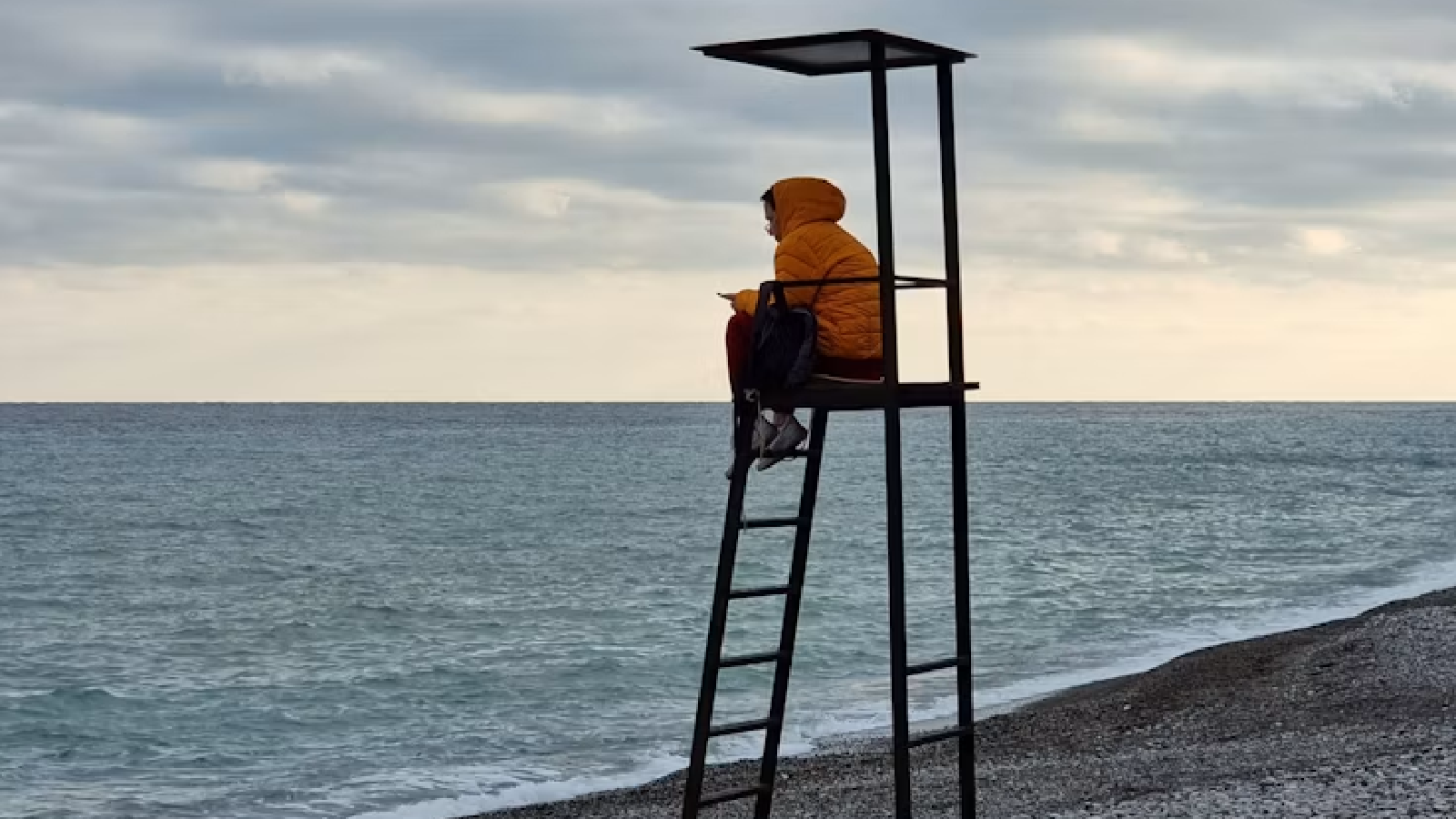
Photo by Konstantin Dyadyun on Unsplash


